 French
 Spanish
 German
 Italian
 English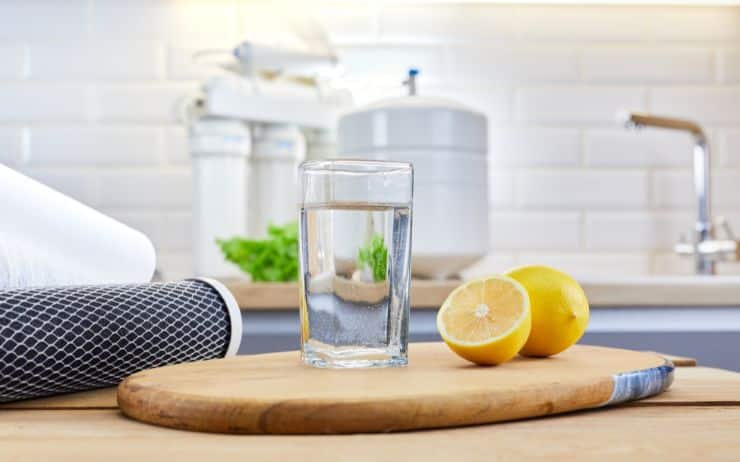
The water purifier is a device found in an increasing number of French households.
While tap water is closely monitored by public authorities in France and enjoys a high level of trust among consumers, the concerns related to its quality have never been more significant. According to the CIEAU Water Barometer 2025 , 75% of French people are concerned about the presence of micropollutants such as PFAS in their drinking water.
In response to these concerns, many French people are turning to domestic filtration or purification devices. However, not all market solutions fornaturally purifying tap water are equal.
To help you choose a system suited to your needs, we compare in this article 6 types of water purifiers : the filter jug, the under-sink purifier, the faucet filter, the osmosis system, the gravity purifier, and the UV-A purifier.
Why install a water purifier at home?
Tap water is the most controlled food product in France and is generally safe to drink. However, this does not mean it is free of contaminants (traces of pesticides, pharmaceutical residues, heavy metals…).
Despite the treatments implemented by water services, localized contamination can also occur. In recent years, several French municipalities have faced alarming levels of PFAS in their drinking water supply.
In this context, a water purifier allows for significantly improving the quality of tap water at home, to protect health and enhance taste.
The benefits of a water purifier:
- Healthier water on a daily basis,
- A neutral taste, free from chlorine and unpleasant odors,
- A reduction of the main pollutants present in tap water,
- Cost savings compared to buying bottled water,
- A simple action to reduce plastic consumption.
Best water purifier: ranking of different domestic water filtration systems (2026)
There are several methods for treating tap water, including distillation, reverse osmosis, activated carbon, and UV-A purification.
Here is a comparative table of the different purification techniques, based on their effectiveness and filtration performance against the main pollutants and contaminants in tap water.
We will detail the advantages, disadvantages, and characteristics of each technology shortly.
| Élément filtré, réduit ou éliminé | Carafe filtrante classique | Filtre sur robinet | Osmoseur |
 Filtre sous évier Opropre |
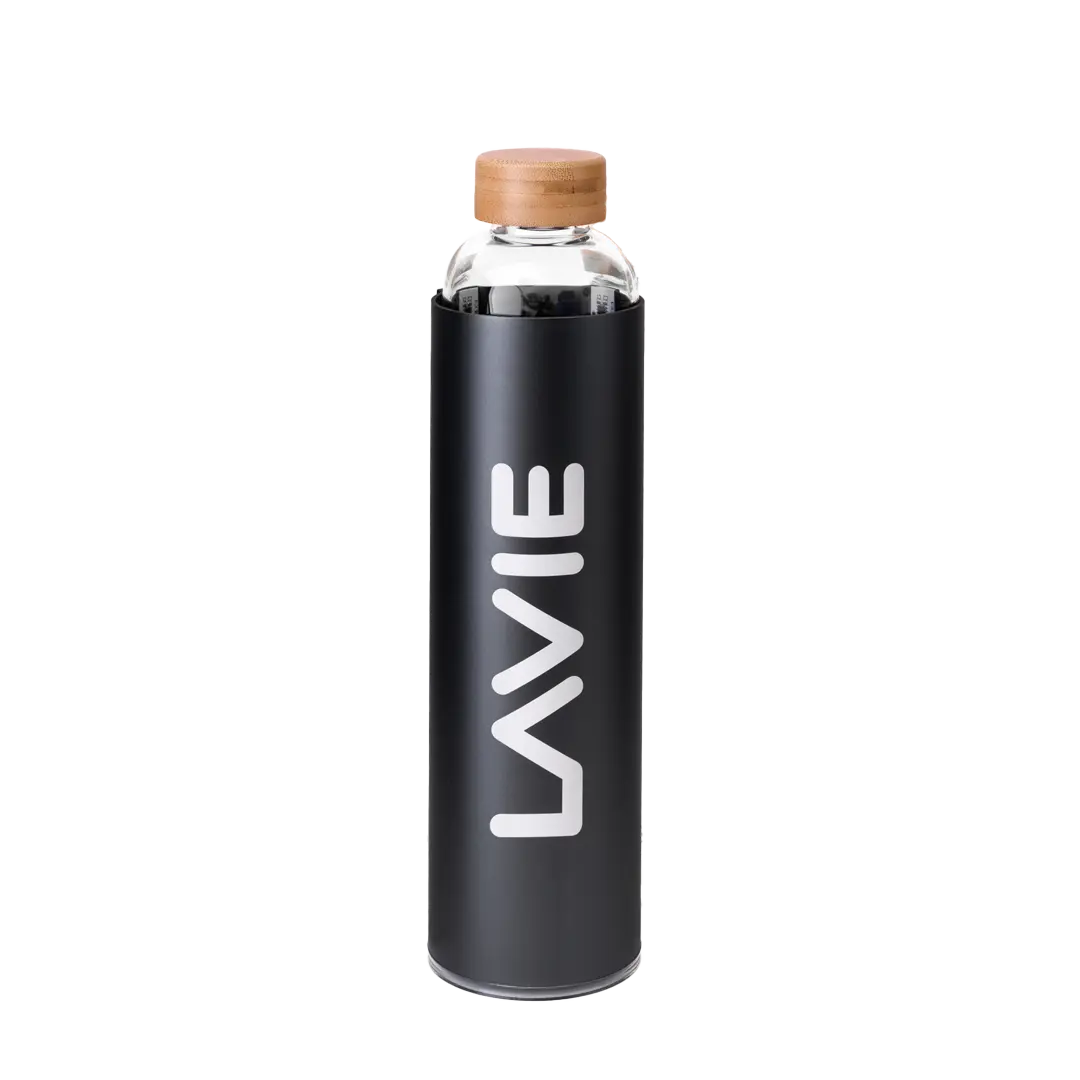 Purificateur LAVIE |
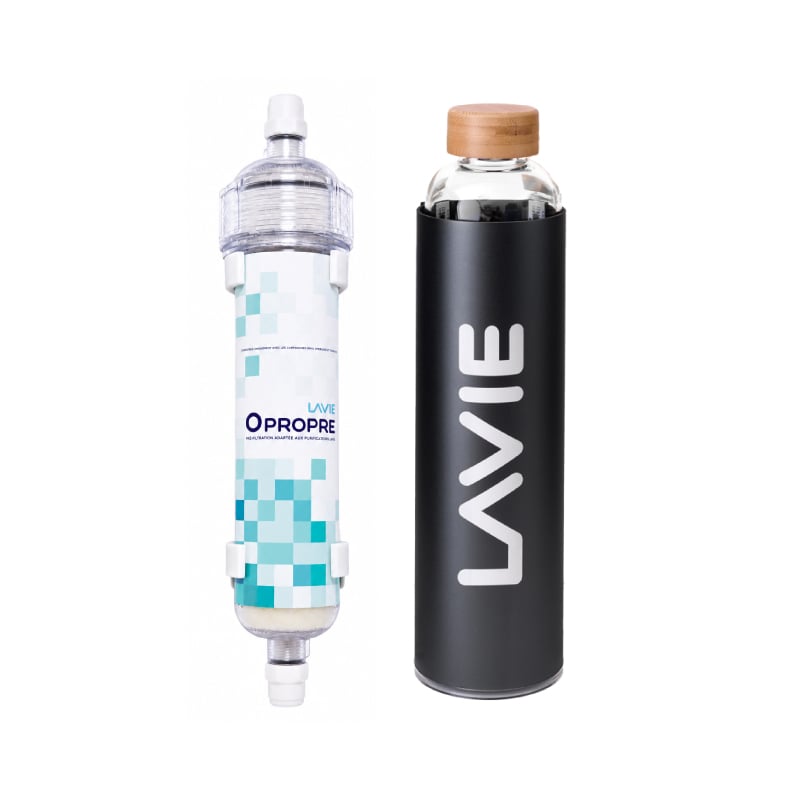 Pack sérénité (Opropre + LAVIE PURE) |
|---|---|---|---|---|---|---|
| Chlore | ✅ | ✅ | ✅ | ✅ | ✅ | ✅ |
| Sédiments | ✅ | 🟠 | ✅ | ✅ | ❌ | ✅ |
| Bactéries | ❌ | ❌ | ❌ | ❌ | ✅ | ✅ |
| Bactéries | ❌ | ❌ | ❌ | ❌ | ✅ | ✅ |
| Médicaments | ❌ | ❌ | ✅ | ✅ | ✅ | ✅ |
| Pesticides | ❌ | ❌ | ✅ | ✅ | ✅ | ✅ |
| Métaux lourds | 🟠 | 🟠 | ✅ | ✅ | ❌ | ✅ |
| PFAS | ❌ | ❌ | ✅ | ✅ | ❌ | ✅ |
| Microplastiques | ❌ | ❌ | ✅ | ✅ | ❌ | ✅ |
| Conservation des minéraux bénéfiques |
❌ | 🟠 | ❌ | ✅ | ✅ | ✅ |
| Découvrir | Découvrir |
Découvrir |
1. LAVIE UV-A Water Purifier: an innovative and natural purification method
LAVIE water purifiers use UV-A rays to treat tap water and make it purer, an innovative technology patented by the brand.
The purification system is based on the principle of chlorine photolysis, a natural reaction triggered by UV that neutralizes contaminants such as chlorine, bacteria, viruses, and pesticides, without the need for mechanical filtration.
Placed on the kitchen counter, the tap water purifier removes the taste of chlorinated water and eliminates its main pollutants in just 15 minutes.
In short, it is the best alternative to filter jugs : more effective, more economical, and more ecological. For more information, consult the reports of our scientific tests conducted in France.

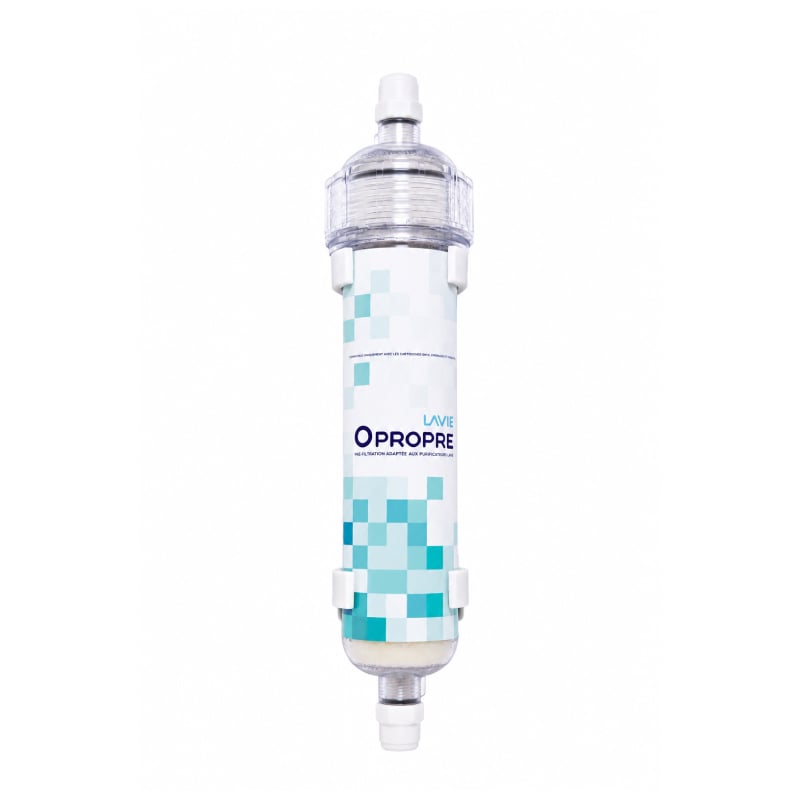
2. Under-sink filter: activated carbon to capture the most stubborn pollutants
Under-sink devices like those in our OPROPRE range require more complex installation, but their filtration method is more effective.
Activated carbon filters are currently one of the most interesting solutions to reduce exposure to contaminants in tap water.
OPROPRE uses coconut-derived carbon combined with a high-performance filtering resin that captures many chemical pollutants such as pesticides, PFAS, heavy metals, microplastics…
The lifespan of the filters is also longer (to be replaced every 6 months compared to every month for a jug!).
For more information, consult our comparison of under-sink water filters.

3. Water osmosis system: effective technology… at what cost?
The water osmosis system uses reverse osmosis to eliminate the majority of contaminants present in water, but its purchase, installation, and maintenance costs are high. You can expect to pay between several hundred and several thousand euros for these devices depending on the brand.
Osmosis systems filter so well… that they retain 95% of the beneficial minerals with their membrane. Therefore, it is essential to add them back at the end of the process, but this function is only available on high-end machines, which use an additional consumable in the form of a mineral cartridge. Not to mention that they generate 70% of wastewater concentrated with pollutants during the purification process, making their use neither economical nor ecological. Moreover, even with this mineral cartridge, the levels remain significantly below WHO recommendations.
Similarly to filter jugs, one must also be cautious of the risk of bacterial growth (without chlorine, bacteria can thrive after the reverse osmosis membrane, particularly in the tank or the outlet pipes to the faucet).
4. Gravity water purifier: performance difficult to assess
The gravity water purifier is a product that requires neither connection to the water supply nor electricity. As its name suggests, its operation is based on gravity, allowing water to naturally pass through the filter(s) of the system.
This type of purifier is often presented as a solution capable of eliminating a wide range of contaminants. In practice, its performance heavily depends on the quality of the cartridges used.
Moreover, some reputable filter brands conduct their own effectiveness tests rather than going through independent laboratories or certifications like the NSF label. Thus, it is difficult to objectively compare the actual performance of a gravity system.
An independent study conducted by Zone Interdite also demonstrated the ineffectiveness of certain gravity purifiers against microplastics (70% of particles were not captured by the filter).
5. Filter jug and faucet filter: solutions that can degrade water quality
The filter jug and faucet purifiers are generally the cheapest options to purchase, with models ranging between 20 and 120 euros. However, be aware that you will need to add the regular cost of replacing the filter cartridges (every 3 to 4 weeks for most models), which varies depending on the brand and manufacturer.
It is also important to note that filter jugs are primarily designed to reduce chlorine responsible for bad taste or odors in tap water. However, their effectiveness is more than limited against the most problematic contaminants (PFAS, pesticides…).
Even more concerning, in a report on filter jugs, ANSES highlights that they can lead to the leaching of certain substances into the water, including silver, sodium, potassium, or ammonium ions.
Poor maintenance or insufficient replacement of cartridges can even promote the development of bacteria. UFC-Que Choisir indeed found during a survey conducted in 31 households a systematic degradation of water quality in all tested homes after passing through a filter jug.
Water Purifier Buying Guide: What Criteria to Consider Before Buying?
1. The quality of your tap water
Our first advice for choosing the right filter is to know the quality of your tap water.
You can check the quality of your municipality’s drinking water by consulting the Ministry of Health website or interactive maps like the one created by Générations futures and Data for good. A water quality test can also help you determine the contamination level of your water, the pollutants it contains, as well as its hardness level or pH.
2. The price of the water purifier
The water purification devices vary significantly in price. While some systems are inexpensive to purchase, the frequent replacement of cartridges or other consumables can significantly increase their long-term operating cost.
- LAVIE UV-A Purifier: between 99 and 199 €, with no recurring costs (neither filter nor consumables).
- OPROPRE Under-sink Filter: between 159 and 189 €, with a cartridge to be replaced every 6 months.
- Water Osmosis System: between 300 and 2,000 €, plus the replacement of filters, membranes, and mineral cartridges, maintenance, and additional water consumption by the filtration circuit…
- Filter Jug: between 30 and 150 €, with cartridges to be replaced every 3 to 4 weeks.
3. The capacity of the purifier
The capacity of the water purifier is another aspect to consider. If you have a large family, you will need a system with a larger storage capacity.
The filter jug has a limited capacity (1L reservoir) and must be refilled regularly, which takes some time each time (10-20 minutes).
The filtered water fountain is an excellent option for obtaining a large purification capacity. With a 5-liter reservoir, the UV purifier LAFONTAINE meets the needs of the whole family!
4. The simplicity of installation and use
The installation of a water filter should be simple, quick, and its use without constraints.
The filter jug and the tap filter are inherently simple to install and use. Similarly, the LAVIE tap water purifier requires no special knowledge for installation as it simply needs to be plugged into a power outlet.
OPROPRE requires a specific under-sink installation, which can, however, be done easily without the help of a professional.
The installation of an osmosis system, on the other hand, requires the intervention of a professional and requires occasional maintenance. Osmosis systems are also the most cumbersome solution: they need space for installation. Additionally, a separate tap must be installed with a very small flow rate: 8 times less than the cold water tap (1l/min)
5. The type of purification sought
As we have seen in the comparison table presented at the top of this guide, not all water purifiers act the same way against contaminants.
No technology is, so to speak, “perfect”: each system has its strengths and limitations. Therefore, before purchasing, it is essential to identify the main problem you wish to solve: improving the taste of water, reducing your exposure to pollutants….
Which purifier removes the taste of chlorine?
If your main concern is to reduce the taste of chlorinated water, the LAVIE purifier is the most suitable solution.
With its patented technology, UV-A rays trigger a natural reaction that degrades the chlorine present in the water, responsible for the bad taste and unpleasant odors.
The UV-A purifier also eliminates more than 99% of bacteria, allowing for long storage without the risk of bacterial growth, unlike filter jugs.
What technology against microplastics?
In the report Zone Interdite “Our health in danger: revelations about this plastic that poisons us” broadcast on March 8, 2026, independent researcher Jean-Baptiste Fini compared several filters against microplastics using deliberately contaminated water.
The results, analyzed by an independent laboratory, show significant differences in effectiveness:
- Gravity devices are the least effective: they retain only 30% of microplastics, allowing the majority of particles to pass through.
- Reverse osmosis systems filter about 60% of microplastics.
- While the OPROPRE activated carbon filter has proven to be the most effective, allowing for the elimination of 75% of microplastics present in contaminated water.
Which purifier against PFAS?
Among the products compared in this buying guide, OPROPRE is one of the most suitable technologies for effectively reducing the presence of PFAS (forever pollutants) in tap water.
Thanks to a resin specifically designed to target them, the water filter acts against PFAS while preserving the minerals naturally contained in tap water.
Which water purifier to choose? Summary
As we have seen throughout this comparison, there are many devices and techniques for purifying tap water on the market. Here is a table summarizing the advantages and disadvantages of each option to help you choose between filter jug, reverse osmosis, UV, and activated carbon filter:
| Carafe filtrante classique | Filtre sur robinet | Osmoseur |
Filtre sous évier Opropre |
Carafe UV-A LAVIE |
|
|---|---|---|---|---|---|
| Méthode de purification | Filtre à charbon actif | Filtre à charbon actif | Membrane semi-perméable | Filtre à charbon actif et résine ciblée anti-PFAS | Rayons ultraviolets (photolyse du chlore) |
| Qualité de l’eau | 💧 | 💧 | 💧 | 💧💧💧 | 💧💧💧 |
| Éléments filtrés / traités | Chlore Sédiments |
Chlore Sédiments |
Chlore Sédiments Bactéries et virus Métaux lourds Pesticides Oligo-éléments |
Chlore Sédiments Métaux lourds Pesticides PFAS |
Chlore Bactéries Virus Traces de médicaments Pesticides |
| Difficulté d’installation | ✅ Facile |
✅ Facile |
❌ Complexe (Professionnel recommandé) |
🟠 Moyenne (À installer sous l’évier) |
✅ Facile (à brancher sur prise secteur) |
| Impact environnemental | ⚠️ Élevé : déchets fréquents (filtres), non recyclables |
⚠️ Élevé : déchets fréquents (filtres), non recyclables |
❌ Très élevé : rejet d’eau polluée (3–4 L par litre purifié) + filtres jetables + membrane jetable |
✅ Faible : cartouches LAVIE consignées et remplies à nouveau. Charbon actif recyclé |
✅ Faible : pas de filtre, ni consommables, faible consommation électrique. |
| Coût initial | € | € | €€€ | €€ | €€ |
| Coûts d’entretien / des consommables | €€ | €€ | €€ | € | Aucun |
| Découvrir |
Découvrir |
If you are looking for the best tap water filter and a complete solution for purifying water, we recommend combining the OPROPRE under-sink filter with the LAVIE water purifier.
This combination allows you to enjoy the complementary benefits of both technologies:
- OPROPRE acts against PFAS, pesticides, heavy metals, and microplastics.
- LAVIE eliminates chlorine responsible for bad taste and neutralizes more than 99% of bacteria.
- The beneficial minerals naturally present in the water are preserved.
- No risk of bacterial growth at the output of treatment.
- Water that is more pleasant to drink, healthier, and safer on a daily basis.