 French
 Spanish
 German
 Italian
 English
In light of the growing concerns about the quality of tap water, more and more households are seeking to improve the water they drink every day. Traces of pesticides, PFAS, microplastics, chlorine taste… These invisible pollutants raise many questions. As a result, filtration solutions are multiplying. But between filter jugs, under-sink filters, and reverse osmosis systems, it becomes difficult to know which technology is truly the most effective.
Tap water is drinkable in France. But is it really flawless and good for health? Chlorine taste, unpleasant odor, traces of medications, sediments, microplastics, PFAS… Increasingly, studies show that various elements are present in our water.
As a result, filtration solutions are multiplying. Filter jugs, under-sink filters, reverse osmosis systems… But not all are equal. Some only improve taste and odor. Others even remove essential minerals from our bodies.
So what is the best filter for tap water in 2026?
Here, we compare the main filtration technologies to help you choose the most reliable treatment.
Is it really necessary to filter tap water in France?
In France, tap water is the most controlled food. The water network must comply with very strict health standards and undergo numerous checks. But compliant does not mean perfect.
Today, analyses show that traces of pesticides, such as nitrates, PFAS (eternal pollutants), sediments, heavy metals, or even pharmaceutical residues can be found. Microplastics have also been detected.
The example of Hauts-de-France illustrates this reality well. 83,000 residents drink tap water contaminated by a fungicide, fluopyram.
According to Générations Futures, this pollution affects 17 distribution networks, supplying 46 municipalities in Pas-de-Calais, Somme, and Nord. In some areas, concentrations can even reach four to five times the regulatory quality limit.
These situations remind us of one thing: even when the water is compliant at the treatment plant, it can be loaded with impurities before it reaches us.
Contaminated tap water is therefore no longer an isolated case, but a reality that affects all regions of France.
Filtering tap water is thus more than necessary to reduce exposure to this pollution.
Tap water filter: what solutions are available?
Filter jug, reverse osmosis system, under-sink filter… Several devices allow for the purification of tap water. But not all are equal.
To clarify, here is a comparative table of the main models to find the best tap water filter.
 |
 |
 |
 |
 |
|
| Purification method | Activated carbon filter | Activated carbon filter | Semi-permeable membrane | Activated carbon filter and targeted anti-PFAS resin | Ultraviolet rays (photolysis of chlorine) |
| Water quality |  |
|
|
|
|
| Filtered / treated elements | Chlorine Sediments |
Chlorine Sediments |
Chlorine Sediments Bacteria and viruses Heavy metals Pesticides Trace elements |
Chlorine Sediments Heavy metals Pesticides PFAS |
Chlorine Bacteria Viruses Traces of medications Pesticides |
| Installation difficulty |  Easy |
 Complex (Professional recommended) |
 Average (To be installed under the sink) |
Easy (to plug into a power outlet) |
| Environmental impact |  High: frequent waste (filters), non-recyclable |
Very high: discharge of polluted water (3–4 L per liter purified) + disposable filters + disposable membrane |
Low: LAVIE cartridges are returned and refilled. Recycled activated carbon. |
Low: no filter or consumables, low power consumption. |
| Initial cost | € | € | €€€ | €€ | €€ |
| Maintenance / consumable costs | €€ | €€ | €€ | € | None |
| Discover | Discover |
Not all filters are equal! The experiment conducted by Zone Interdite
In the report Zone Interdite (“Our health at risk: revelations about this plastic that poisons us,” aired on March 8, 2026), independent researcher Jean-Baptiste Fini, a microplastics specialist, compared three filtration systems using deliberately contaminated water.
The results, analyzed by an independent laboratory, show significant differences in effectiveness:
- The gravity filters are the least effective: they filter only 30% of microplastics, allowing the majority of particles to pass through.
- The reverse osmosis systems retain about 60% of microplastics.
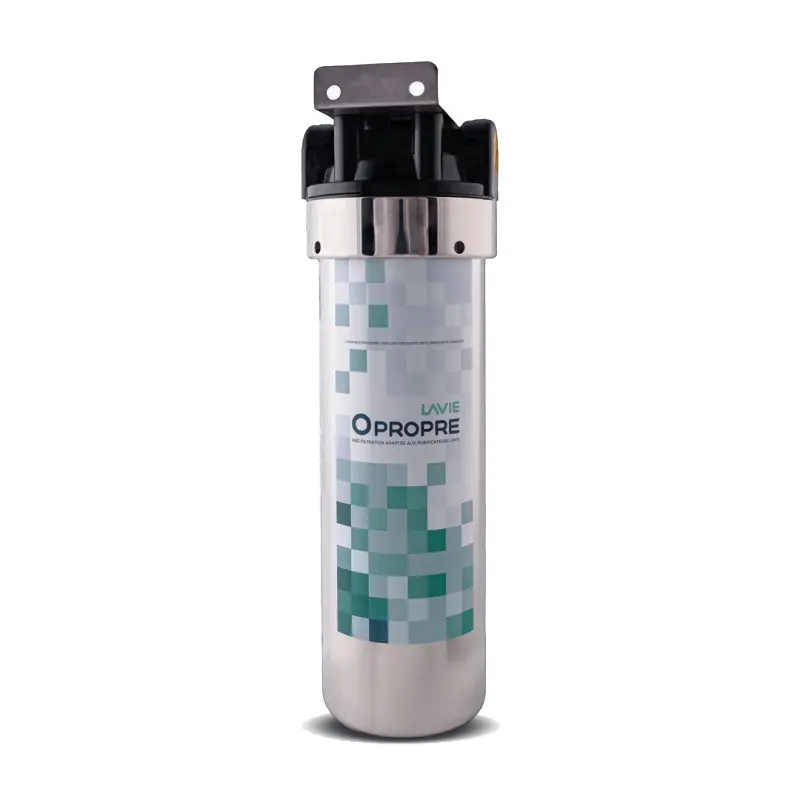
- While the Opropre activated carbon filter proved to be the most effective, allowing for the elimination of 75% of microplastics present in the contaminated water!
Conclusion: while filtration generally reduces the presence of microplastics, the choice of system makes a major difference in your actual daily exposure.
Under-sink activated carbon filter: how does it work?
Activated carbon is one of the most commonly used filtration technologies to purify tap water. Through a phenomenon called “adsorption,” its microporous surface captures many impurities: chlorine, heavy metals, and some microplastics.
This under-sink water filtration system acts directly at the source, before the water reaches the tap and thus your glass.
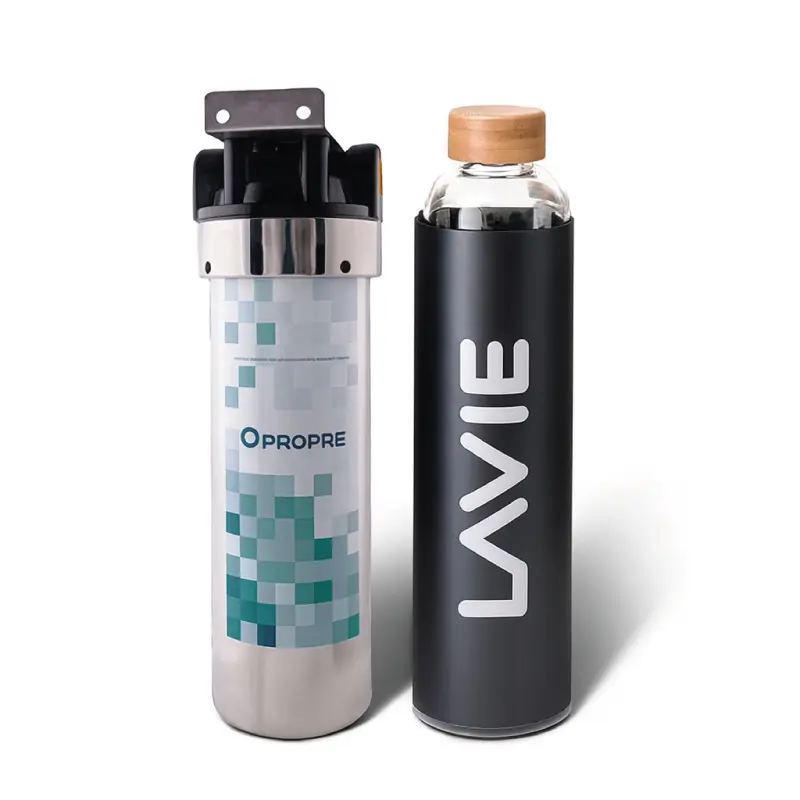
The Opropre product combines activated carbon and ion exchange resin to reduce contaminants, particularly the most stubborn ones.
A particularly effective treatment for improving the quality of tap water.

The reverse osmosis system: a highly advanced filtration
The reverse osmosis system for tap water is a highly advanced filtration technology. Thanks to an extremely fine membrane, it can eliminate up to 99% of contaminants. On paper, it is very effective.
But in daily use, limitations quickly become apparent!
The water is demineralized, as the naturally present minerals are also retained. The installation is costly with several filters and membranes that need to be replaced regularly. Moreover, the system generates significant water waste. To produce one liter of filtered water, about 4 liters are discarded. A disaster!
Filter jug: simple, but very ineffective
Filter jugs are simple and compact. But among all the models, which filter jug to choose?
It is important to note that their operation remains very limited:
- Ineffective against persistent pollutants
- Frequent replacement of cartridges, on average every 3 to 4 weeks
- Risk of bacterial growth in case of poor maintenance
- Environmental impact with non-recycled disposable cartridges and accumulation of plastic waste
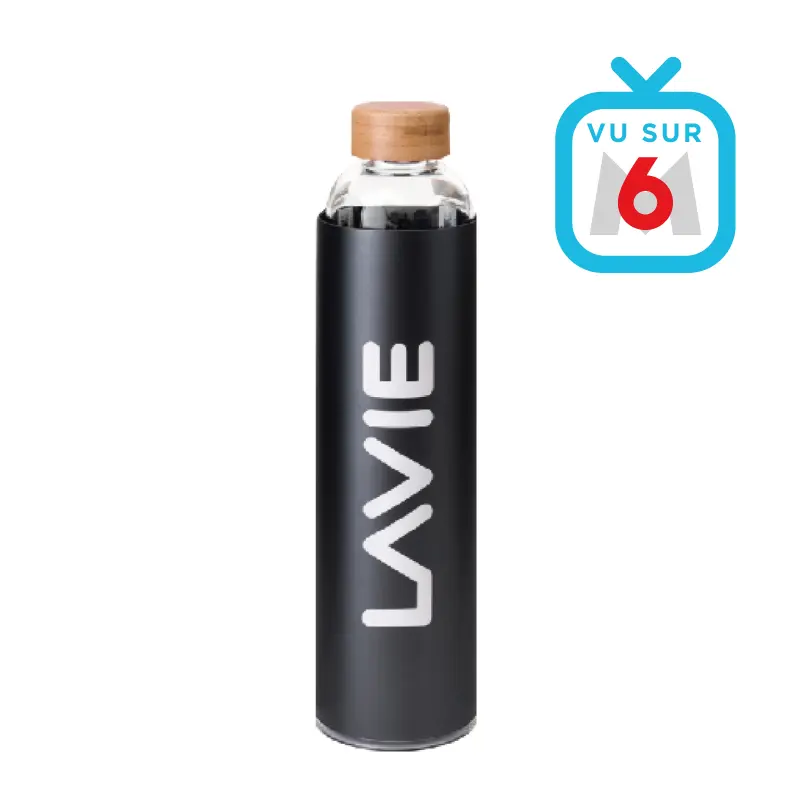
The LAVIE purifier works differently and without a filter! UV-A rays transform the chlorine present in the water into compounds capable of neutralizing bacteria, sediments, viruses, and some chemical residues, all without consumables. With this system, the water is healthy and preserves essential minerals.
A quality, ecological, and sustainable filtration.

Tap water filter: which solution is the most effective?
You understand, not all treatment systems are equal. And above all, they do not filter the same elements. To choose the most efficient device, you must therefore look at what each technology can actually capture.
| Filtered, reduced, or eliminated element | |
|
|
|
|
 |
| Chlorine | |
|
|
|
|
|
| Sediments | |
|
|
|
|
|
| Bacteria | |
|
|
|
|
|
| Viruses | |
|
|
|
|
|
| Medications | |
|
|
|
|
|
| Pesticides | |
|
|
|
|
|
| Heavy metals | |
|
|
|
|
|
| PFAS | |
|
|
|
|
|
| Microplastics | |
|
|
|
|
|
| Preservation of beneficial minerals | |
|
|
|
|
|
| Discover | Discover | Discover |
Chlorine filtration
Chlorine is naturally present to disinfect drinking water and prevent the development of bacteria. While it is essential for ensuring the safety of water, it can also alter its taste and odor.
That is why most filtration systems allow for effective reduction of chlorine.
But the LAVIE purifier uses a different process: photolysis. Under the effect of UV-A rays, chlorine is not retained but transformed into compounds capable of neutralizing unwanted elements, all without a filter and without cartridges.
You get pleasant drinking water of high quality. The scientific results prove it.
Elimination of bacteria and viruses
To eliminate bacteria and viruses present in drinking water, not all filtration systems are equal. Classic filter jugs, for example, are not designed to neutralize these microorganisms.
Worse still, once chlorine is reduced, the water becomes more vulnerable to their proliferation. And the humid environment promotes bacterial growth in case of poor maintenance, especially if the cartridges are not changed regularly. The taste and odor will only become more unpleasant.
The LAVIE filtration technology works differently. Thanks to the UV-A rays of the purifier, the chlorine present in the water is transformed into compounds capable of neutralizing bacteria, viruses, and certain chemical particles.
A simple, quick, and particularly effective purification.
Removal of pesticides and pharmaceutical residues
Pesticides and pharmaceutical residues are among the pollutants found in the drinking water network. They persist in the environment and contaminate water resources.
To effectively reduce them, the Opropre under-sink filter acts directly at the source. Thanks to its activated carbon and ion exchange resin, it captures the vast majority of these molecules before the water reaches the tap.
Combined with the LAVIE purifier, this system offers a complete solution. You get safer and more pleasant drinking water.
PFAS, heavy metals, and microplastics
PFAS, heavy metals, and microplastics are among the most difficult particles to eliminate from tap water. Eternal pollutants are particularly concerning because they accumulate in the environment, as well as in the body.
To effectively reduce them, two technologies are currently recognized: the reverse osmosis system and the under-sink activated carbon filter, such as Opropre. The reverse osmosis system offers very advanced filtration due to its extremely fine membrane, but it has several limitations: demineralized water, expensive installation, and significant water waste.
The Opropre product, on the other hand, captures these contaminants while retaining essential minerals (calcium, magnesium…) and without water discharge.
An effective, sustainable purification with no ecological impact!
Serenity Pack: the complete solution for healthy water
To obtain truly healthier water, the ideal is to act on two levels: retain pollutants at the source and purify the water at the time of consumption. This is precisely the goal of the Serenity Pack offered by LAVIE.
This device combines two complementary technologies:
- The under-sink Opropre filter, which captures many chemicals such as PFAS and heavy metals before the water reaches the tap
- The LAVIE purifier, which neutralizes the last unwanted substances and sediments using UV-A rays at the time of consumption
This range offers quality and effective filtration to enjoy purer and more pleasant tap water.

How to choose a filter for tap water?
Price: beware of the real cost
The price of a tap water filter can vary greatly depending on the chosen models. Some solutions may seem inexpensive at purchase, but their real cost becomes apparent over time.
Classic filtered carafes, for example, require frequent cartridge replacements, on average every 3 to 4 weeks. The reverse osmosis system, on the other hand, requires a high initial investment and regular maintenance with several filters and the membrane needing replacement.
LAVIE devices offer a better balance in the long term. No installation by a professional, no consumables, and no surprises for your wallet.
A simple, economical, and sustainable system to improve the quality of your water.
Cartridges: what is their lifespan and maintenance?
The lifespan of cartridges is an essential criterion to consider when making your choice.
For comparison, classic filtered carafes require changing the cartridge every 3 to 4 weeks. The reverse osmosis system has several filters and membranes that must also be regularly renewed to maintain their performance.
The LAVIE range eliminates these constraints:
- The LAVIE purifier operates without filters or consumables, thus incurring no costs.
- The under-sink Opropre filter offers a lifespan of 6 months, with a deposit system allowing for the recycling of carbon and resin.
Result: less maintenance, less waste, and a sustainable treatment to improve water quality.
Installation: simple or complex?
The installation of a water filter at home is important to anticipate. Some technologies require complex setups while others are much simpler.
The reverse osmosis system, for example, requires the intervention of a professional and several maintenance steps to replace filters and cartridges.
In contrast, LAVIE devices are designed to be simple to use right from delivery:
- The LAVIE purifier requires no installation. Just plug it into a power outlet.
- The under-sink Opropre filter is easily placed under the sink due to its compact design.
Result: with the LAVIE system, you benefit from a solution that is easy to install and use, tailored to your daily needs.
What is the most reliable water filter in 2026?
Several technologies allow for the purification of tap water. Filter carafes, under-sink filters, and reverse osmosis systems are the most common. However, in practice, they do not have the same capabilities.
Carafes remain simple, but their effectiveness is limited and they have a significant ecological impact. The reverse osmosis system, on the other hand, filters up to 99% of contaminants thanks to a very fine membrane, but at the cost of a heavy installation, regular maintenance, considerable water waste, and even water acidification.
To obtain truly healthier water, the most relevant approach is to act on two levels: filtration at the source and purification at the time of consumption.
This is exactly what the LAVIE Serenity Pack offers. With the under-sink Opropre filter, many pollutants, including the most persistent ones, are captured before the water reaches the tap. The LAVIE purifier then neutralizes the last unwanted substances using UV-A rays.
Thus, you have filtered tap water of quality and pleasant to drink at home.