 French
 Spanish
 German
 Italian
 English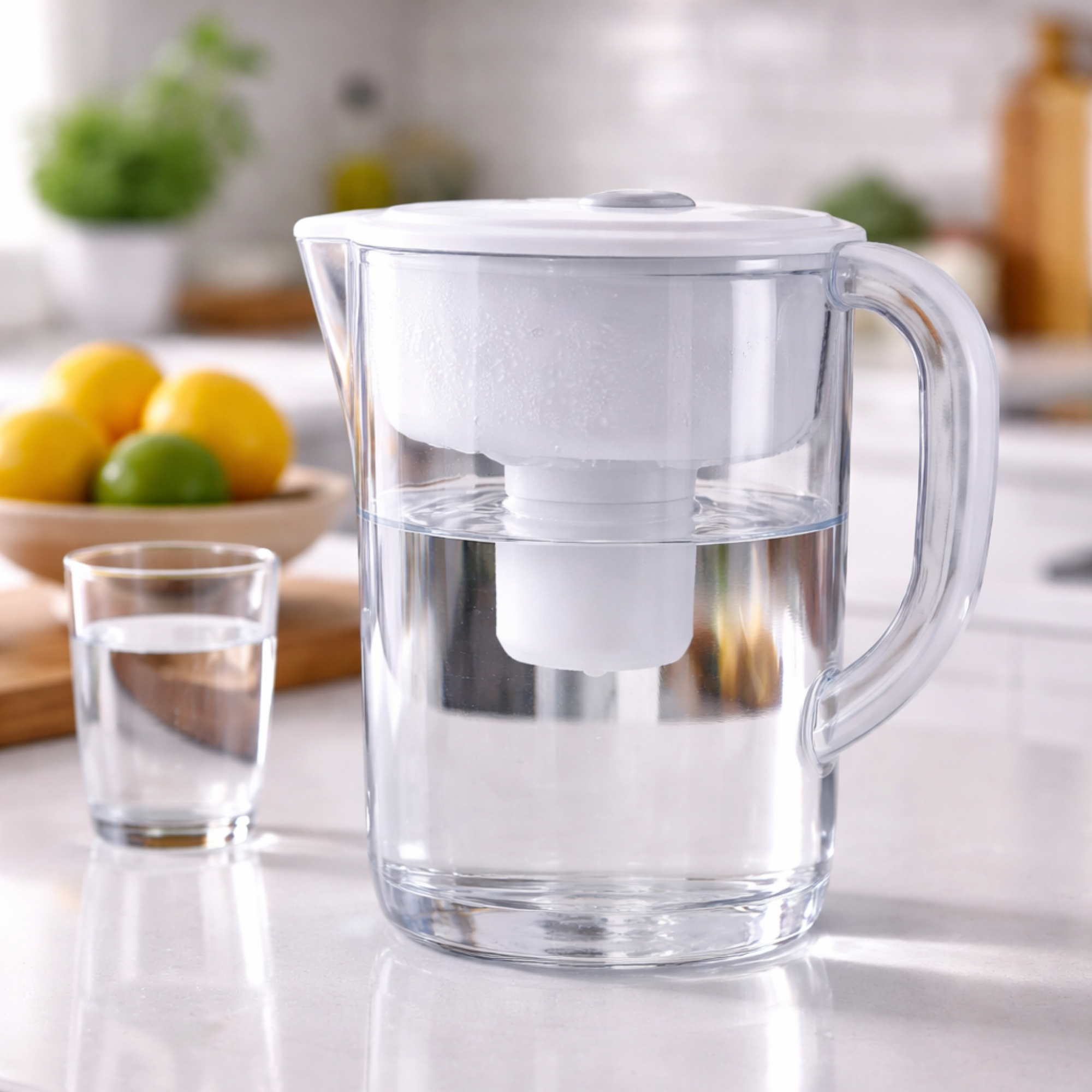
Tap water is drinkable. But is it flawless? As for bottled water, analyses reveal that it is far from perfect.
PFAS, pesticides, pharmaceutical residues, microplastics… These are all pollutants found in the water we drink every day.
This is why filtered water is becoming increasingly popular. More practical than packs, more economical and healthier, it is the best alternative to protect one’s health.
However, one must choose the right technology. Between filter jugs, reverse osmosis systems, activated carbon filters, or UV-A purifiers, not all options are equal.
So, what exactly is filtered water? What are its benefits? And above all, which system should be adopted?
What is filtered water?
Filtered water is water that has undergone a filtration process designed to retain undesirable substances.
The goal? To improve its quality by reducing the presence of impurities and contaminants such as pesticides, heavy metals, microplastics, PFAS, or certain bacteria.
But be careful: there are several ways to filter. A filter jug, a reverse osmosis system, an activated carbon filter, or a UV-A purifier do not work the same way and do not yield the same results.
Some solutions merely improve taste, while others offer much more thorough treatment.
That is why choosing the best tap water filter is not just about comparing prices. It is essential to understand what each technology is actually capable of retaining.
What are the benefits of filtered water?
Filtered water represents the perfect compromise between tap water and bottled, mineral, or spring water. It allows you to continue to drink water from home while improving its composition. Taste, health, ecology, savings: its benefits are numerous.
Rediscover a more pleasant taste
Drinking water at home should be a pleasure, not a chore. Yet, some people do not appreciate the taste or smell of tap water, linked to the presence of chlorine.
But thanks to filtration, it is possible to rediscover a more pleasant flavor.
This improvement changes a lot. Water that is more enjoyable to drink naturally encourages one to drink more often and stay better hydrated throughout the day.
A simple benefit, but necessary for many people.
Enjoy better quality water
Studies reveal today the presence of contaminants in what we drink, whether from bottled mineral water or tap water. Substances that are better avoided for one’s health.
This is precisely one of the main advantages of filtered water. Depending on the technology used, it allows for a reduction in the amount of pollutants, including the most persistent ones, notably PFAS.
But not all solutions are equal. Some merely improve taste, while others offer more comprehensive filtration.
The result: better quality water that one drinks with confidence.
Reduce waste and save money
Filtered water allows for effective hydration without relying on bottled mineral or spring water. No more need to carry heavy packs, find space to store them, or see plastic waste accumulate.
A real gain in comfort, with a reduced environmental impact.
It is also an economical option. Bottled water costs on average up to 100 times more than tap water. In the long run, the savings are considerable.
A beneficial choice for one’s budget, daily life, and the planet.
Which filtration system to choose to improve water quality?
There are many water filtration systems. But some only improve taste, while others effectively reduce harmful chemical particles.
It is therefore important to choose the technology that best meets your needs.
Filter jug: a technology far from perfect
Filter jugs are often the first reflex for purifying water. Their advantage? Reducing chlorine and improving taste.
But behind this apparent effectiveness of the filter jug lie several disadvantages:
- Its capacity remains limited on many contaminants such as pesticides, PFAS, heavy metals, or microplastics.
- Cartridges must be replaced regularly, every 3 to 4 weeks, generating costs and a quantity of plastic waste.
- There is a risk of bacterial growth in case of poor maintenance. According to the UFC-Que Choisir, “At home, bacterial contamination is almost systematic” in the tested jugs.
In other words, water that tastes better is not necessarily cleaner water.
Reverse osmosis: an advanced technique, but at what cost?
Thanks to its extremely fine membrane, reverse osmosis is capable of retaining a large portion of pollutants, including the most persistent ones like PFAS.
But this performance also has its downsides:
- It also removes essential minerals naturally present in water.
- It produces more acidic water.
- It rejects up to 3 to 5 liters of water for each liter filtered.
- Its installation, maintenance, and filter replacement represent a significant cost.
- Cartridges and membranes generate additional waste.
Moreover, a test conducted as part of the show Zone Interdite showed that reverse osmosis allowed up to 40% of microplastics to pass through. A rate that contrasts with the “total” purification image of this technology.
The result: an osmosis water is not the most suitable solution for daily consumption.
UV-A purifier: healthier water without filter or consumables
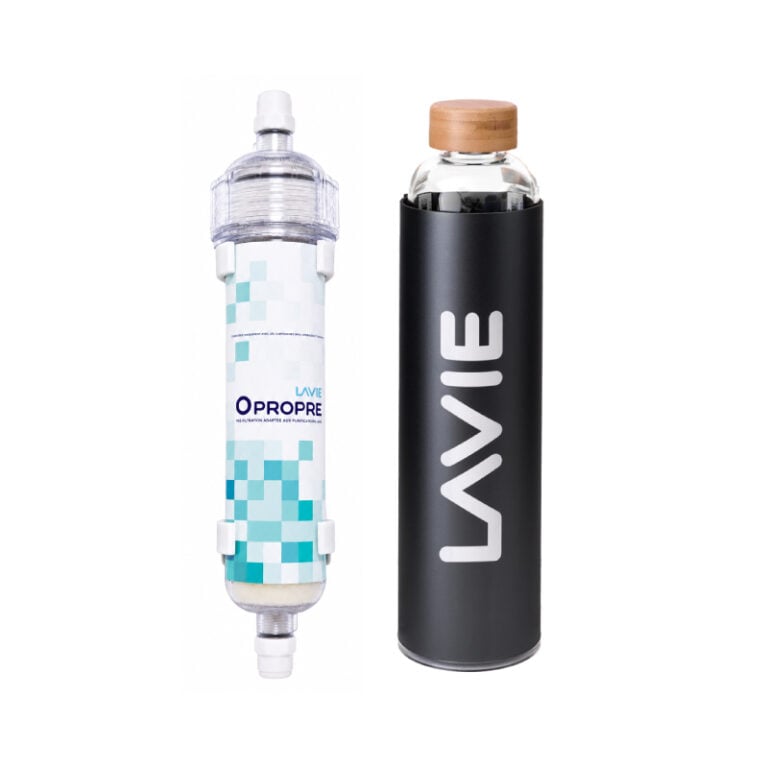
The UV-A water purifier LAVIE uses patented technology inspired by a natural phenomenon called photolysis.
Its principle is simple: UV-A light activates the chlorine present in the water. This then transforms into reactive compounds capable of neutralizing bacteria, viruses, traces of medications, and various toxic residues.
And this technology has other advantages:
- It preserves essential minerals like calcium and magnesium.
- It operates without filter, without chemicals, and without special maintenance.
- It limits waste and costs related to the replacement of consumables.
- It improves taste and odor.
An easy, eco-friendly, and economical use to enjoy healthy and safe water for health.

Under-sink filter OPROPRE: the solution against the most stubborn pollutants
With OPROPRE, treatment occurs directly at the source. This under-sink filter combines high-performance activated carbon with a specific resin capable of retaining the most persistent pollutants.
Its main advantages:
- It reduces PFAS, pesticides, heavy metals, micro and nanoplastics.
- It preserves essential minerals.
- Its cartridge lasts up to 6 months, limiting costs and maintenance constraints.
- Its cartridge is deposit-returnable, refillable, and recyclable, thus eliminating waste.
A reliable, eco-friendly and efficient solution to enjoy healthy water while reducing its impact on the environment and budget.
Drinking filtered water: a solution to better protect one’s health
Filtered water represents the perfect compromise between tap water and bottled water. It improves taste while reducing the presence of pollutants and impurities. And all this while limiting plastic waste and daily expenses.
However, it is essential to choose the right technology.
This is precisely where LAVIE solutions make sense. The OPROPRE under-sink filter acts directly at the source to retain numerous contaminants, while the LAVIE UV-A purifier enhances water quality without filters or chemicals. This combination also eliminates any bacteria that may be present during the filling of the bottle, thus making the water healthy and safe until the cap is opened. It allows for safe storage over long periods, even at room temperature.
Together, they offer a comprehensive response to enjoy healthier water that is more pleasant to drink and more environmentally friendly every day.