 French
 Spanish
 German
 Italian
 English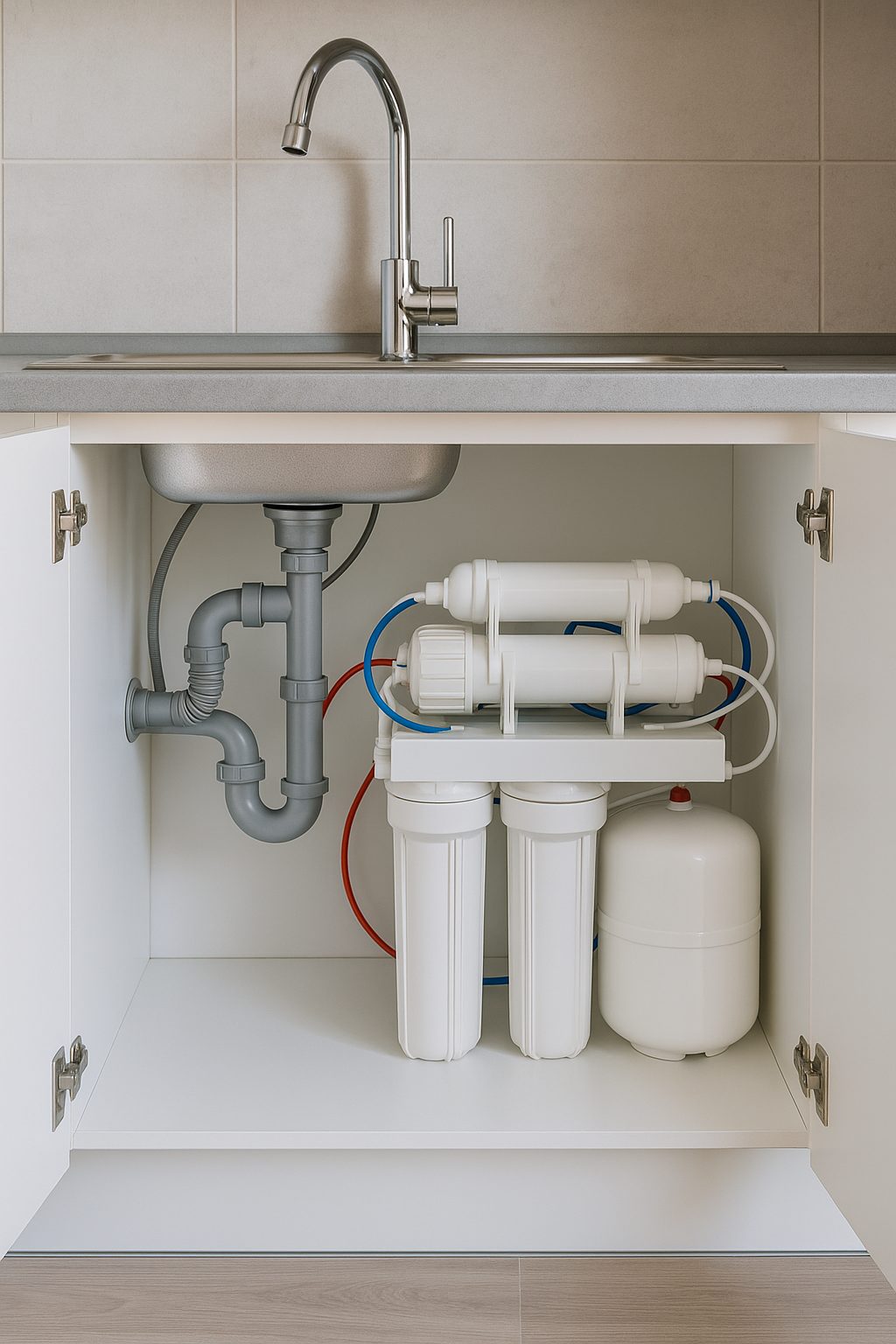
They are invisible and odorless, but very much present in our glasses. PFAS, also known as forever chemicals, are dangerous chemical substances that we find today in the water of our pipes. Their existence, confirmed in many municipalities, increasingly worries health authorities.
A recent example: in July 2025, twelve towns in the Ardennes banned the consumption of tap water due to excessively high levels of PFAS, suspected of having serious health effects.
In the face of this silent threat, reverse osmosis is presented as an ideal technology for drinking purer water. But is it really the best option for everyday use? Well, no! Because while this technology is effective, it hides many limitations.
Are you looking for a sustainable and reassuring solution for your health and that of your family? In this article, we help you gain clarity on the use of a reverse osmosis system for tap water and we offer you equally effective, but much more responsible alternatives like the Opropre Turquoise filter from LAVIE.
PFAS, these invisible pollutants that threaten your health
PFAS, per- and polyfluoroalkyl substances, are toxic chemical compounds that have been massively used for over 70 years in everyday products: non-stick pans, waterproof textiles, food packaging, firefighting foams… Unfortunately, these forever pollutants are found everywhere in our environment: in soils, groundwater, and tap water.
That is why, on July 30, 2025, the Ministry of Ecology published a map listing the presence of PFAS in water in France. 39 sampling points exceed regulatory thresholds in drinking water. And this is just the tip of the iceberg: there are reportedly several thousand varieties of PFAS, but only 20 are monitored according to the current European directive.
That’s not all! Some are now classified as carcinogenic or possibly carcinogenic. Over time, they can also disrupt the hormonal system, affect fertility, the liver, and other vital organs.
However, most conventional filtration solutions like filter jugs are not effective against PFAS. Only more advanced technologies, such as reverse osmosis or specialized filters like Opropre Turquoise, can truly eliminate them from your water. Let’s take a closer look at their PFAS treatment capabilities.
💧 Read also: Filter jug: Is it effective against PFAS?
Reverse osmosis: a formidable weapon against PFAS
Reverse osmosis is one of the most effective solutions for removing PFAS (forever pollutants) from tap drinking water. This technology relies on a very advanced process: water is forced at high pressure through a membrane made up of several layers, capable of retaining almost all undesirable substances.
Result: the osmosis system removes up to 99% of contaminants, such as nitrates, pesticides, heavy metals, pharmaceutical residues, chlorine, bacteria, viruses, and of course, PFAS and TFA.
It is a filtration system recognized for its performance, used both in industry and in some households.
But despite its effectiveness, this water treatment is not without consequences for your health and the environment. We explain why.
Behind pure water, the harmful effects of reverse osmosis
Despite its effectiveness against PFAS, reverse osmosis has many disadvantages that make this process poorly suited for daily use, even dangerous for your health and for the environment.
- High long-term cost: the purchase cost of a high-performance osmosis system can exceed several hundred euros (not including installation, which is generally entrusted to a professional). In addition, there are regular maintenance costs: filters to be replaced every 6 months, membranes, remineralization cartridges… And of course, none of these elements are recyclable.
- Concerning water waste: to produce 1 liter of purified water, up to 4 liters are rejected. Moreover, this water, concentrated with pollutants, goes directly back into the pipes without treatment. On a household scale, this represents hundreds of liters of drinking water lost each week. A catastrophic result.
- Disastrous ecological impact: disposable filters, single-use cartridges, electricity consumption, discharge of polluted water into the environment… Reverse osmosis generates invisible pollution, completely contradicting a necessary ecological approach today.
- Demineralized water that is bad to drink: by retaining almost everything, including essential minerals like calcium, magnesium, and potassium, osmosis water becomes unbalanced and acidic. It loses its quality, which can present a danger to your health. In the long term, this disrupts your metabolism and weakens the body. Even when remineralized, its mineral content remains well below WHO recommendations.
- Risk of bacterial proliferation: by also removing chlorine, the water becomes vulnerable. Result: if the osmosis system is poorly maintained, bacteria and mold can develop. A “pure water” that turns into a danger for your health. Paradoxical, isn’t it?
So, what solutions can we consider to effectively eliminate PFAS from your water without compromising either your health or the planet?
💧 Read also: Does reverse osmosis make water dangerous to consume?
The reverse osmosis unit: effective… but not against microplastics?
In the report Zone Interdite (“Our health in danger: revelations about this plastic that poisons us,” aired on March 8, 2026), independent researcher Jean-Baptiste Fini, a microplastics specialist, compared three filtration systems using deliberately contaminated water.
The results, analyzed by an independent laboratory, show significant differences in effectiveness:
- The gravity filters are the least effective: they filter only 30% of microplastics, allowing the majority of particles to pass through.
- The reverse osmosis systems retain about 60% of microplastics.
- While the Opropre activated carbon filter proved to be the most effective, eliminating 75% of the microplastics present in the contaminated water!
Conclusion: while filtration generally reduces the presence of microplastics, the choice of system makes a major difference in your actual daily exposure.

Reliable and safe technologies to protect against PFAS
Filter jug, osmosis system, faucet filter… It’s not always easy to navigate when looking for quality drinking water. To help you make the right choice, here is a clear comparison of the main filtration solutions and their effectiveness against PFAS, the so-called forever pollutants, and other contaminants.
If you want to learn more about the effectiveness and limitations of these devices, you can also consult our review of faucet filters. You will find useful insights to better understand the performance of these solutions and choose the one that best meets your needs.
|
Filtered, reduced, or eliminated element |

Classic filter jug |

Tap filter |

Reverse osmosis system |

Under-sink Opropre filter |
Serenity pack (Opropre + LAVIE PURE) |
| Chlorine | ✅ | ✅ | ✅ | ✅ | ✅ |
| Sediments | ✅ | 🟠 | ✅ | ✅ | ✅ |
| Bacteria | ❌ | ❌ | ❌ | ❌ | ✅ |
| Viruses | ❌ | ❌ | ❌ | ❌ | ✅ |
| Medicines | ❌ | ❌ | ✅ | ✅ | ✅ |
| Heavy metals | 🟠 | 🟠 | ✅ | ✅ | ✅ |
| Pesticides | ❌ | ❌ | ✅ | ✅ | ✅ |
| PFAS | ❌ | ❌ | ✅ | ✅ | ✅ |
| Microplastics | ❌ | ❌ | ✅ | ✅ | ✅ |
| Preservation of beneficial minerals | ❌ | 🟠 | ❌ | ✅ | ✅ |
| Discover | Discover |
Opropre Turquoise: the under-sink filter that combines effectiveness and ecology
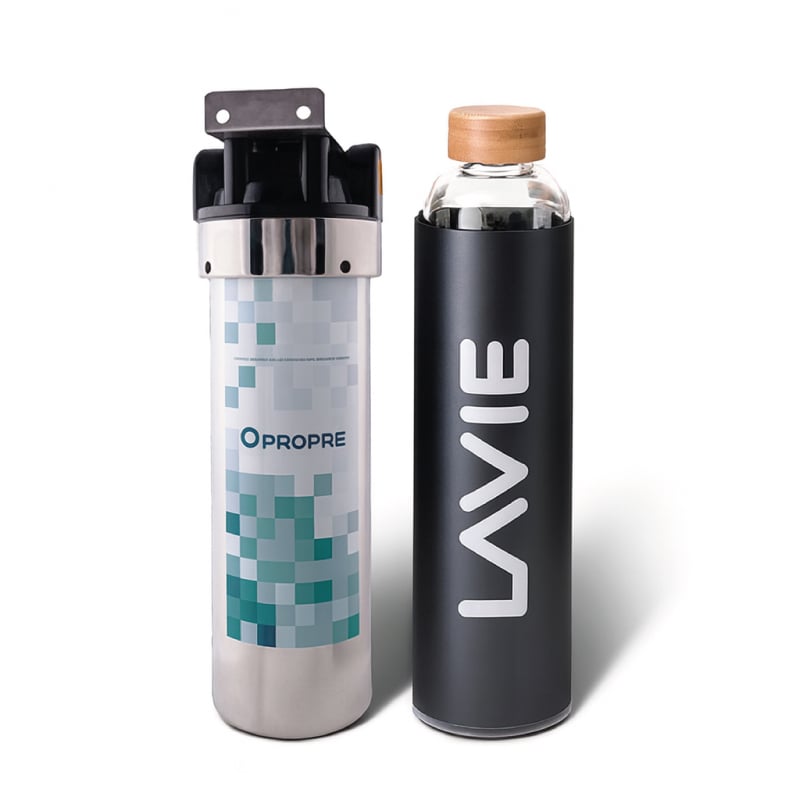
Opropre Turquoise pushes the limits of tap water filtration at home. Developed by LAVIE, this next-generation under-sink filter eliminates the most stubborn pollutants, including PFAS, without the drawbacks of reverse osmosis.
Its secret? A combination of high-quality coconut activated carbon and a specific ion exchange resin. Together, they effectively filter drinking water of chlorine, heavy metals, pesticides, microplastics, nanoplastics… All while preserving essential minerals like calcium and magnesium, and without chemicals. You end up with healthy, high-quality water that is balanced and pleasant to drink, day after day.
And its performance on PFAS is scientifically proven. An independent study conducted by the Environmental Chemistry Laboratory of Aix-Marseille University demonstrated that the filter can retain up to 27.4 mg of PFOA and 23.8 mg of PFBA per gram of resin. These amounts represent twice the PFAS level measured at the most concentrated point in France over six months (for tap water use: drinking + cooking + dishwashing in a household of 4 people). A very high-level result, rare in domestic use.
Another advantage of this water treatment: its sustainable design. LAVIE cartridges are returnable for recharging. The activated carbon and anti-PFAS resin are then recycled in specialized industrial circuits. No unnecessary plastic waste production.
And to finish beautifully: easy to install, with no water rejection, no electricity, and no compromises, Opropre Turquoise is THE reliable, sustainable, and secure filtration solution against PFAS.
Why bottled water is not the right choice against PFAS?
In the face of growing distrust towards tap water and its contaminants, many are adopting bottled water. However, this alternative is far from ideal compared to other technologies.
From a health perspective, several analyses have highlighted the presence of microplastics in bottles from major brands. And contrary to popular belief, PFAS have also been detected. Drinking bottled water is therefore not synonymous with purity, quite the opposite.
From a practical and economic standpoint, bottled water entails a significant budget in the long term, in addition to being cumbersome to transport and store.
And what about its dramatic ecological impact? Every year, billions of plastic bottles end up in the trash, and only a minority is actually recycled. The result: tons of waste accumulate in nature, exacerbating an already alarming pollution situation.
Bottled water does not protect your health any more. It is better to opt for effective and sustainable filtration, such as Opropre Turquoise.
In the face of PFAS, is reverse osmosis the right answer?
Reverse osmosis is certainly effective against PFAS present in tap water, but at what cost? Elimination of essential minerals, water wastage, high cost, ecological impact… This technology is neither suitable for daily use nor beneficial for your health and that of the planet.
Fortunately, an alternative exists: Opropre Turquoise. This under-sink filter combines high performance, environmental respect, and ease of use. It removes PFAS from your water while preserving essential minerals, without discharging polluted water or producing plastic waste. Its goal? To provide you with healthy, great-tasting, balanced, and beneficial drinking water.
For safe, responsible, and sustainable hydration, Opropre Turquoise is the ideal choice.