 French
 Spanish
 German
 Italian
 English
Drinking healthier water while reducing plastic waste and avoiding heavy packs… This is what more and more households desire. A question arises: how can we filter tap water effectively, economically, and sustainably?
Because even when controlled, drinking water in France can contain chlorine, pesticides, pharmaceutical residues, and even forever chemicals.
At LAVIE, our solutions are safe, eco-friendly, economical, free from plastic and chemicals, and address current health challenges. Discover how to filter tap water simply and sensibly with these healthy alternatives.
Is tap water really safe? Why filter it?
In France, tap water is very seriously controlled before being deemed potable and consumed with confidence. But is that enough to make it truly healthy? Not necessarily. Its quality varies by region, the condition of the pipes, and the treatments applied. Indeed, chlorine, pesticides, pharmaceutical residues, and today PFAS, these forever pollutants, are increasingly found in our glasses.
Their presence is now confirmed in many French municipalities. In July 2025, 12 towns in the Ardennes banned the consumption of tap water due to a PFAS level that is too high, suspected of having serious effects on the health of residents.
This wake-up call raises a crucial question: can we still trust tap water? And above all, how can we hydrate safely without relying on plastic bottles? More and more households are choosing to filter their water at home. An economical and ecological solution, provided you choose the best tap water filters on the market.
This is exactly what LAVIE offers with a range of effective, durable devices designed to help you drink safe filtered water every day.
Drinking healthier water: LAVIE’s 5 innovative filtration solutions
LAVIE Purifier: healthier water through UV-A light
The LAVIE water purifiers rely on patented technology that uses UV-A light to transform tap water into premium filtered water in just 15 minutes. This natural process effectively neutralizes chlorine, pesticides, pharmaceutical residues, and certain bacteria, while preserving the good minerals for your body.
Without filters, without cartridges, without disposable plastic: they offer an economical, responsible, and zero-waste response, ideal for beneficial daily hydration that respects the environment.
A safe and committed choice to regain control over the quality of your water.

LaFontaine: the family filtering fountain for purified water on demand
With a capacity of 5 liters, LaFontaine is the ideal solution for families, offices, or establishments wishing to purify their water simply and effectively. Thanks to UV-A light, it treats a large amount of tap water in a single filling, without filters to change or disposable plastic.
It fully aligns with a sustainable, practical, and responsible hydration approach. The LaFontaine product combines performance, user comfort, and respect for the planet to offer everyone healthy water daily.

Opropre Turquoise: high-performance under-sink filters
The Opropre Turquoise under-sink filters provide an ultra-effective response for purifying your tap water. Thanks to a combination of coconut activated carbon and specific resin, they eliminate heavy metals, micro and nanoplastics, as well as PFAS. All this, without removing the essential trace elements for your body.
The best part? The cartridge is deposit-based, rechargeable, and recyclable. Every six months, you send it back: LAVIE inserts new activated carbon, while the old one is recycled in specialized industrial circuits. The resin follows the same process.
A reliable, durable technology perfectly suited for daily use, complementing our UV-A purifiers.

Odouce Water Softener: zero salt, zero CO₂, 100% effective
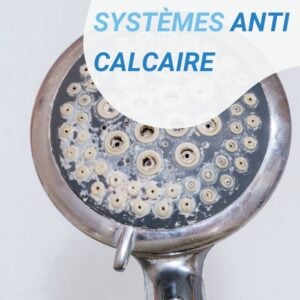
Odouce is the next-generation water softener, designed by LAVIE to stop limescale without salt, electricity, or chemicals. Thanks to a patented technology (turbulent galvanic polarization), it transforms limescale into aragonite, a harmless fine powder that does not cling to pipes or heating elements.
Unlike traditional salt or CO₂ softeners, Odouce does not alter the composition of the water: it remains potable, mineralized, and pleasant to drink.
No adjustments, no refills, no heavy maintenance: the Odouce device combines performance, practicality, and benefits, while reducing environmental impact.
Moreover, it is a perfect complement to our Opropre under-sink pre-filters and our UV-A purifiers!

Natural filtration methods: how effective are they?
Charcoal, ceramic beads, clay… Several methods promise to purify tap water naturally. An overview of these solutions and their effectiveness.
Is Binchotan charcoal really effective for filtering water?
Binchotan charcoal, derived from Japanese oak, is often presented as a natural method for purifying water. But in reality, its benefits are mostly theoretical (see the scientific opinions on binchotan charcoal). While it may slightly improve taste, no independent scientific study proves its effectiveness against heavy metals or pharmaceutical traces.
On the environmental side, the assessment is far from perfect: long and energy-intensive production, transport over thousands of kilometers, aluminum packaging…
In short, an artisanal solution, but neither sustainable nor truly reliable against contaminants present in tap water.
Ceramic beads: a method with limited effects
Ceramic beads are small balls of baked clay, enriched with microorganisms intended to reduce chlorine, limit bacteria, and balance the pH of the water. They are simply placed in a carafe. However, to date, no independent scientific results prove their action against most contaminants.
Clay balls: limited use for water quality
Clay balls, often used in carafes, primarily act through mechanical filtration. Their porous texture can retain some suspended particles, such as dust or certain physical impurities. However, they have no proven action against chemical pollutants, pesticides, or pharmaceutical elements.
Tap filters, carafes, reverse osmosis systems… Outdated devices?
Classic filtering carafe: practical, but with limited performance
Classic filtering carafes, such as those from Brita or Philips, attract with their promise: to improve the taste of water and reduce certain undesirables. But in reality, their effectiveness remains limited. The filter retains chlorine and softens, but at the cost of a loss of essential trace elements and a pH that turns acidic. See here our opinion on the best filtering carafe.
Worse: without rigorous maintenance, these carafes can become a breeding ground for bacteria. In addition, the disposable filters need to be changed every month, creating non-recyclable plastic waste.
In other words, they are not very eco-friendly, not very durable, and sometimes counterproductive for health.
Domestic reverse osmosis system: advanced filtration, but at what cost?
The reverse osmosis system for tap water eliminates most of the pollutants present: chlorine, heavy metals, bacteria, residues… But it also removes good minerals like calcium and magnesium. Even models with remineralization remain below WHO recommendations. The filtered water obtained is therefore demineralized, acidic, and poorly suited for daily consumption. Without rigorous maintenance, the tanks also become breeding grounds for microbes, in the absence of the removed chlorine. Additionally, there is a complex installation, demanding attention, and enormous water waste (up to 4 liters rejected for 1 liter filtered).
The reverse osmosis system: effective… but not against microplastics?
In the report Zone Interdite (“Our health in danger: revelations about this plastic that poisons us,” aired on March 8, 2026), independent researcher Jean-Baptiste Fini, a microplastics specialist, compared three filtration systems using deliberately contaminated water.
The results, analyzed by an independent laboratory, show significant differences in effectiveness:
- The gravity filters are the least effective: they filter only 30% of microplastics, allowing the majority of particles to pass through.
- The reverse osmosis systems retain about 60% of microplastics.
- While the Opropre activated carbon filter proved to be the most effective, eliminating 75% of the microplastics present in the contaminated water!
Conclusion: while filtration generally reduces the presence of microplastics, the choice of system makes a major difference in your actual daily exposure.
Tap filter: accessible, but often ineffective
Faucet filters have much to offer: easy to install, compact, effective against chlorine, odors, certain heavy metals, and microplastics, while preserving essential elements. Some stainless steel models are even more robust and durable.
However, their performance remains limited: the flow rate is often reduced, cartridges need to be replaced approximately every 30 days, and their placement can hinder daily use. Most importantly, they do not filter out all unwanted substances such as PFAS or pharmaceutical residues.
An interesting supplementary choice, but insufficient for truly purified water.
Which filter to choose to finally drink quality tap water?
Classic filtration devices promise a lot, but rarely deliver on all their promises and impose numerous constraints. At LAVIE, we have chosen more natural solutions, without plastic, without chemicals, and with scientifically proven results.
Do you want to improve the taste of tap water and eliminate chlorine? Our UV-A purifiers, including LaFontaine, provide superior quality water that is beneficial for your health and respectful of the environment.
Need deep treatment? The Opropre under-sink filters remove microplastics, heavy metals, and PFAS (with the Turquoise model), while preserving beneficial minerals.
And to say goodbye to limescale and protect your appliances, Odouce is your discreet, economical ally, free from salt and CO₂.
Eco-friendly, efficient, and designed to last, LAVIE products reinvent filtration for purer water, day after day.