 French
 Spanish
 German
 Italian
 English
Tap filters attract with their simplicity. Easy to install, compact, and relatively affordable, they promise to improve water quality without any construction work.
But are they really capable of retaining the pollutants present in water? In reality, their effectiveness is often more limited than one might imagine. Before choosing the best tap water filter, it is therefore important to know their actual performance.
Discover our review of tap filters, their advantages, disadvantages, and alternatives for healthier water in daily life.
How does a tap filter work?
A tap filter attaches directly to the end of the faucet. When water flows, it passes through a cartridge containing various filtering materials before reaching your glass. Depending on the models, activated carbon is used to reduce chlorine and certain chemical pollutants, ion exchange resins to retain certain metals, or mechanical filtration to capture particles.
But the composition of the cartridge is not everything. Its effectiveness also depends on the amount of activated carbon it contains and the time the water is in contact with it. The more significant these two elements are, the more capable the filter is of blocking contaminants.
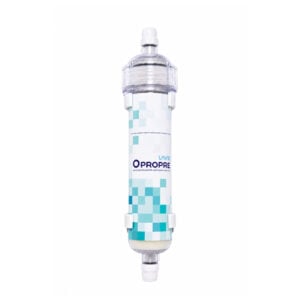
This is particularly what distinguishes a tap filter from an under-sink filter. The Opropre cartridge from LaVie has 5 to 10 times more filtering materials and is about four times longer than that of a standard model. It therefore offers a greater water filtration capacity.
What pollutants are retained by a tap filter?
Are tap filters as effective as other filtration systems in eliminating contaminants from drinking water?
Here is a comparison table of the main water treatment solutions, from filtered carafes to reverse osmosis, including products from LaVie, to discover which pollutants each technology is capable of retaining or removing.
| Élément filtré, réduit ou éliminé | Carafe filtrante classique | Filtre sur robinet | Osmoseur |
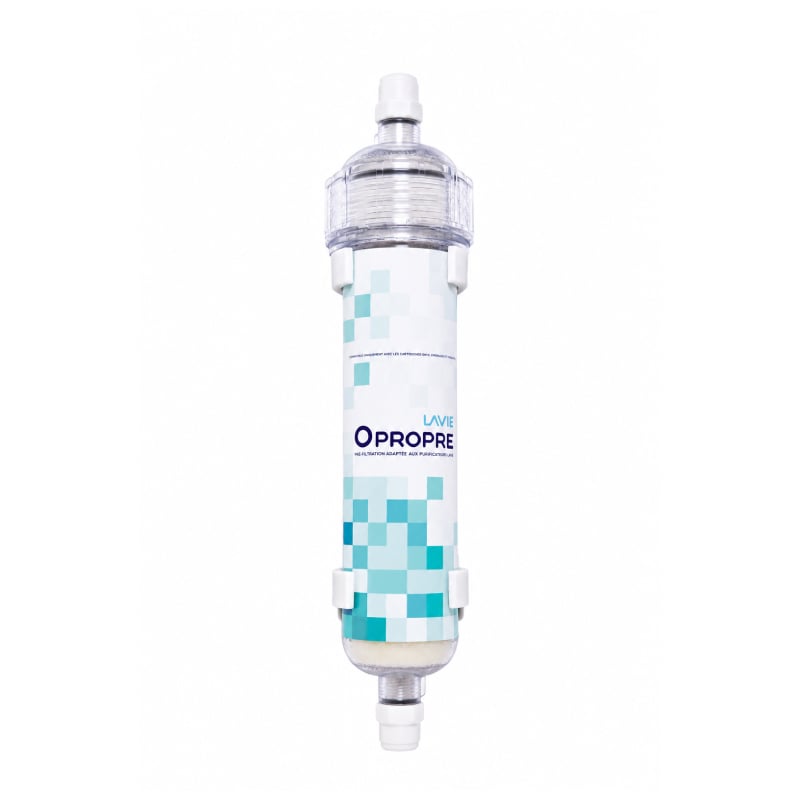 Filtre sous évier Opropre |
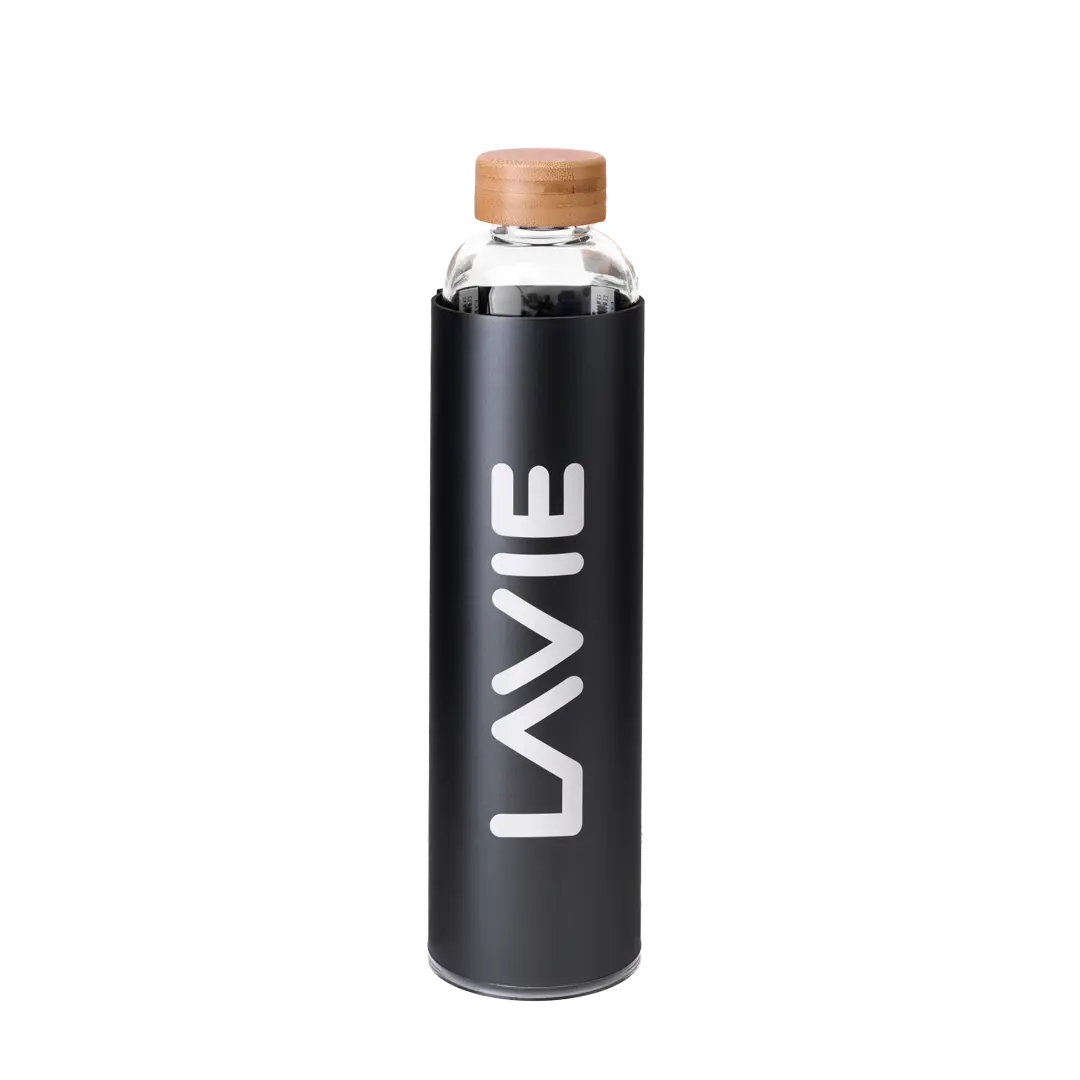 Purificateur LAVIE |
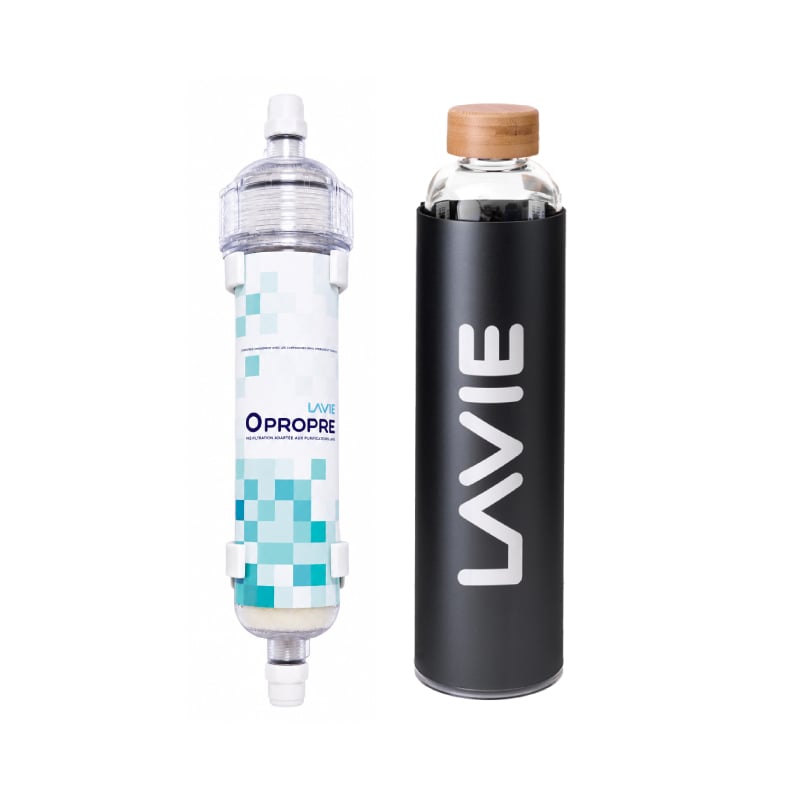 Pack sérénité (Opropre + LAVIE PURE) |
|---|---|---|---|---|---|---|
| Chlore | ✅ | ✅ | ✅ | ✅ | ✅ | ✅ |
| Sédiments | ✅ | 🟠 | ✅ | ✅ | ❌ | ✅ |
| Bactéries | ❌ | ❌ | ❌ | ❌ | ✅ | ✅ |
| Bactéries | ❌ | ❌ | ❌ | ❌ | ✅ | ✅ |
| Médicaments | ❌ | ❌ | ✅ | ✅ | ✅ | ✅ |
| Pesticides | ❌ | ❌ | ✅ | ✅ | ✅ | ✅ |
| Métaux lourds | 🟠 | 🟠 | ✅ | ✅ | ❌ | ✅ |
| PFAS | ❌ | ❌ | ✅ | ✅ | ❌ | ✅ |
| Microplastiques | ❌ | ❌ | ✅ | ✅ | ❌ | ✅ |
| Conservation des minéraux bénéfiques |
❌ | 🟠 | ❌ | ✅ | ✅ | ✅ |
| Découvrir | Découvrir |
Découvrir |
As shown in this table, tap filters are primarily effective against chlorine. They improve the taste and smell of water. Some models also retain sediments and reduce heavy metals, with effects that vary according to the cartridges.
However, the results remain very limited against pesticides, pharmaceutical residues, and PFAS. Standard tap filters do not guarantee satisfactory reduction of these contaminants.
Everything depends on your needs. To reduce the chlorine taste in tap water, a tap filter may suffice.
On the other hand, to filter PFAS from water, it is better to choose a solution whose performance has been tested on these substances, such as the Opropre under-sink filter from LaVie.
What are the advantages and disadvantages of a tap filter?
The advantages of a tap filter
Easy to install, affordable, and practical for daily use, tap filters have several advantages:
- Easy installation: they attach directly to the faucet in a few minutes and without any construction work.
- Accessible price: they represent a relatively low investment at purchase compared to other filtration systems.
- Improvement of taste and odors: thanks to the reduction of chlorine, tap water becomes more pleasant to drink.
- Compact format: they take up little space and do not clutter the countertop at home.
- Practical use: water is filtered directly at the tap, without having to fill a carafe or wait.
The disadvantages of a tap filter
But behind their simplicity, tap filters also have several limitations:
- Limited filtration capacity: their small cartridges contain few filtering materials, which reduces their effectiveness against certain pollutants.
- Very reduced water flow: water passes through the cartridge before exiting the faucet, which slows its flow.
- Regular maintenance: cartridges must be replaced frequently, leading to additional expenses and generating plastic waste.
- Risk of bacterial proliferation: without proper maintenance, bacteria can develop in the cartridge.
- Non-discreet appearance: attached to the end of the faucet, the device remains visible and may hinder certain uses.
What solutions are available to replace the tap filter?
There are several alternatives to tap filters to improve the quality of your water. Some offer a more comprehensive water treatment, while being more economical and environmentally friendly in the long term.
Filtered carafes, UV-A purifiers, under-sink filters… Let’s take stock of these different solutions.
Tap filter or filtered carafe?
Tap filters and traditional filtered carafes operate on the same principle. Their activated carbon-based cartridge primarily reduces chlorine and certain pollutants. Their filtration capacity is therefore quite similar.
But their limitations are also similar! Cartridges must be replaced regularly, which increases expenses and generates plastic waste. And without proper maintenance, bacteria can also multiply. A risk highlighted by ANSES and confirmed by analyses from UFC-Que Choisir, which indicates that “bacterial contaminations are almost systematic” in the tested filtered carafes.
Fortunately, the best filtered carafe is not necessarily the one that uses a filter! LaVie PURE purifies water using UV-A technology in 15 minutes. Without a cartridge, it acts on chlorine, bacteria, viruses, pesticides, and traces of medications, while preserving essential minerals, including calcium and magnesium.

Tap filter or under-sink filter?
The tap filter has the advantage of being affordable and easy to install. But its small cartridge limits its filtration capacity, requires frequent replacements, and significantly slows down water flow.
In contrast, an under-sink filter offers a more complete filtration thanks to a larger cartridge that lasts longer. Its installation requires a bit more work, but it remains discreet and does not clutter the faucet.
This is particularly the case for Opropre from LaVie, for example, which targets PFAS, heavy metals, and microplastics, including nanoplastics. According to analyses from CNRS/Aix-Marseille University, Opropre has reduced TFA by up to 99.9%, a particularly persistent pollutant found in water.
The right reflex? Compare the filtration test results before choosing your equipment according to your needs.