 French
 Spanish
 German
 Italian
 English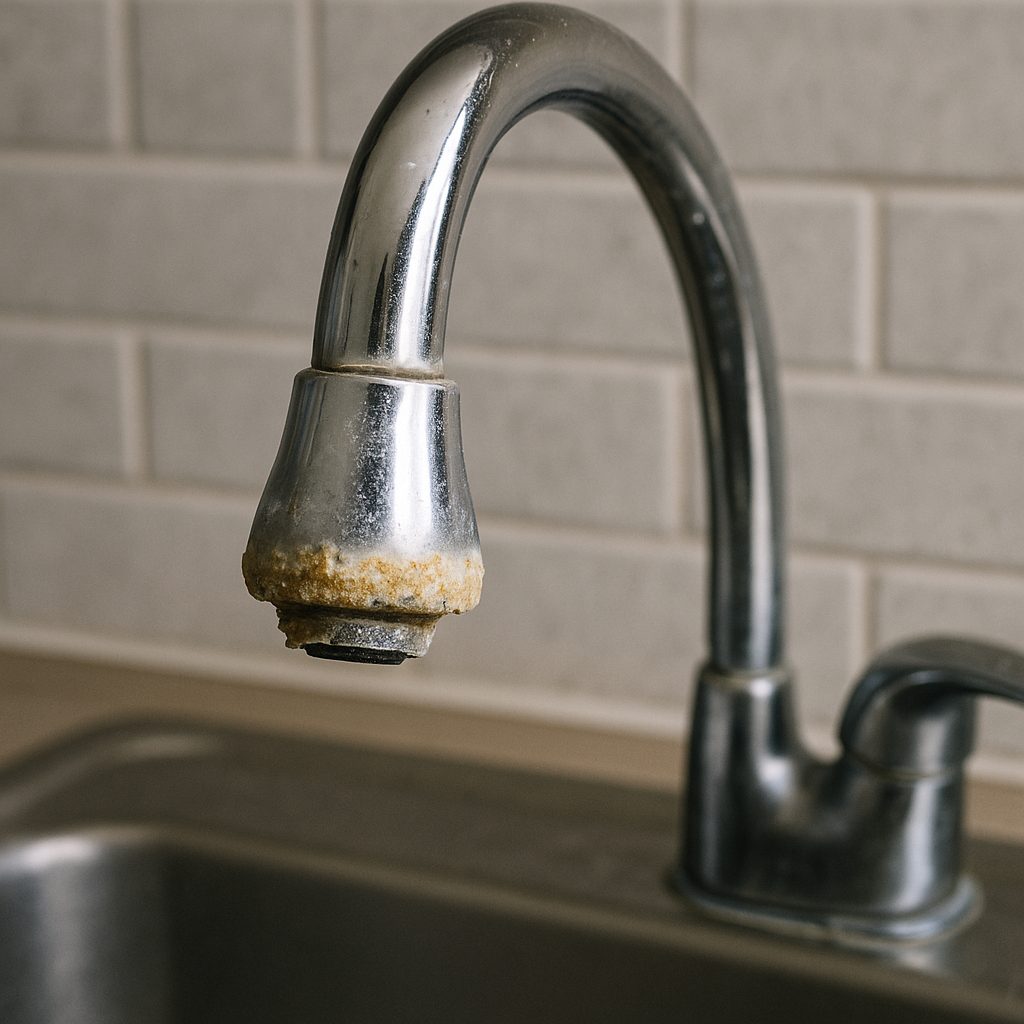
In France, more than one in two households is affected by hard water. Dry skin, damaged appliances, and soaring energy bills. The consequences are numerous. The water softener then becomes a solution to prevent the formation of calcium carbonate, also known as limescale.
However, traditional models, particularly those using salt, present several disadvantages: costly, complex to maintain, and not environmentally friendly.
That is why salt-free softeners are generating increasing interest. But are they really reliable? How do they work? What are their advantages and limitations in their use?
To help you make the right choice, here is our complete review of these water softeners, particularly Odouce by LAVIE: an effective, sustainable, and uncompromising solution.
Salt-based softeners: the old method that no longer convinces
Traditional salt-based water softeners have long been considered the most effective treatment against limescale formation. Their principle? An ion exchange: calcium and magnesium (responsible for limescale) are replaced by sodium, making the water softer while protecting your appliances.
But behind this result lie several disadvantages. First, softened water contains a significant amount of sodium, which alters its taste and makes it not recommended for consumption, especially for people suffering from hypertension or cardiovascular issues. Environmentally, the system discharges a large quantity of salty water with each regeneration, thereby contributing to the pollution of groundwater.
But that’s not all! These softeners also require regular maintenance accompanied by a significant budget (installation, salt, maintenance…) and can also make the water too acidic. In other words, it is a radical solution, but with consequences.
More ecological, more economical: salt-free softeners change the game
Unlike traditional water softeners, salt-free systems do not eliminate calcium or magnesium, which are the main components of limescale. They simply modify their structure, thus preventing limescale from settling and adhering. These minerals essential to your health are then preserved. The result: quality water, pleasant to drink every day, but also gentler on your pipes, appliances, and skin.
Their main advantage? A treatment without salt, without chemicals, and without complex maintenance. And the benefits do not stop there: these next-generation systems are suitable for all homes, even in small spaces.
Thus, unlike traditional models on the market, these softeners allow you to reduce your ecological impact while improving water quality. Simplified installation, long-term savings, and zero polluting discharge: an option that ticks all the boxes.
The right compromise between efficiency, comfort, and respect for the planet. But are they all so powerful against limescale?
Water softener: which anti-limescale system is right for you?
Today, there are several ways to get rid of limescale and thus the deposit of tartar at home: traditional salt-based softeners, CO₂ systems, magnetic or electronic devices, or more innovative alternatives like Odouce by LAVIE.
But not all work the same way and do not yield the same results. Installation, maintenance, impact on water quality, cost, ecology… This leads to major differences.
To clarify, here is a comparative table of the main anti-limescale solutions available on the market. Enough to sort through and choose the model that meets your needs.
|
Criterion |
Salt-based softener |
CO₂ system |
Magnetic or electronic anti-limescale |

Odouce – Salt-free softener |
| Effectiveness against limescale |
💧💧💧High: eliminates calcium ions | 💧💧Good: prevents crystallization | ❌Very low, ineffective on very hard water | 💧💧💧High: prevents limescale formation and cleans pipes |
| Curative effect (descaling) | ❌ No | ⚠️ Low | ❌ No | ✅ Yes! Gradual descaling of pipes |
| Change in water composition |
❌ Yes (addition of sodium in the water) | ❌ Yes (injection of CO₂) | ✅ No | ✅ No + preservation of minerals |
| Installation | ❌ Complex (requires a professional) | ❌ Complex (requires a professional) | ✅ Simple | ✅ Simple, without complex work. |
| Maintenance | ❌ Salt refills, regular maintenance | ❌ Regular maintenance | ✅ None or low | ✅ No maintenance required |
| Ecology | ❌ Brine discharges, salt and resin to change | ⚠️ Recharge and transport of CO₂ bottles | ✅ No discharge | ✅ No discharge, no consumables |
| Initial cost | €€€ | €€ | € | €€ |
| Recurring costs | €€€ | €€ | – | None! |
| Discover |
Detailed review of each anti-limescale system: what to remember
Not all anti-limescale solutions are equal, and their effectiveness depends as much on the technology as on your actual needs. Between maintenance, cost, ecological impact, and water quality, it is essential to understand what each system can (or cannot) do. To find out what the best anti-limescale filter is, here is our detailed opinion, device by device, to help you choose with confidence.
Odouce salt-free water softener
Odouce is a salt-free anti-limescale treatment designed by LAVIE, which uses a patented technology that is somewhat magical (but mainly very scientific) to soften water: turbulent galvanic polarization.
What does that mean? As the water passes through, a natural reaction modifies the very structure of limescale. This is where it gets interesting!
The movement of water inside the system triggers an ionization that releases a tiny amount of zinc. This zinc then interacts with the calcium carbonate present in the water to transform it into aragonite, a fine, light white powder that does not stick to pipes, heating elements, or surfaces. And this new form does not accumulate. It can be easily removed with a simple cloth or flows away with the water.
Of course, this process has no impact on your health or that of your family. Indeed, unlike a salt-based softener, Odouce does not alter the natural composition of the water: calcium and magnesium are preserved, making the water still drinkable, pleasant to consume, and beneficial for your body.
On the practical side, Odouce scores high:
- No salt, no electricity, no chemicals
- No maintenance required
- Quick installation, no need for complex work
- 5-year warranty and 6-month satisfaction or money-back guarantee
Odouce is the next-generation water softener: salt-free, uncompromising, and respectful of both your health and the environment.
“It is a solution with simple installation and no maintenance, thus reliable over time, as no adjustment is necessary throughout the product’s lifespan. Even though the efficiency is not 100% (86%), it is close to a traditional water softener: they are set to 95% to prevent variations in calcium and avoid producing corrosive water.
Like the CO₂ bubble solution, it preserves mineral salts and does not alter the quality of drinking water. One last advantage, but not the least, is the very low footprint of the device.
Finally, enriching water with zinc is a good idea for your immunity!”
Review by Pascal Nuti
Co-inventor of the LaVie water treatment process


CO₂ Softener
The CO₂ softener operates on a simple yet effective principle: injecting carbon dioxide (CO₂) into the water to lower the pH. This slight acidification allows for the transformation of limestone (calcium carbonate) into calcium bicarbonate, a soluble form that does not adhere to surfaces or appliances.
This process does not eliminate essential minerals but prevents their crystallization into scale. The water remains potable, rich in trace elements, and without altered taste.
Result: your equipment is protected (no corrosion), your energy consumption is optimized, and you reduce the use of anti-scale products.
However, this type of treatment to soften water requires:
- a professional installation (especially to calibrate the CO₂ dosage),
- regular gas refills, which can be heavy and costly,
- monitoring of the pH to avoid overly acidic water,
- a negative environmental impact due to CO₂ cylinders that generate polluting waste (refills and transport).
“This process is scientifically proven and very effective. Lowering the pH by CO₂ injection is operational and quick to install, although it requires installation by a plumber and fine-tuning.
Advantage: no pollution from the salt of traditional softeners nor waste of salty water, water that retains its drinking properties and mineral salts.
Disadvantage: the consumable remains expensive (and heavy…), and the fragility of the adjustment is common with traditional softeners: if the calcium load of the network decreases, the treated water becomes acidic and corrosive.”
Review by Pascal Nuti
Co-inventor of the LaVie water treatment process
The CO₂ system is therefore an effective choice against limescale, but it requires a certain technical follow-up, a regular budget, and its ecological footprint is detrimental.
Magnetic or Electronic Anti-Scale
Like previous devices, magnetic or electronic systems do not remove limescale from water. Their role is rather to modify its behavior to prevent scale from adhering to your pipes or appliances. In other words, limescale remains present but becomes less sticky.
Magnetic systems work thanks to magnets placed around the pipes. They are easy to install, affordable, and do not require major work or special attention. However, their performance depends on the strength of the magnets and the quality of the water. For example, if the water contains iron oxide (common with old pipes), the magnetic field can be disrupted and lose all effectiveness.
Electronic systems, on the other hand, use electrical impulses to create a more persistent magnetic field. They offer potentially more powerful protection but require an electrical supply and represent a higher investment. It should also be noted that their energy consumption remains low but imposes an additional long-term cost.
“Effectiveness not really scientifically proven. These magnets or electromagnets work in rare cases (less than 50%), without anyone really knowing why. Just read customer reviews of these products on online sales sites to realize this.
The advantage (when it works) is the simplicity of installation: no connection is necessary, just screw or clip the magnets or coil onto the water supply of the house.
Major drawback: powerful models can become very expensive. We approach the price of a classic water softener, or even more: up to several thousand euros for some.”
Review by Pascal Nuti
Co-inventor of the LaVie water treatment process
In summary: a simple device, but with very variable results, especially in areas where the water is very hard.

Criteria to consider before purchasing a water softener
Before investing in a water softener, it is essential to ask the right questions. Not all households have the same needs or constraints. Here are the criteria to examine to make a suitable and sustainable choice.
- The type of technology: do you want a device that completely removes limescale from the water (like a salt softener), or rather a system that simply prevents scale from adhering (like Odouce, or CO₂ or electronic systems)?
- The hardness of your water: the harder your water, the more effective the chosen product must be.
- The installation: are you looking for an easily installable system? Or are you willing to hire a professional for a more technical installation on the plumbing (and often more expensive)?
- The short and long-term budget: beyond the purchase price, consider maintenance costs (salt, CO₂, electricity, maintenance), the product’s lifespan, and potential savings on your bills.
- The ecological impact: Is it not preferable to buy a solution without consumables, without chemicals, and without polluting discharges? A responsible and crucial choice!
- The use of water: if you drink tap water, it is better to avoid options that alter its composition, such as salt softeners that add sodium.
A good softener is a treatment suited to your home, your lifestyle, your health, and your priorities. Take the time to compare these alternatives to find the answer that suits you.
The salt-free softener, today’s limescale solution
The salt-free softener is no longer an alternative: it is a complete solution. More environmentally friendly, easier to install, and more economical in the long term while retaining the essential minerals in water. In short, it meets the expectations of modern households, concerned about both their comfort and their ecological impact.
Certainly, it does not eliminate calcium from the water, but it prevents it from becoming incrusting/sticky in your pipes, appliances, and surfaces. A gentler, smarter, and more effective approach.
If you are looking for a high-performing system that is beneficial for health and the planet, the salt-free water softener clearly deserves your attention. And among them, Odouce ticks all the boxes.