 French
 Spanish
 German
 Italian
 English
Is there a water softener without drawbacks?

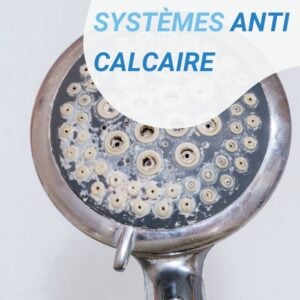
Many of you have water that is too hard and suffer from its disadvantages in your environment: limescale marks on taps, bathtubs, showers, and water heaters with a (too) short lifespan, as well as on your household appliances such as kettles or coffee makers.
Of course, this is a good sign; your water contains a lot of calcium ions, which are essential for our health.
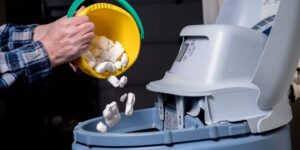
But too much is too much, and you have decided to do something to improve your daily life; perhaps you have already invested in a water softener, which replaces calcium ions with… table salt!
Thus, you have shifted the problem: you indeed have less hard water, but it is saltier, which you will discharge into the environment, not to mention the maintenance cycles of the machine, and the need to add salt regularly, as well as to check its settings frequently.
Also read: Water hardness: What is hard water and how to measure it at home?
The installation is also not very simple and often requires the intervention of a professional, not to mention that this device takes up space in your home.
Thus, the water output, although considered potable, loses much of its health benefits: no calcium and a lot of sodium (table salt) is not recommended for humans, quite the opposite.
These systems also remove a good part (if not all) of the chlorine that protects you against bacteria, and which is the main consumable of our LaVie water purifier.
Preserve the trace elements in tap water with LaVie

The UV-A LaVie® water purifiers operate without filters or maintenance and allow you to purify your tap water in 15 minutes.
They use an innovative, patented, and exclusive technology from LaVie®: the photolysis of chlorine by UV-A radiation.
This treatment allows for the reduction of chlorine and its derivatives, chemical compounds such as certain pesticides or traces of medications, as well as tastes and odors that can be found in tap water, while preserving 100% of the trace elements.
The result, which is of very high quality, allows you to definitively eliminate the consumption of bottled plastic water.
The carbon footprint associated with the production of the aluminum tube of the UV water purifier is neutralized within a few days of use compared to the equivalent consumption of water in plastic bottles.
But there are other solutions!
Our partner Ethic Process distributes in France Sialex rings, which work differently. Their action is contactless (just like LaVie) and requires no electricity consumption thanks to a thermodynamic process. They help maintain the liquid form of calcium and thus prevent the formation of incrusting limescale, and even clean the limescale accumulated in your pipes and water heaters for years.
Micro-vibrations are generated by this ring, which can be attached to your water supply in 5 minutes, between the water meter and your home. They are caused by differences in expansion between several materials, quartz and silicon, which react to minute variations in temperature. Thus, no electricity consumption is generated.
No maintenance is required, nor any adjustments or upkeep. Our partner, a true water professional for years, can allow you to test the product for 30 days to verify its effectiveness.
This product costs about the same as a water softener, but you will save on salt purchases and maintenance, resulting in approximately 70% savings over about 10 years! The icing on the cake is that the outgoing water retains all its trace elements and cannot be contaminated with bacteria or salt; it is completely assimilable by the body.
Thus, treated with LaVie, we obtain very high-quality water that can easily compete with bottled water; it is the solution we recommend in cases of excessively hard water.

More information on our partner Ethic Process's website
There are also CO2 water softeners that prevent drinking salty water. They work quite well, but you will need to replace the heavy CO2 bottles several times a year.

Some excerpts from articles on water softeners
Source Wikipedia
Issues, interest, and limitations
Moderately hard waters, unlike other highly mineralized waters, are not toxic, but they pose problems of biofilms, clogging of water pipes, plumbing, and household appliances (boilers, washing machines, irons, etc.) and wash textiles slightly less effectively (as they foam less).
Water that is too demineralized can conversely pose toxicological and ecotoxicological problems induced by the solubilization of toxic metals (for example, in the presence of old lead pipes or lead-containing solder that causes lead poisoning) and accelerated corrosion of certain pipes or containers.
The presence of certain additives in the water (even in low doses) can inhibit certain physico-chemical purification processes for water treatment and purification, including decarbonization (in the case of washing additives, for example).
A persistent legend is propagated, mainly by installers, indicating that the consumption of hard drinking water, also known as hard water, would be harmful to health. This claim is false, as demonstrated by research from the CNRS, which indicates that for a healthy person, the consumption of this type of drinking water is safe.
In March 2017, the cantonal laboratory of Thurgau (Switzerland) examined 23 sodium softener systems randomly chosen from private homes and schools. The drinking water was studied for its bacteriological purity and chemical composition before and after the salt softener. For 87% of the softeners (20 out of 23), the detectable number of microorganisms (bacteria and fungi) in the drinking water at least doubled! And in the case of six softeners (26%), the maximum legal value of germs in drinking water was even exceeded by 3 to 600 times! 90% of the softeners were also poorly adjusted, with a residual hardness of less than 15 °fH, half of them even being below 7 °fH, thus posing a risk of corrosion of pipes and household appliances.
Source: Water Information Center
It is strongly advised against connecting it to the cold water supply system. Care must be taken to strictly follow the installation and maintenance instructions, at the risk of degrading the sanitary quality of the tap water.
Source Veolia Water
Using a water softener for your household appliances can prevent scaling of your installations if your water is very hard. However, it is important not to soften water intended for drinking or cooking. If you have one, we encourage you to follow the maintenance recommendations to avoid altering the sanitary quality of the water we distribute.
Source UFC Que Choisir
A water softener is installed at home to combat limescale. However, a significant portion of homes equipped with one are supplied with drinking water that has a hardness between 18 and 27 French degrees (°f), which is classified as soft to moderately hard.
The necessity to soften is not obvious. Only water that is truly hard, that is 35 °f or more, can justify the use of a softener. Our analyses focused on eleven homes equipped with a softener.
Hardness and Aggressiveness: Corrosion Risks
Whether justified or not, the function of a softener is to soften the water. All of them do this (but barely in Arpajon), meaning they remove essential minerals, calcium and magnesium, from drinking water. They fulfill their contract, but this is precisely what poses a problem. Until 2007, drinking water was not to be softened to less than 15 °f for distribution. The new decree did not retain this requirement, but it imposes that the water be “in calco-carbonic balance or slightly incrusting,” which amounts to about the same since softened water is often aggressive. This is indeed what our analyses demonstrate. Water arrives at homes in balance or slightly incrusting, which meets the requirements of drinking water standards. However, once softened, it becomes aggressive in eight of the eleven equipped homes.
This is problematic, as this aggressive softened water presents serious disadvantages. Certainly, it does not scale pipes or appliances unlike hard water. But, conversely, it attacks them. The risks of corrosion are therefore significant: this water can perforate a pipeline or burst a hot water tank. Moreover, it becomes laden with metallic particles when it attacks materials. If it is iron, it is colored and unpleasant but not too serious. When it comes to lead from old pipes or cadmium from soldering, however, it is toxic.
Calcium and Sodium: It Loads with Salt!
Softening water means removing its calcium, and not just its scaling limescale, despite what professionals claim. It is primarily when heated, starting at 60 °C, that limescale forms incrusting deposits. Cold water may leave traces but does not really scale. It contains calcium, which is an excellent thing. Calcium intake is indeed essential for the human body, and water has an incomparable advantage in this regard: it allows for good absorption without adding any extra calories, unlike all foods recommended for their calcium content. Children and adolescents have an imperative need for it, as it is necessary for bone construction. Pregnant women also need it, and calcium is valuable in the fight against osteoporosis.
Additionally, it proves useful against kidney stones, contrary to a widely held belief. Therefore, removing calcium from water is an heresy, as we already explained last year regarding filter jugs. Unfortunately for users’ health: the softener replaces this precious calcium with salt! There is no escaping it; it is its principle of operation. Except for a softener that softens little, that of Arpajon, all devices load the water with sodium, and two of them even exceed the drinking water reference set at 200 mg/l. For individuals on a strict salt-free diet, drinking softened water quickly exceeds the recommended maximum dose of 500 mg of sodium per day. Drinking sodium-laden water is also inappropriate when one is in good health, given the widespread excess of salt intake: an average of 8.5 grams per day, while health authorities recommend not exceeding 6 grams. Even if water contributes little to salt intake compared to bread, cold cuts, cheeses, and industrially prepared dishes, adding sodium is a true nonsense from a nutritional and health perspective.
Microbiology: Addition of Microbes
Water that passes through a resin is more exposed to bacterial growth than tap water. The softener can therefore promote the multiplication of microbes, although this is not a general rule. However, the problem concerns several tested devices. And one of them (Arpajon) adds highly discouraged germs to the water.
Conclusion: There is No Benefit
In conclusion, very softened water becomes aggressive, devoid of calcium but with sodium. Softeners do not improve the quality of drinking water – they degrade it! A home may require a softener if the water is very hard, but the kitchen circuit must always remain outside the treatment. Furthermore, the device must be set to maintain 15 °f of hardness to reduce the aggressiveness of softened water.
Armed with these clarifications, you will be able to choose your water softener sensibly, according to your needs and uses.
To your health!
Also read: A water softener, why do it?

Article written on 11/08/2021 by Pascal Nuti – CIO Solable – Passionate about energy, I am constantly seeking new targets for improvement by exploring cross-cutting paths using innovative methods.

Find all our articles about water
Do you want to stay updated on our articles about water?
Sign up below for our Newsletter
and receive -5% on your first order!