 French
 Spanish
 German
 Italian
 English
Limescale on the faucets. A shower losing pressure. A kettle whitened despite repeated descaling…
You might be thinking it’s time to invest in a water softener? Beware: the displayed price is rarely the price you will pay!
Indeed, the purchase price represents only part of the budget to consider. Depending on the chosen technology (salt water softener, salt-free, or CO₂), one must also take into account installation costs, equipment maintenance, consumables, electricity consumption, and of course, the lifespan of the devices.
And depending on the hardness of your water, not all will necessarily be suitable for your household.
So, how much should you actually budget? And which solution offers the best value for money?
What is the price of a water softener according to its technology?
Comparing only the purchase price of a water softener is a bit like choosing a car without looking at its fuel consumption. What really matters is its long-term cost.
Installation, accessory maintenance, consumables, electricity consumption, lifespan, reduction of limescale and tartar…
These are all criteria that can turn a good deal into a failed investment. Here are the main elements to compare on these devices before making your choice.
| Criteria | Salt water softener | CO₂ softener | Salt-free Odouce softener |
| Purchase price | €500 to €8000 | €1500 to €4000 | €499 |
| Installation | €300 to €1000 | €300 to €1000 | Simple, no plumber required |
| Maintenance | €200 to €300/year | €200 to €300/year | None |
| Consumables | Salt | CO₂ refill | None |
| Annual cost | ≈ €400 | ≈ €400 | €0 |
| Estimated lifespan | 10 years | 10 years | 10 years |
Purchase price of a water softener: why such discrepancies?
The price of a water softener can vary from €500 to over €8,000. This leads one to think that the most expensive is the most effective. Not necessarily. The difference can be explained by other criteria.
The first is the technology used. A salt water softener, a CO₂ model, or a salt-free softener do not operate in the same way and do not incorporate the same components. Some require a salt tank, volumetric or timed regeneration, ion exchange resins, or a CO₂ injection system, while others rely on a simpler design to combat limescale.
The price also depends on the treatment capacity, flow rate, quality of materials, but also on the features offered, such as an electronic control screen, automatic settings, or a connection to a mobile application.
Finally, the brand as well as the included services (delivery, installation, or first maintenance) can further increase the price.
Remember one thing: a high purchase price does not guarantee a better investment. The true cost of a water softener is calculated over several years.
Installation cost of a water softener: need for a professional?
When comparing the price of water softeners, one must also consider the cost of its installation. Again, the devices are not equal in this regard.
Salt water softeners, that is, those with sodium chloride, are generally the most demanding to install. They must be connected to the water supply, equipped with a valve for volumetric regeneration, have a wastewater outlet, and an electrical supply.
As a result, the intervention of a plumber is essential, which represents a budget ranging from €300 to €1,000.
CO₂ models also require the capabilities of a professional. Their injection system requires a specific connection and appropriate commissioning.
In contrast, salt-free water softeners are much simpler to install. Some solutions, like Odouce, can be installed directly on the main pipeline, without electrical supply, without drainage, and of course, without needing a plumber.
Therefore, do not rely solely on the price on the label. Installation must be taken into account.
Maintenance of a water softener: how much should you budget each year?
Now is the time for everything to come together! The true cost of a water softener begins once it is installed.
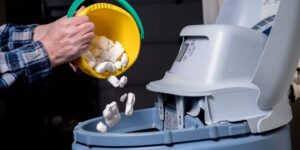
Salt water softeners are the most demanding in terms of maintenance. For example, the tank must be regularly replenished with salt, and the ion exchange resins must be replaced to remain effective against limescale.
Additionally, there are usually two annual visits from professionals, which represents an investment of between €200 and €300 per year.
In total, the budget can easily reach €400 each year, or €4,000 over ten years.
CO₂ systems also require attention throughout the year. CO₂ refills must be replaced regularly, and depending on the models, a check may be recommended to ensure the proper functioning of the device.
In contrast, salt-free water softeners require neither salt nor CO₂ refills, thus no maintenance. With a solution like Odouce, you immediately know what you are paying for.
The purchase price is a one-time expense. The maintenance costs of the softener, however, recur every year. This is where your budget starts to take a hit.
Which water softener offers the best value for money?
Salt-free water softeners, like Odouce, offer the best value for money today. Why? Because they are the most economical in the long term.
A water softener accompanies you for years against limescale. Its installation cost, maintenance, consumables, electricity consumption, and lifespan have a much greater impact on your budget than the few hundred euros that separate two models at purchase.
Salt water softeners remain effective against limescale and tartar, but they also involve a salt tank to refill, ion exchange resins to change, professional visits, and water and electricity consumption. In other words, costs that recur year after year.
CO₂ systems are similar. They still require CO₂ refills and regular monitoring of the equipment.
But the Odouce water softener goes further. It requires neither consumables, nor maintenance, nor electrical supply. Unlike some water treatment technologies, it also retains the minerals naturally present in the water, such as calcium and magnesium, without the need for remineralization. Its startup is also simpler, which helps avoid installation costs.
As a result: a sustainable investment, a controlled budget, and quality softened water.
To discover more about the advantages and capacity of these solutions, consult our article dedicated to reviews of salt-free water softeners.
Odouce: the economical and ecological water softener
What is the best salt-free softener? The answer is simple: Odouce brings together everything one expects from a modern water softener.
Offered at €499, Odouce has the capacity to reduce up to 76% of tartar while preserving the minerals naturally present in the water, such as calcium and magnesium. Unlike some water treatment technologies, there is therefore no need to remineralize the water after it passes through the device.
Its installation is also simple, which helps limit intervention costs.
In addition to being economical, the Odouce water softener is 100% recyclable.
As a result: softened water at the tap, without the constraints of traditional systems.
In the end, you invest only once in your water softener! And for even more peace of mind, Odouce is guaranteed for 5 years.
This is what makes Odouce an economical, effective, and more environmentally friendly solution for sustainably combating limescale and tartar.