 Français
 Español
 Deutsch
 Italiano
 English
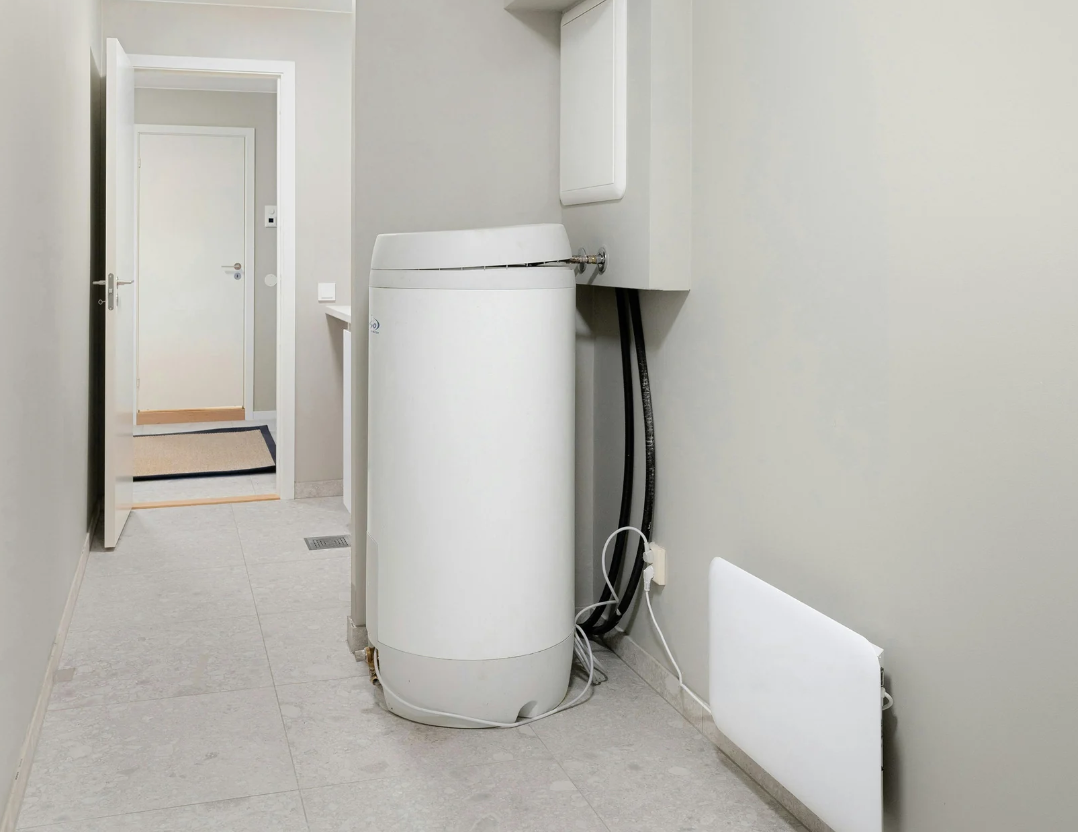
Limescale in the water heater can quickly become a problem. Longer heating times, increased energy consumption, breakdowns… As it accumulates, limescale can become costly!
Fortunately, there are solutions to limit its formation, such as OChaude from LaVie, which protects the water heater, or ODouce, which acts on limescale throughout the home.
But how can you tell if your equipment is already scaled? How to remove limescale from a water heater? And above all, what is the best anti-limescale system for your installation?
In this article, discover how to recognize a scaled water heater, effectively descale it, and prevent the appearance of limescale.
What are the signs of a scaled water heater?
Several signs can reveal a scaled water heater:
- Less hot water: your supply runs out faster or the water is no longer hot enough.
- Longer heating time: limescale hinders heat transfer and slows down heating.
- Unusual noises: crackling, banging, or rumbling during heating.
- Increased electricity bill: your device consumes more to heat the water.
- Lower hot water flow: limescale can clog pipes or fittings.
But be careful, these signs are not necessarily related to limescale! A poorly set thermostat or a defective heating element can also explain these problems.
To be sure, check the hardness of your water (TH). The higher it is, the greater the risk of scaling. A professional can then examine your device to confirm the presence of limescale.
How to descale an electric water heater?
How often should you descale your water heater?
The frequency of descaling a water heater mainly depends on the hardness of the water (TH), the heating temperature, and its usage.
In general, descaling is recommended:
- Every 1 to 2 years if your water is hard or very hard (from 20 °f).
- Every 2 to 3 years if your water is soft or low in limescale (less than 20 °f).
These timeframes are indicative and may vary depending on the model of the water heater. It is best to follow the manufacturer’s recommendations.
And if signs of scaling appear sooner, do not wait to have your device checked.
What are the steps to follow to descale your water heater?
To descale an electric water heater, you need to empty the tank, remove the limescale deposits, and clean the accessible components. Here are the main steps:
- Turn off the electricity at the electrical panel and let the water cool down.
- Close the cold water supply to the water heater.
- Drain the tank by opening a hot water tap and the drain valve.
- Remove the protective cover, disconnect the necessary connections, and then remove the flange or heating element depending on the model.
- Remove the accumulated limescale from the tank.
- Clean the scaled heating element and check the condition of the protective anode.
- Reassemble the components with a new gasket, following the manufacturer’s instructions.
- Fill the tank by reopening the cold water supply and leaving a hot water tap open to release air.
- Check for leaks, then restore power once the tank is completely filled.
Warning, this operation requires plumbing and electrical skills!
If in doubt about the procedures, it is better to call a professional, especially if your water heater is old or heavily scaled.
How to sustainably protect your water heater from limescale?
Descaling your water heater is good, but preventing limescale from accumulating again is even better! For this, several solutions exist. Depending on your needs, you can protect only your water heater or act against limescale throughout your home.
Install a limescale filter to stop limescale
To limit the formation of limescale in your appliance, you can install a limescale filter for water heaters directly on its cold water inlet.
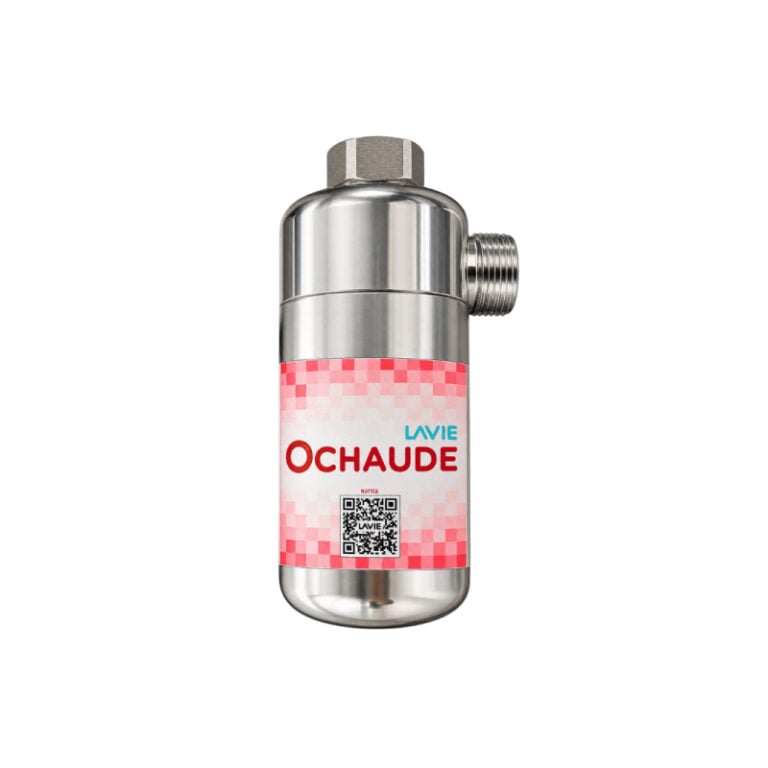
This is precisely the role of OChaude from LaVie. Its cartridge gradually releases an active ingredient based on maleic acid, chitosan, and hydroxyapatite that prevents calcium carbonate from crystallizing when the water heats. In other words, limescale does not form and the water retains its calcium and magnesium.
Result? Up to 99.9% reduction in limescale formation, with several benefits:
- A protected water heater, to extend its lifespan.
- Less limescale deposits on the heating element, in the tank, and on hot water appliances: faucets, shower walls, bathtub, and pipes.
- A salt-free solution, compatible with all hot water tanks, as well as with washing machines and dishwashers.
- More comfort in the shower, with less tightness and softer skin and hair.
- Simple maintenance, with a cartridge to be replaced every year or after 100 m³ of treated water.
Install a limescale system to protect the whole house
Do you want to protect your water heater, as well as your pipes, faucets, and appliances? In that case, a descaling system installed on the main water supply allows for action throughout the home.
This is the principle of ODouce from LaVie, a salt-free softener that uses patented turbulent ionization technology. This transforms calcium carbonate into aragonite, a powdery form that does not adhere to surfaces.
Its main advantages:
- Up to 76% reduction in scale formation, according to the results of scientific tests.
- Protection for the entire installation, from the water heater to the pipes and appliances.
- Preventive and curative action, to limit new deposits and gradually reduce the existing scale.
- Without salt, without chemicals, without electricity, and without cartridges to replace, with a claimed lifespan of 10 years.
And unlike a traditional salt water softener, ODouce does not remove minerals from the water.
To understand the differences between these technologies, check out our comparison of salt-free water softeners.

Anti-limescale filter or water softener to protect your water heater?
To properly protect your water heater from limescale, several solutions are available. It all depends on the extent of the desired action, from just the water heater to the entire house.
- OChaude specifically protects the water heater. Installed on its cold water inlet, it reduces limescale formation in the tank and on hot water appliances by up to 99.9%. This preserves its performance and lifespan.
- ODouce protects the entire house. Installed on the main water inlet, it limits new deposits and gradually eliminates existing limescale without salt, without chemicals, without electricity, and without special maintenance.
- If you have very hard water, the best solution is to combine both protections, which are 100% compatible.
- The traditional salt water softener reduces water hardness by removing some calcium and magnesium. However, it requires salt, water to clean its resin, and regular maintenance. Remineralization may also be necessary, increasing costs.
To know what to do against hard water, the ODouce and OChaude association offers complementary protection. The first acts throughout the house, the second targets the water heater.
The right reflexes to avoid scaling of the water heater
Properly set the temperature of your water heater to limit scale
Set your water heater between 55 and 60 °C to limit the formation of scale and preserve the sanitary quality of the water. A temperature that is too high promotes the deposition of lime on the heating element and in the tank.
This setting has three advantages:
- Less scale on the equipment, thanks to a controlled temperature.
- Reduced energy consumption by avoiding unnecessary heating of the water.
- Better sanitary safety by limiting the proliferation of bacteria, particularly legionella.
But be careful, this setting does not eliminate limescale! It does not change the hardness of the water or its calcium and magnesium content. Regular maintenance remains essential.
Regularly maintain your water heater to preserve its performance
A well-maintained water heater is a device that works better and lasts longer.
To limit the accumulation of limescale and avoid premature wear, a few actions are essential:
- Check the safety group by regularly operating its drain lever, according to the manufacturer’s recommendations.
- Have the thermostat and the heating element checked in case of malfunction or signs of scaling.
- Plan for regular descaling, depending on the hardness of your water, your usage, and the manufacturer’s recommendations.
Preventive maintenance remains the best reflex to preserve the performance of your equipment and limit costly repairs.
Why does limescale accumulate in a water heater?
Limescale accumulates in a water heater when hard water, naturally rich in calcium and magnesium, is heated.
Under the effect of heat, some of the calcium forms solid calcium carbonate, in other words, limescale. This gradually deposits on the heating element and at the bottom of the hot water tank.
Three factors accelerate this scaling:
- The hardness of the water (TH) : the more calcium and magnesium the water contains, the greater the risk of limescale formation.
- The heating temperature : water heated to high temperatures promotes the precipitation of limescale.
- The consumption of hot water : the more the water heater operates, the more it receives water containing minerals that can form limescale.
What are the consequences of limescale on a water heater?
The accumulation of limescale in a water heater has direct consequences on its operation and lifespan. Among the main issues:
- Increased electricity consumption: limescale prevents heat from spreading properly, which increases energy needs.
- Longer heating time: water takes longer to reach the desired temperature.
- Premature wear: the heating element and other components deteriorate more quickly.
- Risk of breakdown: limescale deposits promote malfunctions and costly repairs.
- Reduced lifespan: your device needs to be replaced sooner than expected.
The more limescale accumulates, the less efficient your water heater becomes. This is why it is important to act before the deposits become too significant.