
 French
 Spanish
 German
 Italian
 English
Drinking water that contains traces of lead, mercury, or arsenic? That reassures no one. However, even though tap water is the most controlled food in France, some heavy metals can still be present.
Old pipes, corrosion of networks, industrial and agricultural activities… The sources of contamination still exist.
The problem? Not all water filters are capable of eliminating these pollutants. Some systems mainly improve taste, without actually retaining the contaminants.
So, which filter to choose against heavy metals?
In this article, we compare the main filtration technologies to help you identify the most effective, but also the most sustainable solutions.
Why is heavy metal filtration essential?
A glass of water with small amounts of heavy metals every day? No, we don’t want that situation. Lead, arsenic, mercury, cadmium, aluminum… These contaminants can still be present in tap water, particularly due to old pipes, corrosion of networks, or certain industrial and agricultural activities.
The problem is that these elements accumulate in the body. Even at low doses, repeated exposure can have health consequences. Cadmium, for example, is known for its toxic effects on the kidneys and bones, and it is classified as a carcinogen. Others can also affect the nervous system and certain sensitive organs.
But they are far from being the only pollutants present. Pesticides, PFAS, sediments, microplastics, chemical residues… The quality and composition of water raise many questions.
A situation that drives many households to seek how to filter tap water effectively on a daily basis.
What are the standards for heavy metals in drinking water?
Tap water is the most monitored food in France. The heavy metals present in drinking water are therefore subject to regular checks to comply with strict health thresholds.
The allowed limits are set at:
- Lead (Pb): 10 µg/L
- Mercury (Hg): 1 µg/L
- Cadmium (Cd) : 5 µg/L
- Arsenic (As) : 10 µg/L
- Nickel (Ni) : 20 µg/L
- Chrome (Cr) : 25 µg/L, with a tolerance up to 50 µg/L until 2035
But beware, water that meets standards does not necessarily mean water free of pollutants. Traces may still be present, and some occasional exceedances exist.
It should be noted that water is not the only source of exposure to these particles. For example, cadmium in water is very closely monitored, but nearly 90% of exposure comes from our diet.
Purifying your water remains important, but food also plays a major role. Consuming more organic products can already help reduce this exposure. They contain on average 48% less cadmium than foods from conventional agriculture.
How to check if your water contains heavy metals?
The problem with heavy metals is that they are invisible. And it’s impossible to know if your water contains them just by taste, smell, or color. And they are far from being the only contaminants that can be found in water. Pesticides, PFAS, sediments, microplastics, pharmaceutical residues… Other pollutants, just as harmful, may be in your glass.
So, how can you know what’s really in your tap water?
Several solutions are available to you. You can already check your municipality’s health reports, available at the town hall. Interactive maps, like the one on the Dans Mon Eau website, also allow you to see more clearly the quality of the water in your area.
And if you have any doubts, the simplest solution is to use a testing kit or to call on a professional for more accurate results.
Which systems really filter heavy metals from water?
Not all tap water filters are in the same category. Some mainly improve taste by reducing chlorine, but is that enough? Others are capable of filtering heavy metals, PFAS, sediments, pesticides, and microplastics.
To help you see more clearly, here is a comparison of the main filtration technologies.
| Élément filtré, réduit ou éliminé | Carafe filtrante classique | Filtre sur robinet | Osmoseur |
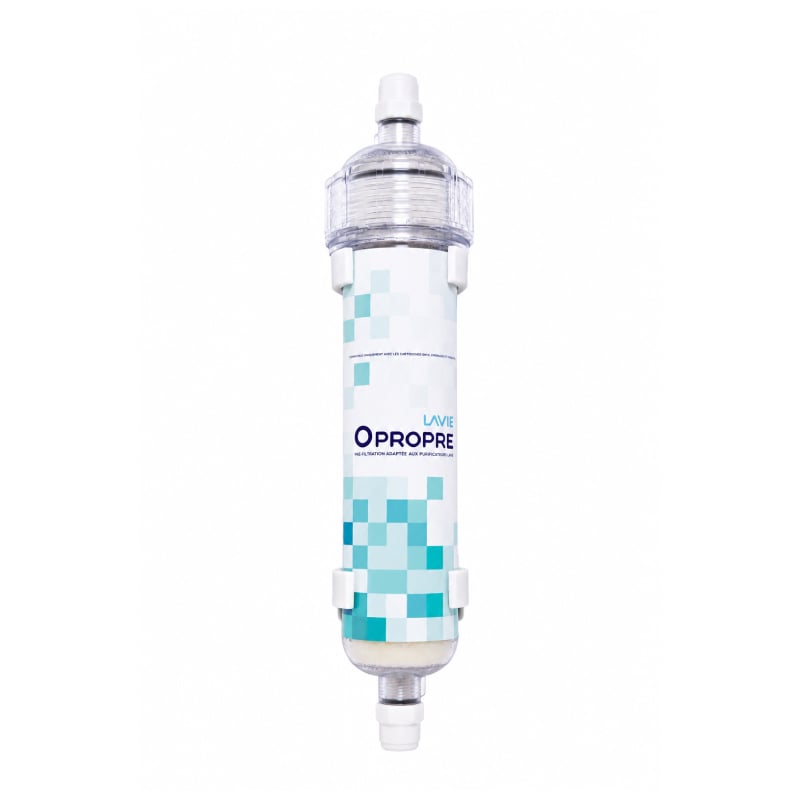 Filtre sous évier Opropre |
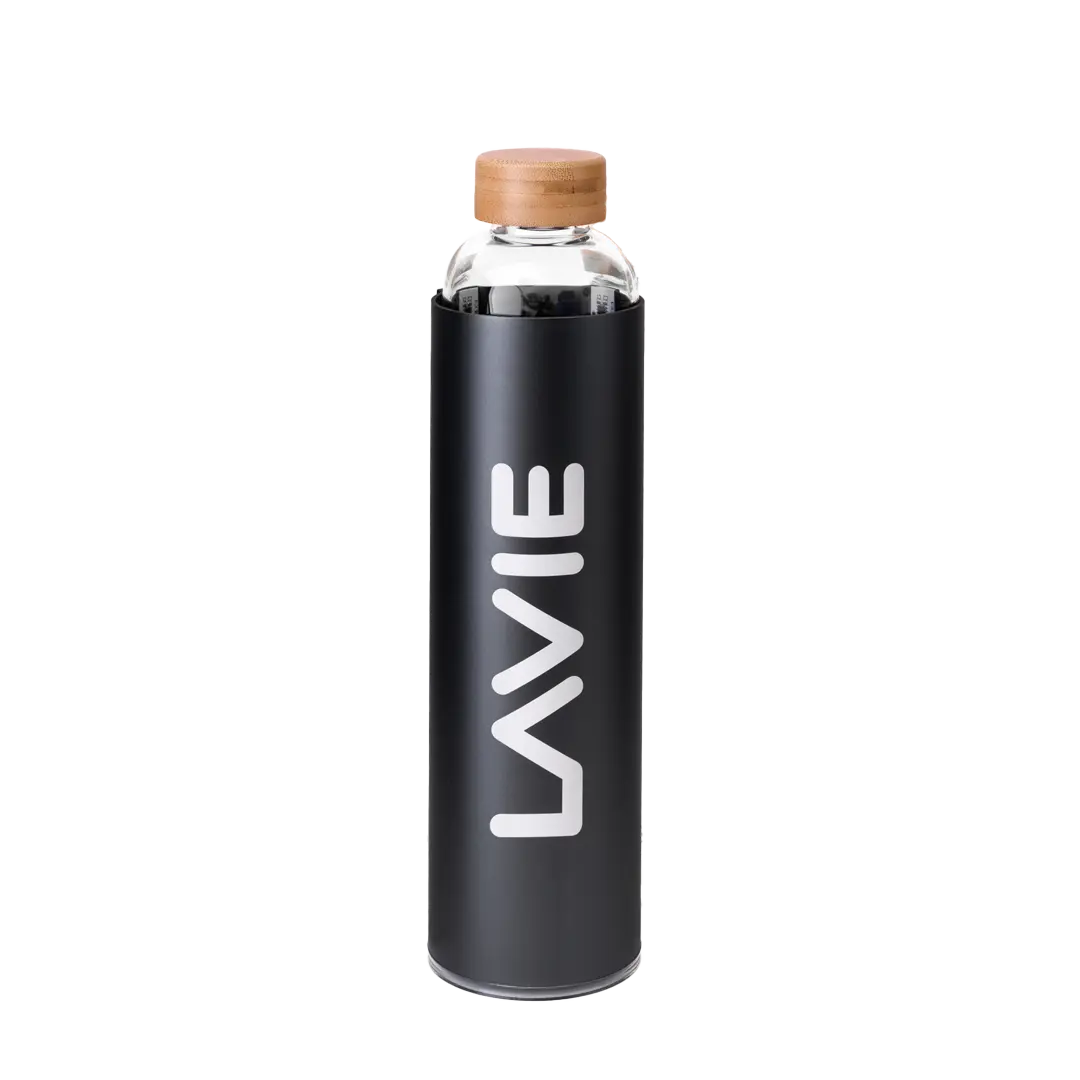 Purificateur LAVIE |
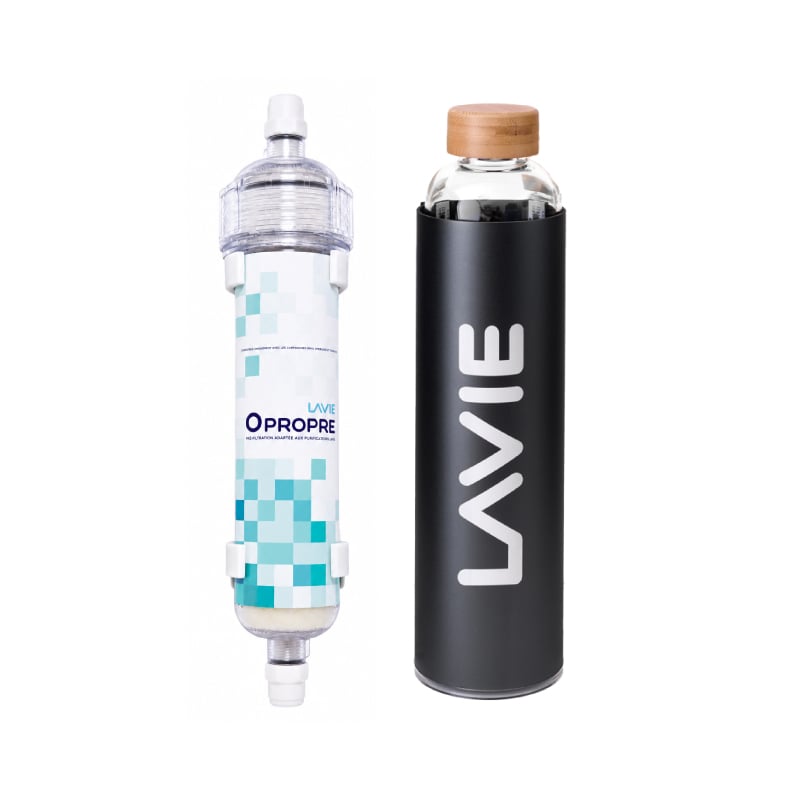 Pack sérénité (Opropre + LAVIE PURE) |
|---|---|---|---|---|---|---|
| Chlore | ✅ | ✅ | ✅ | ✅ | ✅ | ✅ |
| Sédiments | ✅ | 🟠 | ✅ | ✅ | ❌ | ✅ |
| Bactéries | ❌ | ❌ | ❌ | ❌ | ✅ | ✅ |
| Bactéries | ❌ | ❌ | ❌ | ❌ | ✅ | ✅ |
| Médicaments | ❌ | ❌ | ✅ | ✅ | ✅ | ✅ |
| Pesticides | ❌ | ❌ | ✅ | ✅ | ✅ | ✅ |
| Métaux lourds | 🟠 | 🟠 | ✅ | ✅ | ❌ | ✅ |
| PFAS | ❌ | ❌ | ✅ | ✅ | ❌ | ✅ |
| Microplastiques | ❌ | ❌ | ✅ | ✅ | ❌ | ✅ |
| Conservation des minéraux bénéfiques |
❌ | 🟠 | ❌ | ✅ | ✅ | ✅ |
| Découvrir | Découvrir |
Découvrir |
Opropre: an effective and sustainable filtration
The Opropre under-sink filter is one of the most effective solutions. Everything happens at the source: the water is filtered even before it comes out of the tap.
Its power relies on an innovative combination: a high-performance activated carbon paired with a specific resin.
Result: a filtration capable of retaining numerous pollutants and chemicals, such as heavy metals, PFAS, pesticides, and microplastics.
And unlike various offers, the Opropre technology preserves the essential minerals for your health.
Another advantage of this treatment: its durability. The cartridge is replaced every six months and operates with a deposit logic to recycle it by eliminating the concentrated pollutants inside.
To go further, check out our comparison of under-sink water filters to better understand the use of Opropre.

Filtered carafes: an insufficient solution, or worse
Filtered carafes have invaded the market. Easy to use, yes. Really effective against heavy metals? No.
Most models rely on a classic activated carbon. Sufficient to improve the taste of water by removing chlorine, but much less effective against more complex pollutants such as heavy metals, PFAS, or microplastics.
And that’s not the only problem.
- A low discount depending on the product
- Filters to be replaced very regularly
- A risk of bacterial nesting if the carafe is poorly maintained
- An accumulation of waste related to disposable cartridges
TheUFC-Que Choisir was already warning about the limits of these devices in an article with a straightforward title: “Useless, or even worse! ”. A phrase that summarizes the problem quite well.
Osmosis system: an extreme treatment with many limitations
On paper, reverse osmosis is impressive. Thanks to its ultra-thin membrane, it is one of the most efficient systems for filtering heavy metals and many other pollutants.
But this “extreme” purification has several limitations.
- Demineralized water: calcium, magnesium… Essential minerals are also removed.
- A cumbersome device: regular maintenance and replacement of the filter cartridge and costly installation.
- A significant waste: for one liter of filtered water, 2 to 4 liters of water are rejected.
- An microplastic filter overrated: Forbidden Zone showed results much lower than expected on some reverse osmosis systems, with a reduction of 60% of microplastics compared to the promised 99%.
Technically, reverse osmosis remains very effective. But on a daily basis, this solution can quickly become heavy, expensive, and polluting.
What is the best filter against heavy metals in tap water?
Each filtration system is different. Some solutions only improve the taste of drinking water, while others are capable of retaining a much wider spectrum of particles.
Filtered pitchers quickly show their limits. Reverse osmosis systems, on the other hand, offer very advanced purification, but with several constraints.
For its part, Opropre checks all the boxes. It effectively filters heavy metals and many other pollutants while retaining the essential minerals for your health. All of this, directly at the source, without complicated installation or complex maintenance.
In other words, Opropre improves the quality of your water on a daily basis.
And if PFAS also worry you, our guide on the best water filter against PFAS will help you see much more clearly.