 French
 Spanish
 German
 Italian
 English
Water is a vital resource for health and well-being, but its quality can vary significantly by region. Tap water, although generally safe, may contain impurities and contaminants that affect its taste, odor, and potentially its safety. This is where the importance of a water filter comes into play. You will also find in this comparison the list of best tap water purifiers on the market.
By effectively removing unwanted particles and contaminants, a water filter not only improves the quality of water but also enhances the health and comfort of your home.
Installation, Filtration, and Maintenance
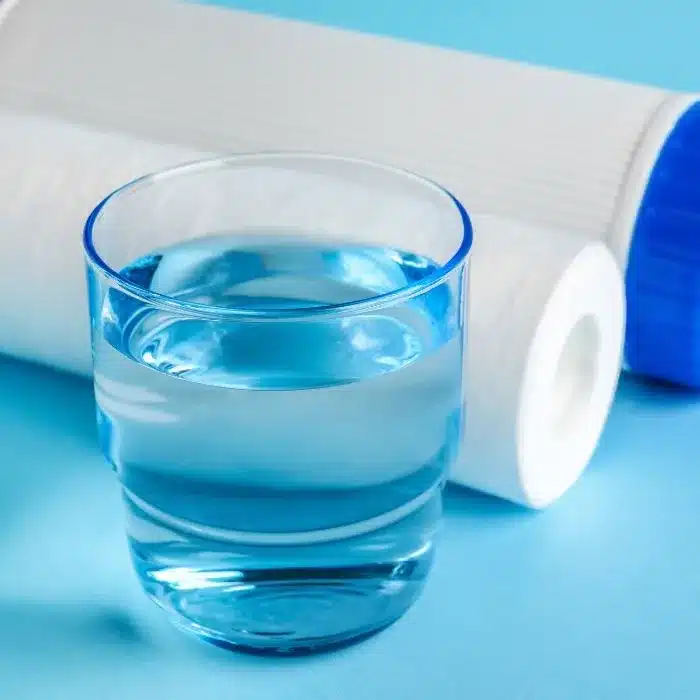
Installing a tap water filter is a straightforward and affordable process, providing immediate access to purer water. While tap filters are easier to install and maintain than complex filtration systems, there is also the option of water purifiers without physical filters that represent an even more significant advancement.
In this article, we will explore the various options for tap water filtration available, from choosing the right filter to tips for installation, first use, regular maintenance, and troubleshooting common issues.
We will also highlight why LAVIE UV-A purifiers offer a superior solution in terms of both efficiency and ease of use.
Choosing the Right Water Filter
The market offers a variety of drinking water filters, each designed to meet specific needs. Understanding the different types available is essential for selecting the filter best suited to your situation.
Types of Water Filters
Tap filters: These filters attach directly to your existing kitchen faucet. They are easy to install and ideal for filtering large quantities of water without major plumbing modifications. + photo
Under-sink filters: These systems are installed under the sink and require a more complex installation. They generally offer superior filtration capacity and are less visible than tap-mounted models.
Other options: There are also filter pitchers (like Brita carafes) whose filter cartridge contains activated carbon, whole-house filtration systems, and refrigerator filters, each with its specific advantages.
Also read: Is the filter pitcher a good idea?
Tap Water Purifiers Without Filters
However, a major innovation in the field of water filtration is filterless technology. We are referring to tap water purification systems that use, for example, UV, UV-A, or UV-C rays (UV-C are only sterilizers). These systems allow for the reduction of various contaminants by simply exposing your tap water to UV light. These devices are revolutionizing water filtration by providing effective purification without the need to regularly replace cartridges or filter elements.
As a reminder, UVA and UVC rays are two types of ultraviolet (UV) radiation emitted by the sun, but they differ in their properties and effects on Earth. UVA rays reach the Earth’s surface and are responsible for a slight tan on our skin (our sun capital remains a limited quantity…), while UVC rays, which are more dangerous, are absorbed by the ozone layer and do not reach the Earth.
Tips for Choosing the Right Filter
When selecting your water filter, consider the following factors:
- Local water quality: Test your water to identify specific contaminants you wish to filter. This step is essential to determine the type of filtration you need. [Link to article on water quality]
- Frequency of use: Consider the amount of water you consume daily. More frequent use may require a system with a larger filtration capacity.
- Space and design: Take into account the available space under your sink or around your faucet, as well as the aesthetics of the kitchen. A compact and stylish system can be an asset, especially in modern kitchens.
- Budget and maintenance cost: Assess the initial cost of the filter and the expenses for replacing cartridges or filter elements. In this regard, it is interesting to note that filterless technologies, while potentially representing a slightly higher initial investment, offer substantial savings in the medium term in terms of maintenance costs, thus eliminating the need for frequent cartridge replacements.
Materials Needed for Installation
Installing a traditional water purification system may require various tools and materials. Here is a list of what you might need:
Tools and materials
- Wrenches to adjust plumbing fittings.
- Teflon tape to ensure the sealing of fittings.
- Drill, if an under-sink installation is required.
Screwdriver for minor adjustments.
Preparation Before Installation
- Ensure to turn off the water supply.
- Clean the workspace to avoid contamination.
Under-Sink Tap Water Filter Installation

For those who prefer a visual demonstration over a lengthy explanation, here is a video that clearly and concisely illustrates the process of installing a water filter under a sink.
First Use and Adjustments
After installation, it is important to know how to use and adjust your filtration system.
Instructions for First Use
- Let the water run through the filter for a few minutes to eliminate initial impurities.
Adjusting Water Flow and Pressure
- Adjust the settings according to the manufacturer’s instructions to achieve the best balance between flow and filtration.
Regular Filter Maintenance
Regular maintenance is crucial to ensure the efficiency and longevity of your filtration system.
Maintenance Frequency
- It is recommended to check and clean your filtration system every month.
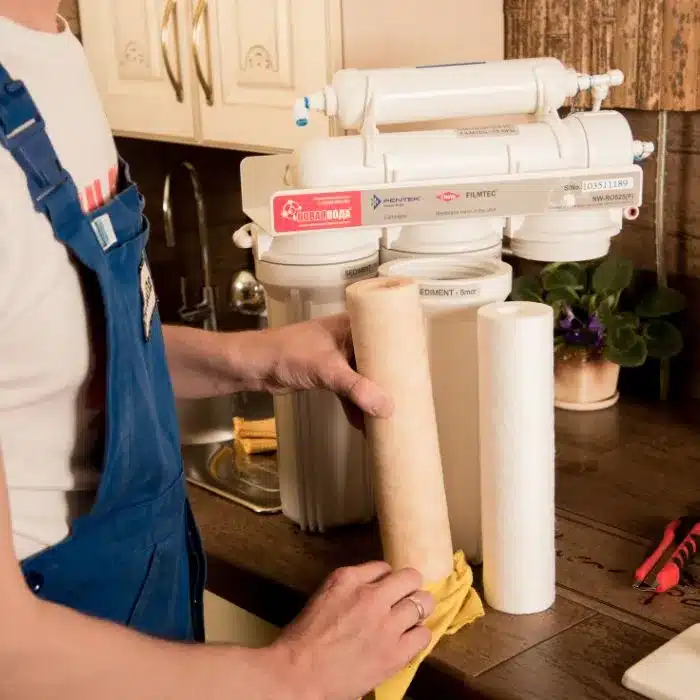
- Cleaning and replacing cartridges
Follow the manufacturer’s instructions for cleaning or replacing filtration cartridges.
Signs of Necessary Change
- Decrease in water flow,
- Change in taste or odor.
For DIY enthusiasts, here is a video showing how to clean the wound polypropylene filter for spring water.
Troubleshooting Common Issues
Even with regular maintenance, issues can arise with traditional water filtration systems.
Common Problems
- Leaks around fittings.
- Reduced water flow due to filter clogging.
Troubleshooting Tips
- Check and tighten fittings if necessary.
- Replace filters according to the manufacturer’s recommendations.
Water Filter Installation: From Simple to Complex!
Installing a water purifier at home varies in complexity depending on the type of system chosen.
For tap filters, installation is generally straightforward and can be done without special DIY skills. These filters attach directly to the existing faucet and require little to no specialized tools.
In contrast, under-sink systems, such as reverse osmosis units, require more complex installation. They necessitate specific tools such as wrenches, Teflon tape, a drill, and a screwdriver, as well as some plumbing expertise to ensure watertight and secure connections.
It is important to turn off the water supply and prepare the workspace before starting. Regular maintenance, including cleaning and replacing cartridges, is essential to maintain system efficiency.
For those who are not comfortable with DIY or who choose more complex systems, it is advisable to hire a professional. This ensures correct installation, avoids costly mistakes, and guarantees the safety and efficiency of the system.
LAVIE UV-A Water Purifier: No Installation or Maintenance Required

The LaVie UV-A tap water purifier stands out for its ease of installation and its innovative approach to water purification.
Innovation and Simplicity: The LaVie UV-A Purifier
Unlike traditional water filters, which as we have seen are often bulky and require complex installation under the sink, the LaVie purifier offers a compact and easy-to-use solution.
Its operation relies on UV-A technology, effectively eliminating chlorine, contaminants, and impurities without the use of physical filters. This feature removes the need for regular maintenance and cartridge replacement, making LaVie an economical and environmentally friendly choice.
Its sleek design and compact size make it ideal for convenient placement on the kitchen countertop. In summary, LaVie provides superior quality purified water with minimal installation and maintenance, thus standing out from traditional under-sink filtration solutions.
Environmental and Economic Benefits of Filterless Purifiers
In relation to under-sink filters, the great advantage of LaVie water purifiers lies in the fact that there are no filters to change! Hence, a substantial saving in the long term. It is also an ecological system for your home since you will produce less waste!
In conclusion, while the installation of a traditional tap water filter offers some advantages, filterless water purifiers like the UV-A models from LAVIE present superior benefits. These innovative systems eliminate the need for frequent cartridge replacements and provide a more sustainable and eco-friendly solution for obtaining pure and healthy water.
The simplified maintenance of filterless water purifiers, combined with their purification efficiency, makes them a superior option for those looking to optimize the quality of their water while reducing hassle and maintenance costs. By following a few simple steps to maintain your purifier, you can enjoy better quality water with minimal effort.
Thus, while acknowledging the advantages of traditional water filters, it is evident that filterless water purifiers represent a major evolution in the field of water purification. They are an ideal solution for those seeking economy, efficiency, convenience, and environmental respect.