 French
 Spanish
 German
 Italian
 English
What is the water hardness (TH)? Simply put, it is an indicator of the mineralization of water. Thus, the more your water contains minerals, the harder it is. Hard water, soft water, these are words we hear too often. It is important to know that the implications of water hardness are numerous. What are they? First of all, TH raises the question of potability. Rest assured, tap water is safe to drink in France. You can drink it without worry!
However, there tends to be some rumors about the dangers of limestone present in this water. So, what does science say about it? Thanks to the hydrometric title, let’s understand together the issues related to the presence of limestone in tap water, and how to interpret its presence.
What is the hydrometric title of your water (TH)?
The hydrotimetric title, also called TH, indicates the concentration of magnesium and calcium salts in our tap water. At first glance, nothing alarming, since mineral salts are excellent for health. However, if you don’t like the taste generated by their presence, you can always buy one of our Lavie purifiers! Thanks to UV-A light emissions, our purifiers eliminate chlorine, tastes, and odors in 15 minutes. Hydrate yourself and enjoy fresh, chlorine-free water! However, a small question remains: why are we so afraid of limescale? Let’s see together why the TH of hard water scares us so much!
Why care about the hardness of your water?
The TH of water, which therefore enlightens us about the presence of limestone, is it an indicator of danger? The answer is one word: No. Indeed, the limestone in our tap water poses no danger to human health.
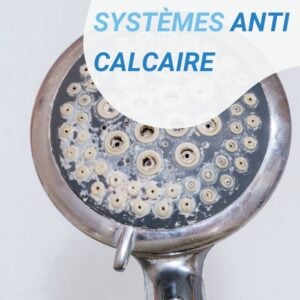
However, it can be quite aggressive on the skin, and especially, accumulate in large quantities in our household appliances. In the long term, the concentration of limestone can cause breakdowns and force you to buy new devices. However, we offer water softeners without salt to protect your appliances! Compatible with pipes, valves, and other faucets, Lavie softeners do not affect the quantity of trace elements!
In summary, the TH of water should be taken into account to preserve your appliances. From a health perspective, you can drink as much as you want! In both cases, it is always good to have a softener. It will allow you to block the formation of limescale and thus preserve your appliances, but also, to eliminate that particular taste that lingers on your tongue when you drink tap water. Furthermore, the quality of water does not only depend on its hardness but also on its filtration method. Some methods allow for preserving its natural benefits, such as filtered water, which improves its taste and purity.
What do French degrees (°f) measure in freshwater?
The hardness of water, as we say in everyday language, refers to the presence of limestone in our water. To be more precise, it is measured by its concentration of calcium and magnesium ions, and is expressed in French degrees (°fH). Several methods, available in stores for the general public, can be used to measure it. Moreover, it varies greatly depending on the regions. Let’s dive into the science of water hardness! If you want to learn more about TH and its meaning, nothing beats exploring these different units of measurement!
The different units of measurement for water hardness
To protect your devices against limescale, it is essential to analyze the hardness of the water. As mentioned earlier, water hardness is measured in French degrees. 1 °fH corresponds to 10 mg/L of calcium carbonate. Be aware that soft water has a hardness of less than 15 French degrees, while hard water exceeds 30 French degrees. How to measure this concentration?
TH Measurement Methods: Tests and Tools
For a quick diagnosis, nothing beats these two tests.
- Colorimetric tests : Colorimetric tests are a simple method for measuring water hardness. By adding a chemical reagent to a water sample, they work by causing a color change based on the concentration of calcium and magnesium. Affordable cost, speed, ease of use, they are perfectly suited for home use! However, take a step back from what they display, they often lack accuracy.
- Single reagent tests: Included in hardness kits, they can be found in stores. It’s pretty much the same method! This type of test allows for the evaluation of multiple water points, and above all, is distinguished by its easy transport.
Impact of limestone on daily life
Now, let’s dive into the impact of TH on different aspects of our daily lives. Through this section, we will see what the myths about limestone in water are, and why they are absolutely false!
Effects of hard water on human health
A hard water, generally safe for human health, can provide a supply of mineral salts. Be cautious with very hard waters, which can cause dry skin, irritations, or exacerbate certain conditions like eczema.
Consequences of TH on household appliances
Hard water accelerates the formation of limescale in appliances such as washing machines, water heaters, or dishwashers, reducing their efficiency and lifespan. It also increases energy consumption, as appliances have to work harder to compensate for the buildup of limescale. To save, it is better to get rid of this excess limescale, or better yet, to prevent its formation!
Influence on gardening and aquaristics
In gardening, hard water can inhibit the absorption of certain nutrients by plants due to the limestone deposits in the soil. For aquaristics, water with inadequate hardness can disrupt the chemical balance necessary for the health of fish and aquatic plants.
Approaches to regulate water TH
Use of Water Softeners
Water softeners are the most common solution for reducing hardness. These devices replace calcium and magnesium ions with sodium ions using ion exchange resins, thereby eliminating limescale by replacing it with salt.
Chemicals: Softener Salt and Alternatives
The addition of softener salt in softening systems is effective, but there are also alternatives such as limescale inhibitors or systems based on polyphosphates. You will see for yourself: the hardness of softened water contains fewer mineral salts than the hardness of untreated water!
Note that LaVie offers a salt-free water softener that retains mineral salts but prevents them from precipitating into scale in your household appliances, see here: Odouce, the salt-free water softener
Protecting your home from hard water
Regular use of descaling cleaners and maintenance of household appliances helps to limit the effects of hard water. Installing a central softening system can also protect the entire home.
Link between TH and pH: What you need to know
Differences between TH and hydrogen potential
TH measures the hardness of water, while pH indicates its acidity or alkalinity. Although distinct, these two parameters influence water quality.
How do these two factors interact?
A high pH associated with high hardness can worsen limescale deposits. Balanced management of hardness and pH is essential to avoid these inconveniences.
Beyond TH: Other water quality parameters
Identification of problems such as cloudy or foul-smelling water
A cloudy or foul-smelling water may indicate the presence of sediments, metals, or bacteria. A thorough analysis is necessary to identify and resolve these issues.
Analysis of the chemical composition of water
In addition to TH, parameters such as chlorine, pesticides, and heavy metals must be monitored to ensure healthy water suitable for consumption and domestic use.