
 French
 Spanish
 German
 Italian
 English
Up to 121,000 microplastics ingested each year by an adult! A staggering figure, put forward by researchers, who today emphasize the extent of this invisible but omnipresent pollution.
Water, air, food: these elements have infiltrated every aspect of our daily lives. And now, science is questioning their ability to reach the human brain.
A study published in the journal Molecular and Cellular Biochemistry analyzes the possible links between exposure to these substances and the development of neurodegenerative diseases, such as Alzheimer’s and Parkinson’s. The culprits are concerning biological mechanisms, such as chronic inflammation, oxidative stress, and the alteration of the blood-brain barrier, which is supposed to protect our brains from toxic molecules.
Microplastics are tiny plastic particles, less than 5 millimeters in size, resulting from the degradation of packaging, bottles, and synthetic textiles. They enter the body and accumulate over time. Are the quantities to be underestimated?
We take stock of the reasons for this contamination, the health risks involved, and the simple actions that can help reduce the absorption of these substances in daily life.
Microplastics in the brain: why is their presence increasing?
In less than ten years, the amount of microplastics found in the brain has increased by about 50%.
An unprecedented evolution, highlighted by the results of several articles, which confirm not only the presence of these elements in our brains but also a growing accumulation over the years. Such concentrations had never been observed before in such a sensitive organ.
The analyses conducted on human samples taken during autopsies show that the brain now contains more micro- and nanoplastics (MNP) than the liver or kidneys, which are specialized in eliminating toxic substances. A troubling new finding.
Experts predominantly find polyethylene, one of the most widely used plastics, particularly from packaging and bottles. These pieces, often at the nanometric scale, are thus capable of penetrating deeply into brain tissues.
This concentration is not a matter of chance. MNP enter the body through ingestion (food and drinks) and inhalation (indoor and outdoor air). Once in the body, the nanoparticles pass into the bloodstream. Some even cross the blood-brain barrier, this natural shield meant to protect our brains from harmful substances. With daily exposure, they gradually accumulate in brain structures.
This situation is part of an alarming global context: overproduction of plastic, explosion of disposable uses, widespread contamination of water, soil, air, and food.
The result: chronic contact, with levels never reached before, the long-term consequences of which are beginning to emerge, particularly concerning dementia.
Where do the microplastics present in our bodies come from?
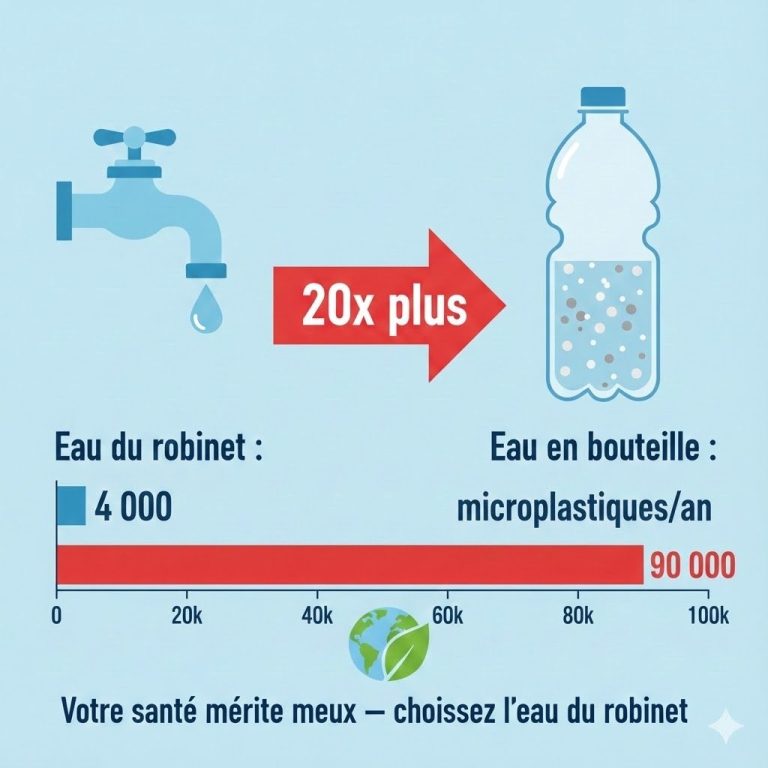
MNP penetrate our bodies through almost all possible pathways due to our environment. This multiple and daily exposure largely explains their increase, including in the brain.
The primary factor of absorption is ingestion. These substances are now found on our plates, but especially in the water we drink. Packaged beverages, particularly in plastic bottles, constitute a major source of pollution. Studies show that these fragments come from both the degradation of the bottles themselves (PET, polypropylene, polyethylene), the bottling processes, and the contamination of raw water.
Additionally, there are food packaging: plastic trays, stretch films, and foods heated in their containers, with an aggravating factor when in contact with fats or acids.
The figures from this study are telling: individuals who primarily consume bottled water would ingest up to 90,000 additional plastic particles each year, compared to about 4,000 per year for tap water. Furthermore, Sarah Sajedi, a PhD student at Concordia University in Canada and author of this scientific analysis, states: “Drinking bottled plastic water is suitable in emergencies, but it is not a practice to adopt daily.” A finding that calls into question the idea that bottled water is a safer option.
Inhalation is the second route of exposure. MNP are present in indoor air, notably in the form of fibers from synthetic textiles and household dust, but also in outdoor air. They can be found in urban environments, near busy roadways, around certain industrial areas, or in atmospheric fallout related to waste fragmentation.
The result: diffuse, continuous, and difficult-to-avoid contamination, which explains why MNP are now present in several of our organs.
💧Read also: Plastic bottled water: what are the dangers?
Who are the most exposed and vulnerable to microplastics?
We are not all equal when it comes to MNP. Some individuals have higher levels of exposure and risk than others.
Pregnant women, infants, young children, and adolescents are among the most sensitive. Their bodies are still developing, particularly the hormonal and nervous systems. However, microplastics carry chemicals such as phthalates or bisphenols, known to be endocrine disruptors. Repeated exposure could then lead to disruptions in hormonal and neurological functioning.
The environment also plays an important role. Populations living near heavily trafficked roadways, industrial areas, or landfills may be more affected by this toxicity due to higher contamination levels.
Additionally, individuals who consume a significant amount of packaged products are at risk. This includes, for example, the:
- ultra-processed foods in plastic,
- prepared meals heated directly in their trays,
- food films or plastic containers used daily,
- packaged beverages such as water, sodas, or juices.
The question “tap water or bottled water” thus becomes central.
Contrary to popular belief, drinking mineral water in bottles significantly increases the ingestion of these harmful elements compared to tap water. A paradox since bottled water is often perceived as more reassuring.
In light of this growing presence, particularly in our brains, scientists are now interested in the possible consequences of MNP on dementia.
Microplastics: what do we know about their effects on health?
Present in the blood, organs, and brain, MNP are no longer just an environmental issue.
Since their identification in the early 2000s, research has shown that they can interact with many systems in the body. However, their precise impact and the risk to our metabolism remain poorly understood.
What we do know, however, is that once ingested or inhaled, they can enter the bloodstream and diffuse throughout the body. Several articles associate their presence with concerning biological mechanisms, such as oxidative stress and inflammation, two processes that weaken cells over the long term.
These potential effects have already been observed on various systems:
- digestive (irritations, intestinal disorders),
- respiratory (inhaled particles),
- immune (inflammatory responses),
- endocrine (hormonal imbalances),
- metabolic.
Regarding the brain, some data show that microparticles can cross the blood-brain barrier and affect the nervous system. Once there, they would promote neuronal inflammation, disrupt mitochondrial function (the “powerhouses” of cells), and interfere with the natural protective and cleaning action of cells.
And that’s not all.
These disruptions are now linked to possible impairments in brain function, observed in neurodegenerative diseases such as Alzheimer’s or Parkinson’s. In this scientific study published in Molecular and Cellular Biochemistry, researchers highlight several commonalities between the absorption of MNP and the progression of these pathologies.
Science remains cautious in light of this finding, but one thing is clear: this situation is more than necessary to take into account.
And as more data accumulates, the question of health becomes urgent.
How to limit exposure to microplastics in daily life?
Good news: even though microplastics are ubiquitous and abundant, you can significantly reduce your exposure through a few simple daily actions and purification technologies.
Start by regularly ventilating your home and limiting sources of dust (synthetic textiles, cluttered surfaces). These actions already help minimize the inhalation of these contaminants.
Regarding food, reduce the use of plastic packaging as much as possible. Favor fresh products and reduce the use of plastic wraps or trays.
When it is difficult to avoid, for example with a container at work, do not heat the food directly in its packaging. Heat promotes the release of particles and chemicals.
The right reflex: transfer the contents to a plate before reheating. And above all, do not expose your plastic containers to sunlight.
Now let’s talk about the water you drink. Bottled water is one of the main causes of microplastic absorption. Switch to tap water. Provided, however, that it is properly filtered.
This is precisely where the under-sink filter Opropre by LAVIE comes into play.
Installed directly under the sink, it acts at the source, even before the water reaches the tap. Opropre effectively retains microparticles, but also removes other contaminants such as PFAS, pesticides, and unwanted residues, without altering essential minerals.
A more ecological, economical, and practical solution that sustainably contributes to reducing your contact with this plastic pollution.
💧 To go further: Food plastics: beware of danger! – La Terre au carré
Filters against microplastics: The experiment conducted by Zone Interdite
In the report Zone Interdite (“Our health in danger: revelations about this plastic that poisons us,” aired on March 8, 2026), independent researcher Jean-Baptiste Fini, a microplastics specialist, compared three filtration systems using deliberately contaminated water.
The results, analyzed by an independent laboratory, show significant differences in effectiveness:
- The gravity filters are the least effective: they filter only 30% of microplastics, allowing the majority of particles to pass through.
- The reverse osmosis systems retain about 60% of microplastics.
- While the Opropre activated carbon filter proved to be the most effective, eliminating 75% of the microplastics present in the contaminated water!
Conclusion: while filtration generally reduces the presence of microplastics, the choice of system makes a major difference in your actual daily exposure.