Readers, have you ever dipped your nose into a glass of tap water and smelled... nothing at all? Drinking water is not wine: there's no complex bouquet to be discovered here. However, this odourless water may be hiding a less refreshing secret: the presence of pesticides.
In France, tap water is one of the most closely monitored foodstuffs, subject to numerous standards and regular health checks. But recent studies, such as the one carried out by Générations Futures and Data for Good, The picture is more mixed when it comes to water quality: there are major disparities between regions.
- In the north, west and parts of the Paris agricultural basin, the pesticide and nitrate concentrations regularly exceed regulatory thresholds.
- In the Lyon region, it is the PFAS, These “eternal pollutants” from industrial activities are a cause for concern for the health authorities.
- And in some communes in the Ardennes, the consumption of tap water has even been banned, due to abnormally high levels of these substances.
While Générations Futures acknowledges that drinking water remains “generally good in France”, it nevertheless warns of “ever-increasing pressure from polluting human activities”.
So how can we protect yourself against pesticides in our tap water?
In this article, we present the most reliable solutions for filter these contaminants and protect your health.
Why are pesticides found in tap water?
Pesticides: a brief definition
First things first. Even if we all think we know what a pesticide is, a little reminder can't hurt!
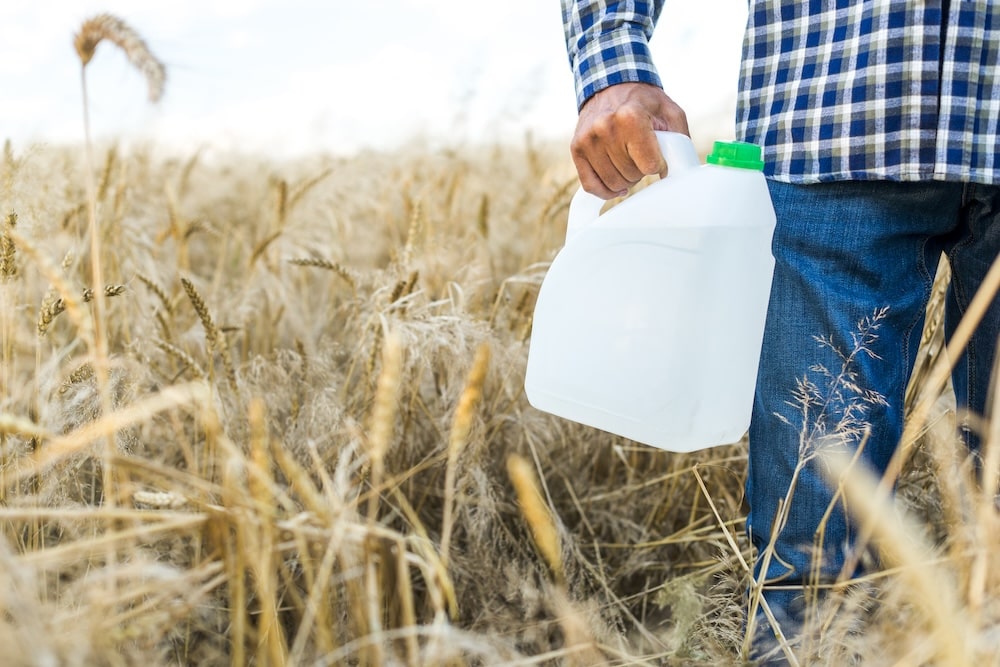
Pesticides are chemical or biological substances used to prevent, control or eliminate undesirable organisms, mainly in agriculture.
They include herbicides, fungicides and insecticides which act specifically against weeds, fungi and insects respectively. In other words, these products have become indispensable allies in modern agriculture, helping to preserve yields.
But like many “miracle solutions”, they have a downside. Their massive use has ecological and health consequences very real. Studies show that they disrupt biodiversity, damage soils and have an impact on human health.
The path from pesticides to our tap water
When fields are treated, some of the plant protection products are washed away by rain or irrigation. These residues then infiltrate the soil, reaching the water table and flowing into rivers and freshwater springs, the main sources of drinking water. resources used to produce our drinking water.
France is one of the biggest consumers of pesticides in Europe (3.65 kg/ha), and although treatment plants eliminate most pollutants, some chemical compounds persist in drinking water.
Persistent metabolites, even years after they were banned
One of the most telling examples is chloridazone desphenyl, a metabolite (i.e. a substance derived from the degradation of a pesticide).
This molecule comes from a herbicide used on beetroot between 1960 and 2020. Although this product is now banned, However, it is still widely detected in water networks in the Paris basin and northern France.
Once buried in the soil, metabolites can persist for decades. Clearly, even after a ban, pesticides can resist!
What are the health risks of pesticides?
Discreet but very real effects
Even at very low concentrations, pesticides can interfere with our bodies.
- Endocrine disruptors, They modify the functioning of the hormonal system, which can influence growth, fertility and foetal development.
- Some of them are carcinogenic or suspected of being so, in particular organochlorines, whose effects become apparent after years of exposure.
- Others can affect the nervous system, causing cognitive problems or promoting neurodegenerative diseases such as Parkinson's, which are often observed in exposed farming populations.
In other words, even if the doses in water are minute, chronic and cumulative exposure raises serious questions about health. Certain categories of the population are also more sensitive than others.
Pesticides, PFAS, heavy metals... an invisible cocktail
Unfortunately, pesticides are not the only undesirable substances in our water systems! There are also :
- PFAS that accumulate in the body (see how to filter PFAS from water in our dedicated article),
- heavy metals such as lead, mercury or even cadmium,
- and microplastics, which are now omnipresent in the environment.
Taken in isolation, these contaminants are already problematic. But taken together, they can interact and amplify their effects, even at low concentrations.
What are the solutions for filtering pesticides from tap water?
Faced with the presence of pesticides and other invisible pollutants Which filtration solution is the most reliable and effective way of protecting yourself?
Here's a comparison of the different filters and purifiers on the market. As you can see, not all solutions are created equal!
Element filtered, reduced or eliminated | 
Classic carafe filter | 
Tap filter | 
Osmosis unit | 
Opropre under-sink filter | 
LAVIE Purifier | 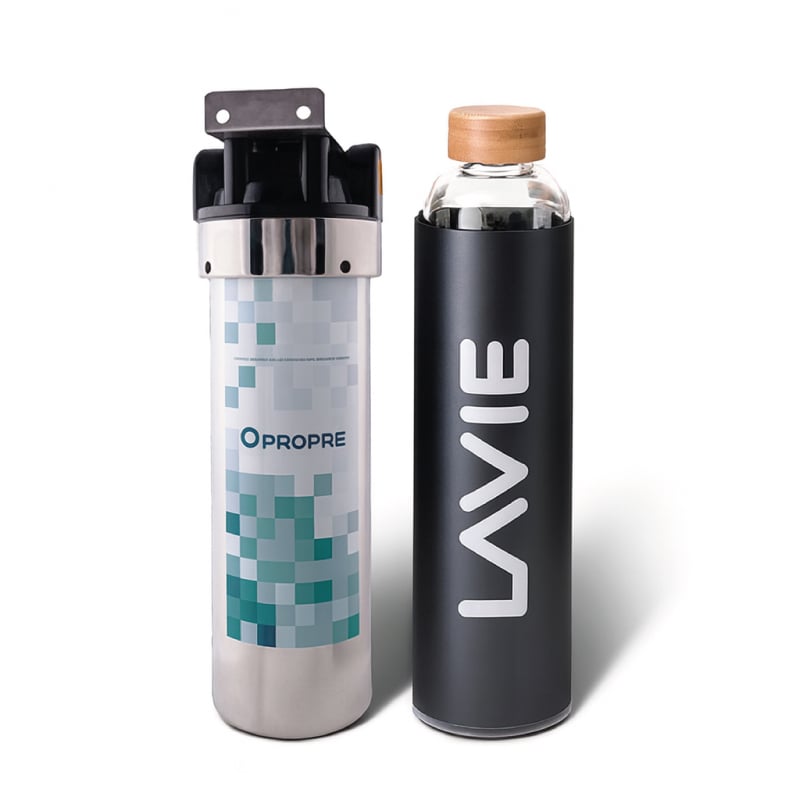
Peace of mind pack (Opropre + LAVIE PURE) |
| Chlorine | ✅ | ✅ | ✅ | ✅ | ✅ | ✅ |
| Sediment | ✅ | 🟠 | ✅ | ✅ | ❌ | ✅ |
| Bacteria | ❌ | ❌ | ❌ | ❌ | ✅ | ✅ |
| Virus | ❌ | ❌ | ❌ | ❌ | ✅ | ✅ |
| Medicines | ❌ | ❌ | ✅ | ✅ | ✅ | ✅ |
| Pesticides | ❌ | ❌ | ✅ | ✅ | ✅ | ✅ |
| Heavy metals | 🟠 | 🟠 | ✅ | ✅ | ❌ | ✅ |
| PFAS | ❌ | ❌ | ✅ | ✅ | ❌ | ✅ |
| Microplastics | ❌ | ❌ | ✅ | ✅ | ❌ | ✅ |
Mineral conservation
beneficial | ❌ | 🟠 | ❌ | ✅ | ✅ | ✅ |
| | | | | Discover | Discover | Discover |
LAVIE UV-A purifiers
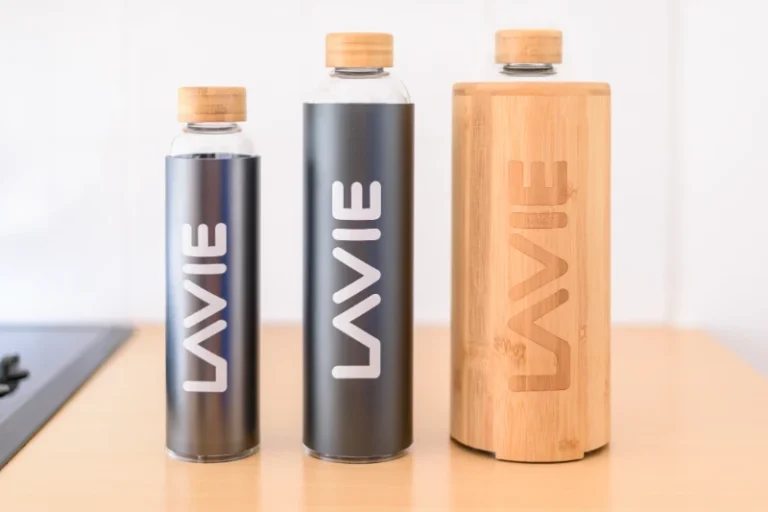
LAVIE purifiers use a patented technology that purifies water using the chlorine photolysis. In concrete terms, UV-A light naturally degrades and eliminates certain substances present in the water, such as pesticides, while preserving the minerals essential to your health.
The scientific tests carried out by independent laboratories on molecules such as glyphosate and chlordecone showed a significant reduction in their concentration after using LAVIE water purifiers.
In just 15 minutes, you get water that's healthier and more pleasant to drink. All without filters or consumables, so no plastic waste!
Opropre Turquoise activated carbon under-sink filters
In addition to LAVIE purifiers, the Opropre under-sink filters act on the most problematic water pollutants: PFAS, pesticides, heavy metals, microplastics and nanoplastics.
Their effectiveness is based on coconut activated carbon combined with a specific resin capable of eliminating the toughest pollutants that most filters fail to retain.
And to avoid unnecessary plastic waste, Opropre cartridges are Returned and recharged with new activated carbon, while the used carbon is recycled through specialised channels.
Under-sink filter
Opropre Turquoise
Are conventional filter carafes effective against pesticides?
Water filter jugs have invaded many French kitchens. Practical, affordable and easy to use, they promise to make water more pleasant to drink. But what is the reality of their effectiveness against pesticides ?
According to a ANSES, filtering carafes are said to have a low to zero efficiency on pesticides and their metabolites.
Their filtration capacity is largely linked to the amount of activated carbon used, and carafe filters contain very little.
In addition, numerous independent studies, such as the one by QUE Choisir have shown that classic carafes are real “luxury" carafes.“breeding grounds for bacteria” ! As well as being ineffective against pesticides, they even degrade water quality because of their filters.
Reverse osmosis: a solution?
Reverse osmosis is often presented as the most complete filtration method on the market. And for good reason: its membrane is capable of retaining up to 99 % of contaminants in water. Pesticides, nitrates, heavy metals, microplastics, PFAS, drug residues... few substances escape its notice.
This process is therefore highly effective from a technical point of view. But behind this performance, the’Reverse osmosis has a number of disadvantages.
First of all, this system wastes an enormous quantity of water: to produce 1 litre of filtered water, you have to discharge into the environment 3 to 4 litres of water concentrated with pollutants.
Next, thewater obtained by reverse osmosis is not without danger. Demineralised, it is depleted in calcium, magnesium and trace elements, all of which are essential to the body's equilibrium.
Fortunately, there are more economical and ecological solutions. to get rid of pesticides effectively.
How can pesticides be effectively filtered from tap water?
As we have seen in this article, despite the rigorous checks carried out in France to verify the tap water quality, Residues of pesticides, PFAS and other persistent pollutants circulate in running water.
Unfortunately, conventional filtration solutions, such as filter jugs or carbon sticks, are not very effective in dealing with these complex contaminants.
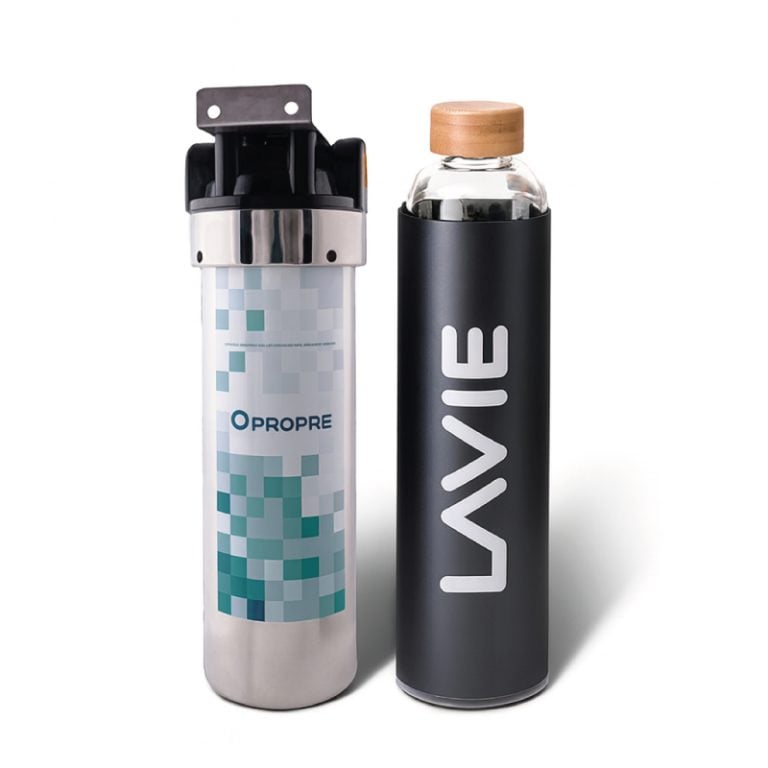
To completely eliminate pesticides from tap water, LAVIE purifiers combined with Opropre filters are by far the most effective, economical and ecological solution on the market.
The LAVIE UV-A purifiers naturally destroys chlorine, pesticides, bacteria and other contaminants, without the need for filters or the generation of plastic waste.
The Opropre under-sink filters eliminates pesticides, PFAS and heavy metals thanks to a dual system using activated carbon and a specific resin.
Discover all the LAVIE purification products for healthier, purer water for the whole family!
Opropre filter + UV-A carafe LAVIE
Serenity pack