 French
 Spanish
 German
 Italian
 English
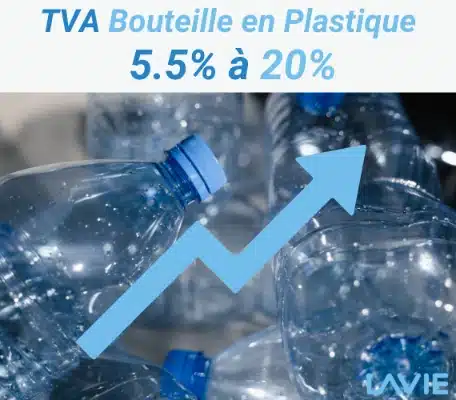
On November 28, 2024, a turning point was initiated in French tax policy regarding bottled water. Senators voted for a drastic increase in VAT, raising its reduced rate from 5.5% to 20%. A measure aimed at encouraging tap water consumption and highlighting the dubious practices of industry players.
Why this measure?
At the heart of this decision lies a scandal involving Nestlé Waters, a subsidiary of the Swiss agri-food giant. Last January, the brand admitted to using prohibited disinfection processes to ensure the “food safety” of its mineral waters. These revelations triggered a senate investigation committee, questioning the practices of major bottled water players.
According to Hervé Gillé, socialist senator:
“In a context where the management of natural resources and ecological issues are crucial, this tax reform is necessary.”
Additional revenue for the State
The increase in VAT could generate between 150 and 300 million euros per year, according to senators’ projections. However, this increase does not apply to bottled water sold overseas, which retains its reduced rate.
A strong ecological signal
Beyond the revenue generated, this measure is part of an approach aimed at reducing plastic use and encouraging more responsible consumption. Indeed, bottled water is often criticized for its ecological footprint, particularly due to the millions of tons of plastic waste it generates.
A healthy and sustainable alternative: water purifiers
In this context, solutions like LAVIE water purifiers emerge as an ecological and economical option. With patented technology using UV-A, our devices purify tap water without filters or chemicals, providing healthy and pleasant-tasting water.
Advantages of LAVIE purifiers:
- Elimination of unpleasant chlorine tastes and odors.
- Complete absence of plastic waste.
- Ease of use and no costly maintenance.
Experts’ opinions
While the Minister of Public Accounts, Laurent Saint-Martin, criticizes the use of VAT as an incentive lever, supporters of this measure commend an approach that combines tax justice and ecological sensitivity.
In parallel, initiatives like those of LAVIE demonstrate that it is possible to act locally to provide a sustainable alternative and reduce the impact of plastic bottles on the environment.
This fiscal upheaval marks a turning point in water resource management in France, paving the way for more responsible consumption patterns. With adapted taxation and innovative technological solutions, the transition towards a less plastic-dependent world seems to be underway.