There's no shortage of options on the jug market: glass, stainless steel, plastic... But not all jugs are created equal. The material used influences more than just the design: it has a direct impact on the quality of the water, the durability of the product and even your health.
So.., which model is really the healthiest, the most ecological and the most economical?
In this comparison of filter carafes, To help you make the best choice, we take a look at the advantages and limitations of each material.
Glass or stainless steel carafe filter? Find out which appliance best suits your lifestyle and needs.
Glass or stainless steel: what are the differences between these two materials?
The choice between glass and stainless steel isn't just a question of aesthetics. These two materials have very different characteristics in terms of health, comfort and durability. This has a direct impact on the quality of your hydration.
Glass is preferred for its neutrality. It releases no chemicals, retains no taste or odour, and is easy to clean. Its transparency also means you can check at a glance that the water is clear and that the appliance is clean. On the other hand, it is more sensitive to shocks and temperature variations.
Stainless steel, for its part, relies on sturdiness. Solid, durable and modern, it withstands repeated handling and temperature variations. But it does have its limits! It can alter the taste of water, and some people find the contact of metal with the mouth unpleasant. Its opacity also makes it difficult to see how much water is inside and how clean it is.
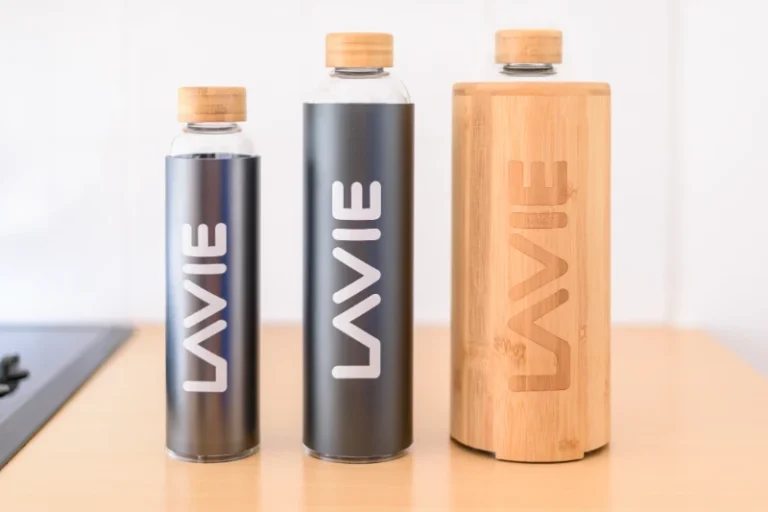
This is where borosilicate glass comes into its own. Used in LAVIE filter jugs, this top-of-the-range material combines strength and purity. It withstands scratches, shocks and high temperatures, while remaining perfectly neutral.
The result: healthy filtered water, with safe, sustainable technology.
Plastic carafe: a danger to your health and the environment
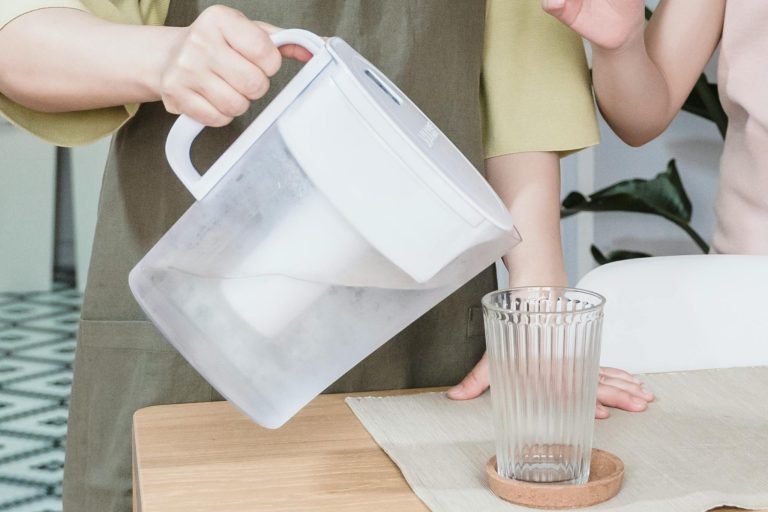
Plastic jugs may be attractive because of their price and lightness (Brita, Philips, Amazon...), but they remain one of the worst choices for filtering tap water.
In terms of health, several studies have shown that carafes release microplastics and endocrine disruptors such as bisphenol A (BPA) and phthalates. These substances migrate through your glass into your body. The result: contaminated water and a long-term danger to your metabolism.
ANSES and UFC-Que Choisir also warn of the risk of bacteria. Without regular maintenance, filters and cartridges made of activated carbon and ion exchange resins become veritable nests of microbes. By removing the chlorine, these devices also remove the barrier against bacteria. A real nonsense when it comes to purity!
But that's not all! Some carafes also release undesirable substances (silver, sodium, ammonium, etc.) and deplete the levels of essential minerals, making filtered tap water undrinkable according to the criteria of the World Health Organisation.
And from an ecological point of view? The situation is catastrophic. The disposable, non-recyclable filters, which have to be changed every three to five weeks, generate enormous pollution, in addition to the carafes themselves, which are not recyclable.
In short, these models are neither healthy nor environmentally responsible.
What are the key criteria for choosing the right appliance?
Before making your choice, you need to understand what makes the difference between an effective model and a disappointing one. Here are the criteria to look at closely before you buy.
- The efficiency of the filtration system
This is criterion no. 1. A good carafe eliminates pollutants without depleting the water. Chlorine, pesticides, heavy metals and drug residues must be eliminated, while retaining essential minerals such as calcium and magnesium. This is what makes the difference between simply filtered water and truly healthy water.
Your choice has a direct impact on the environment. Carafes with disposable filters generate considerable waste and require regular replacement. Choose sustainable technology, without consumables, made from recyclable materials.
Some carafes may look cheap when you buy them, but the filters you have to replace every month quickly add up. Look at the real cost of maintenance. A model without a filter or with a long-life system will be more cost-effective and more practical for everyday use.
Glass and stainless steel are the most reliable: healthy, durable and easy to maintain. Glass is neutral and elegant, while stainless steel is more solid and modern. Plastic should be avoided: it contaminates the water and poses a health risk.
The best: borosilicate glass, which combines purity and resistance for optimum filtration.
- Capacity and practicality
A 1-litre carafe is enough for a single person, but a family will prefer a model with a capacity of 1.5 to 2 litres. Don't forget how easy it is to hold, how heavy it is and how easy it is to clean: a carafe that's easy to use will become an everyday reflex.
In short, for water that respects your body, your budget and the planet, it is best to turn to a alternative to the carafe filter classic, like the LAVIE bottle.
LAVIE UV-A carafe in borosilicate glass: the best in domestic filtration
|
Element filtered, reduced or eliminated
|

Classic carafe filter
|

UV-A carafe LAVIE
|
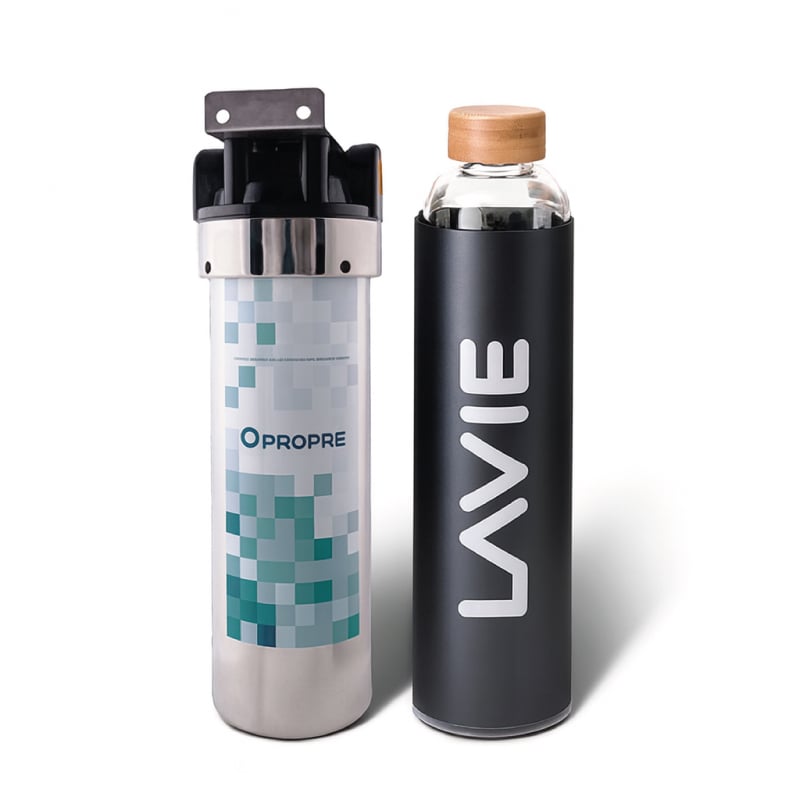
LAVIE decanter + Opropre filter
|
| Chlorine |
✅ |
✅ |
✅ |
| Sediment |
✅ |
❌ |
✅ |
| Bacteria |
❌ |
✅ |
✅ |
| Virus |
❌ |
✅ |
✅ |
| Medicines |
❌ |
✅ |
✅ |
| Heavy metals |
🟠 |
❌ |
✅ |
| Pesticides |
❌ |
✅ |
✅ |
| PFAS |
❌ |
❌ |
✅ |
| Microplastics |
❌ |
❌ |
✅ |
| Conservation of beneficial minerals |
❌ |
✅ |
✅ |
|
|
Discover
|
Discover
|
Faced with the limitations of traditional carafe filters (cartridges to change, loss of trace elements, impurities, etc.), LAVIE has developed a sustainable and highly effective alternative.
Sa technology is based on UV-A rays, which trigger a natural phenomenon known as chlorine photolysis.
In other words, when light passes through the water, it transforms the chlorine into reactive radicals capable of neutralising pesticides, bacteria, viruses and drug residues, while preserving 100 % of essential minerals such as calcium and magnesium.
In just fifteen minutes, your tap water will be healthy, balanced and pleasant to drink.
The tests and opinions The results are clear: 100 % of bacteria eliminated, more than 50 % reduction in glyphosate and up to 49 % reduction in chlordecone.
Far from being a simple mechanical filter, LAVIE offers complete, stable, contamination-free purification or release.
And its material makes it a first-class system. Made from borosilicate glass, the LAVIE UV-A bottle combines performance, durability and neutrality. This top-of-the-range, practical material, which is ubiquitous in laboratories, is resistant to shocks and high temperatures and does not release any substances.
With no filters and no recurring costs, it's an ecological, economical and safe choice.
The answer is clear: use the LAVIE UV-A appliance by borosilicate glass is the best option for domestic filtration.