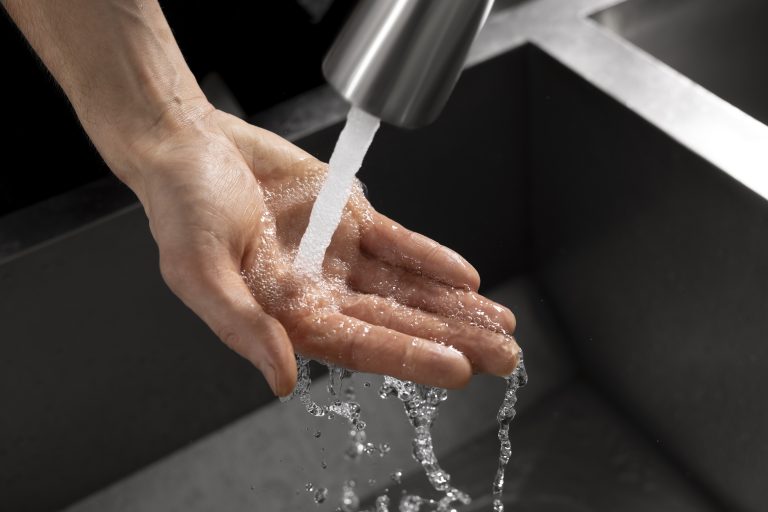
The alarm has been sounded: 83,000 inhabitants of the Hauts-de-France region drink contaminated tap water by a fungicide, fluopyram.
In some communes, the contamination has been going on for over a year. And the concentrations found are 4 to 5 times the regulatory limit.
What's most worrying? This pesticide belongs to the PFAS family of “eternal pollutants”, which are particularly persistent and difficult to eliminate using conventional treatments. Their effects on health are increasingly being questioned.
So yes, tap water is strictly controlled in France. But no, it's not always safe to drink. And the situation varies from region to region.
Pesticides, heavy metals, nitrates... Should we be worried?
The good news is that there are solutions for limit exposure to these contaminants at home. But what should you choose? We take a closer look.
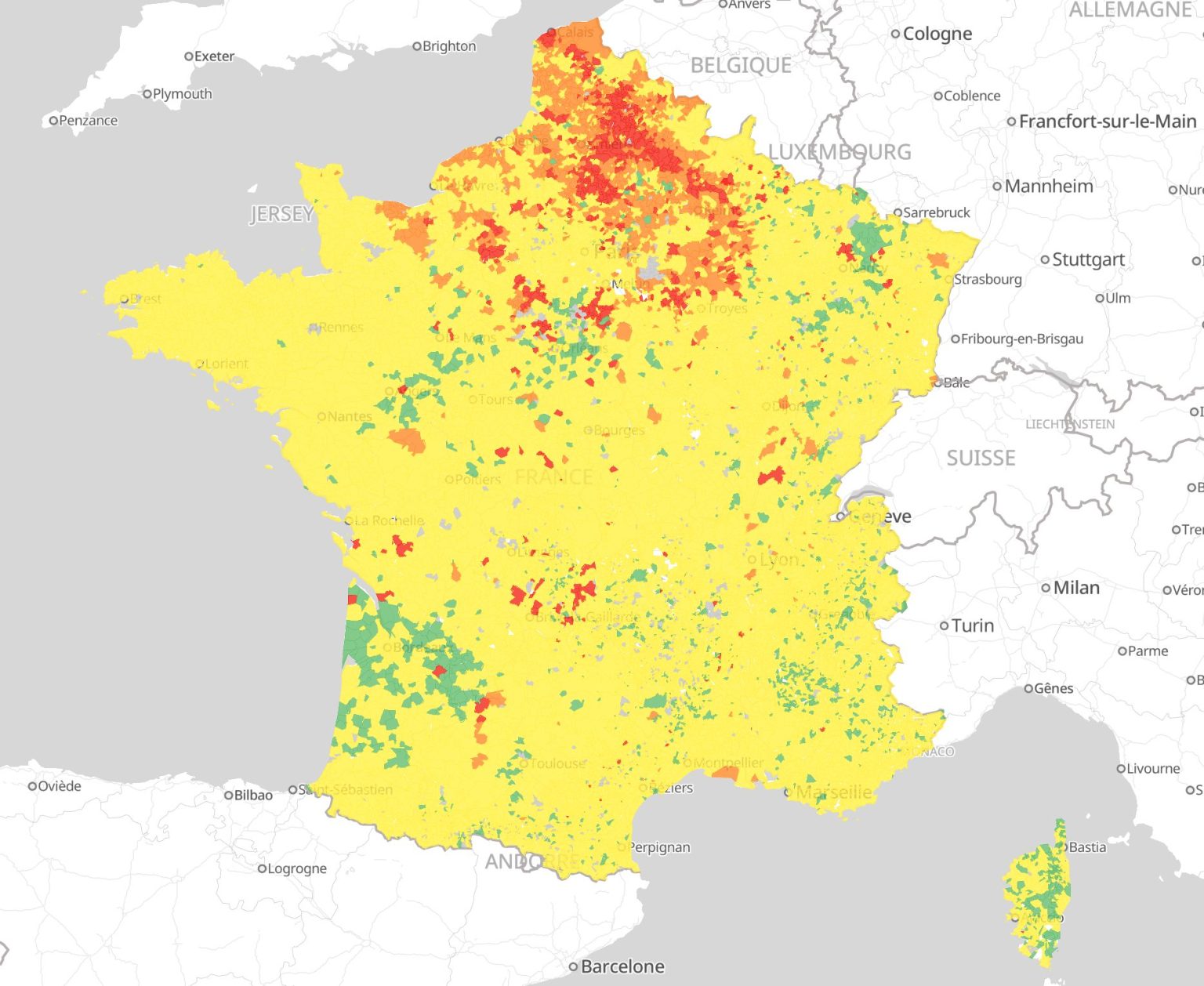
Contaminated tap water: which regions are affected?
Source: Generations Future & Data for Good, 2025
The map speaks for itself. Pollutants detected across most of France.
And among them, one name comes up more and more often: PFAS.
These toxic substances, which have been used for decades in non-stick frying pans, waterproof textiles, food packaging and certain industrial equipment, have one thing in common: they are extremely persistent.
Why is this?
Because they hardly ever break down. They remain in the soil, migrate to groundwater and end up in tap water.
Today, a large proportion of the French population is exposed to this pollution. But some regions are more affected than others:
- The Grand Est, This is particularly true around former industrial and military zones, where the land has been permanently scarred by the use of these toxic products.
- Hauts-de-France, where past industrial activity has left persistent residues in the water.
- Certain municipalities in the Île-de-France region, This is particularly true in the vicinity of industrial sites, where underground contamination has been identified.
This health situation does not mean that the water is undrinkable. But it is a reminder that pollution is diffuse, long-lasting and difficult to eliminate by conventional treatment.
And these are not the only elements involved. Agricultural pesticides, persistent metabolites, industrial residues, heavy metals... Almost everywhere in the country, the water we drink contains traces of chemical substances.
So the question is no longer whether the water is contaminated. But at what level, and how to limit daily exposure.
To find out exactly how good the water is in your locality:
👉 https://dansmoneau.fr/
What contaminants are found in tap water?
Tap water contains traces of toxic substances. But where do they come from? Agriculture, industry, ageing distribution networks, disinfection treatments... Before it reaches your glass, water passes through many different environments.
As a result, even when it is drinkable, it can concentrate nitrates, pesticides, heavy metals, microplastics, chlorine and, more rarely, bacteria.
Here are the main contaminants detected in tap water today.
PFAS: these “eternal pollutants” present in tap water
Eternal pollutants are chemical compounds that have been used for decades in industry: non-stick coatings, technical textiles, fire-fighting foams... What's special about them? They hardly deteriorate at all. Persistent, they contaminate soil and groundwater.
Today, they represent a real health issue. Scientific data even links them to damage to the immune system and liver, fertility problems and the development of chronic diseases.
💧Read also: How do you filter PFAS from tap water?
Pesticides: agricultural residues in your glass of water
Pesticides don't stop at the fields and countryside. Some of them seep into the soil, reach the water table and end up in our tap water. Their metabolites, compounds produced by their breakdown, are also found. In other words, even when the original product disappears, the “leftovers” continue to circulate.
The results of the analyses carried out by Future Generations and Data for Good confirm this. In the north, west and in the Paris agricultural basin, concentrations regularly exceed authorised thresholds.
The problem? These substances act in very small doses. Several are classified or suspected carcinogens. Others disrupt the hormonal and nervous systems. A situation not to be overlooked!
💧Read also: How do you filter pesticides from tap water?
Microplastics: invisible, persistent and difficult to measure
Microplastics are tiny fragments produced by the degradation of plastics. They are also known as nanoplastics when they are even smaller. They come from packaging, synthetic textiles, industrial processes and even distribution networks.
They are found in the air, soil, food and tap water. But it doesn't stop there.
Their microscopic size makes them almost impossible to quantify precisely. As for their effects on health, they are a cause for serious concern. Once ingested, these fragments are lodged in certain organs, even the brain. Visit analyses suggest inflammatory reactions, oxidative stress and disturbances to the immune system.
💧Read also: How do you filter microplastics from tap water?
Heavy metals: lead, cadmium, nickel, copper, etc.
Heavy metals don't always come from far away. They can come from old pipes or certain domestic installations. Lead is the best known, but cadmium in water, Nickel and copper can also be found in your glass.
In the long term, repeated exposure to these metals is dangerous. Cadmium, for example, accumulates in the body. Classified as a definite human carcinogen, it is associated with kidney damage, bone fragility and the development of certain cancers.
These residues are therefore a real health issue.
Bacteria: how can they get into our water?
Drinking water is strictly monitored in France. Bacteria such as Escherichia coli (E. coli), enterococci and Pseudomonas aeruginosa must be completely absent from 250ml of water. On paper, everything is under control and the treatment is effective for drinking. However, between the plant and your tap, incidents can occur and impact the quality of your water.
Aging pipes, building work, flooding or poor maintenance can all lead to the appearance of bacteria in tap water.
It remains rare. But there is no such thing as zero risk.
Chlorine: effective protection, but with a strong taste
Chlorine is not there by chance. It is added to drinking water to eliminate viruses, bacteria, parasites and other harmful micro-organisms. It also prevents them from proliferating all the way to your tap. From a health point of view, it's a real shield.
But this protection comes at a price. Visit chlorine in tap water can leave a distinctive taste and smell, And that's something that many people find hard to ignore.
It protects effectively, but does not make the water more pleasant to drink.
How can you protect your water from contaminants?
Just because tap water is safe to drink doesn't mean it's free from undesirable substances such as pesticides, nitrates, microplastics, heavy metals, bacteria and chlorine. Drinkable doesn't mean good quality!
The good news is that there are several solutions for reducing exposure to contaminants in the home. Filter jugs, sink-mounted filters, under-sink filters, reverse osmosis systems... There's a wide choice. But some of them have a number of limitations, and can even be dangerous.
Before investing, it's best to have the support of a comparison of tap water filters to understand what really works.
Element filtered, reduced or eliminated | 
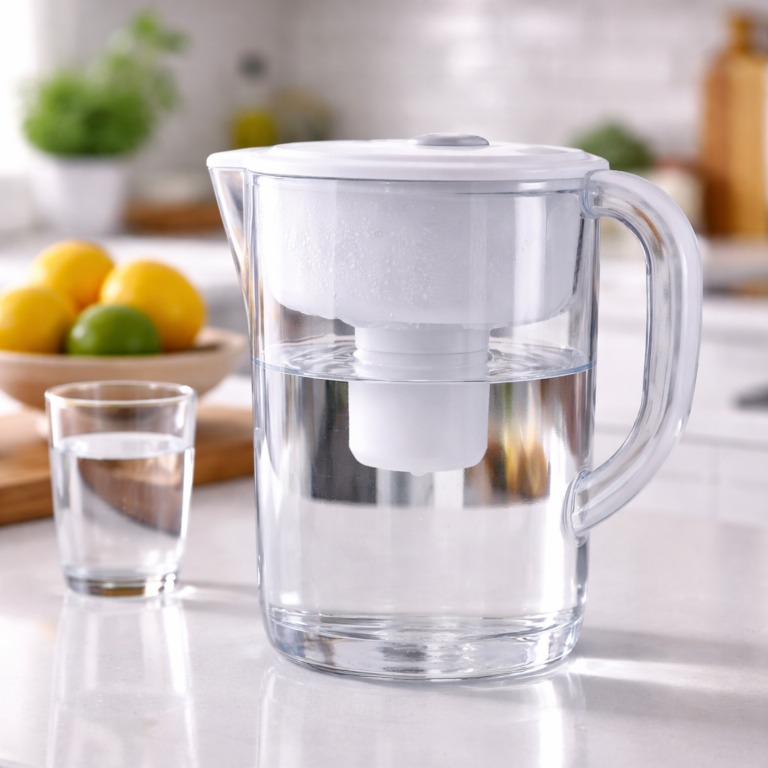
Classic carafe filter | 
Tap filter | 
Osmosis unit | 
Opropre under-sink filter | 
LAVIE Purifier | 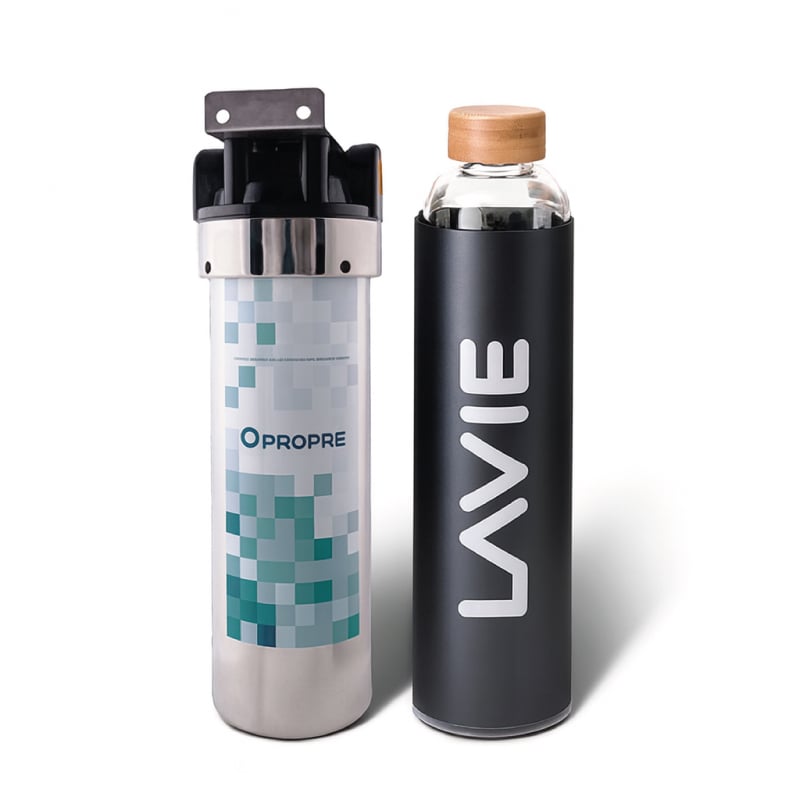
Peace of mind pack (Opropre + LAVIE PURE) |
| Chlorine | ✅ | ✅ | ✅ | ✅ | ✅ | ✅ |
| Sediment | ✅ | 🟠 | ✅ | ✅ | ❌ | ✅ |
| Bacteria | ❌ | ❌ | ❌ | ❌ | ✅ | ✅ |
| Virus | ❌ | ❌ | ❌ | ❌ | ✅ | ✅ |
| Medicines | ❌ | ❌ | ✅ | ✅ | ✅ | ✅ |
| Pesticides | ❌ | ❌ | ✅ | ✅ | ✅ | ✅ |
| Heavy metals | 🟠 | 🟠 | ✅ | ✅ | ❌ | ✅ |
| PFAS | ❌ | ❌ | ✅ | ✅ | ❌ | ✅ |
| Microplastics | ❌ | ❌ | ✅ | ✅ | ❌ | ✅ |
Mineral conservation
beneficial | ❌ | 🟠 | ❌ | ✅ | ✅ | ✅ |
| | | | | Discover | Discover | Discover |
LAVIE purifier: when light protects your water
What if purification were simply a matter of light? That's the innovative technology behind LAVIE purifiers.
In concrete terms, the UV-A rays from our products transform the chlorine present in the water into reactive compounds capable of neutralising bacteria, viruses and certain residues such as pesticides and traces of medicines.
Unlike conventional filter carafes, which require cartridges to be replaced, resulting in recurring costs and plastic waste, LAVIE technology works without consumables. It also prevents contamination of filters, which can become breeding grounds for bacteria if they are not properly maintained.
All this in just 15 minutes, without adding any chemicals and without altering the essential minerals.
Summary : healthy, high-quality water, More pleasant to drink, and less polluting for the environment.
Opropre under-sink filter: high-performance filtration at source
With Opropre, filtration takes place directly at source. Installed under the sink, it works continuously, even before the water comes out of the tap. Its system combines high-performance activated carbon with a specific resin. capable of retaining particularly resistant substances such as PFAS, pesticides, heavy metals and microplastics.
And unlike simple mechanical filtration, Opropre removes these contaminants while allowing the essential minerals your body needs to pass through.
Bonus: the cartridge is returnable, refillable and recyclable. Every six months, it is returned, refilled with new activated carbon and then reused.
A demanding solution, designed to protect your health and the environment.
Contaminated tap water: which system should you choose?
When faced with contaminated tap water, a single solution won't do the job. Eternal pollutants, agricultural pesticides, invisible microplastics, silent heavy metals... These contaminants are not the same and do not act in the same way. So we need a tailored response.
To really reduce your exposure, the idea is simple: act on two levels.
- From the source, With the Opropre under-sink filter. It captures microplastics, PFAS and heavy metals before the water even reaches your glass.
- Then when it's time to drink, With the UV-A LAVIE decanter, which neutralises bacteria, viruses, pesticides and drug residues without affecting essential minerals.
The LAVIE Serenity Pack combines these two actions. Less pollution. Less plastic. More control and quality.
And above all, a real health response to contaminated tap water.
Pre-filtration + Purifier
Serenity Pack