You are hesitating to drink tap water? You're not alone. Between viruses, chlorine, pesticides and heavy metals, many French people are wondering about the composition and actual quality of the water they drink. And we can understand them: these contaminants are a regular feature of health news.
Yet it remains the most closely controlled food in the country, with strict regulations in place throughout the year.
So why does this mistrust persist? And above all, is it really justified?
In this article, we sort out the concerns and reality. With clear explanations and simple solutions for you and your family.
What is the quality of tap water in France?
In France, the water we distribute is one of the most closely monitored in the world. Every day, it undergoes strict controls. Nothing is left to chance. The result is..: a compliance rate of around 98 %, making it safe drinking water for most households.
But be careful: «potable» does not mean «perfect». Why not? Because the composition and quality of water are not the same everywhere. It varies from one commune to the next: more chlorinated in some towns, higher pesticide levels in agricultural areas, old pipes in some areas... In other words, your water does not have the same history as your neighbour's water.
So, in practical terms, what are the various contaminants that can be found in today's tap water networks? And more importantly, what risks do they represent for human health?
Drinking tap water: what are the health risks?
Even if tap water complies with strict standards, it is not totally free from pollutants. Dangerous compounds can find their way into your glass, depending on the region, the soil, local agriculture or the state of the pipes.
And it is precisely these substances that raise the most questions.
So which ones are the most common, and what health risks do they represent?
Nitrates
Nitrates in the drinking water distribution network comes mainly from agricultural activities These include fertiliser spreading, intensive livestock farming and run-off into groundwater. Their concentration therefore varies according to rural areas and soil conditions.
But the danger of nitrates in water is mainly due to their transformation into nitrites: by-products which, in excess, can disrupt the transport of oxygen in the blood. And at levels that are too high, they become a risk for infants, who are more sensitive to this transformation.
Chlorine
The presence of chlorine in tap water is no coincidence: it is chlorine that eliminates bacteria. Essential protection!
But it does have one drawback: even in small quantities, it can alter the taste and smell of the water. Some sensitive people may also experience slight irritation. In other words, the risk to humans is minimal, but the pleasure may take a hit.
Pesticides
The pesticides present come mainly from agricultural areas, where the various products used to treat crops infiltrate the soil and reach the water table. Some regions are therefore more exposed than others.
The real problem? Some of them are being monitored very closely, because they are suspected of acting as endocrine disruptors or having potential carcinogenic effects on humans.
But the good news is that there are solutions for eliminating them effectively!
Antibiotics, anti-inflammatories... These drug residues are not eliminated by treatment plants. The result: these chemicals end up in our tap water.
And even if concentrations remain low, certain compounds can act as endocrine disruptors and interfere with hormonal balance. This «invisible» presence, which is difficult to control, is a source of concern for many consumers. The effects can be genotoxic and reprotoxic.
Heavy metals (lead, cadmium)
Heavy metals find their way into tap water for two reasons: old pipes in some buildings and a lack of drainage. industrial pollution in soil and groundwater. In particular, these are the sources of lead andcadmium in water. The latter is concentrated in the fertilisers used in intensive agriculture.
They are among the most closely monitored contaminants, because they accumulate in the body and affect our metabolism: the nervous system, the kidneys, but also immunity and, in the long term, cardiovascular health.
PFAS (“eternal pollutants”)
PFAS are these ultra-resistant chemical substances that can be found everywhere: non-stick frying pans, waterproof textiles, food packaging, cosmetics... But their solidity is also their danger: they degrade very slowly.
As a result, they accumulate in the environment, contaminating soil and groundwater and ending up in our tap water.
What's most worrying? These eternal pollutants are associated with hormonal, immune and cardiovascular risks, which explains the growing concern.
However, to protect yourself effectively, LAVIE proposes awater filter against PFAS adapted to your needs.
Drinking tap water or bottled water: what should you choose?
When confidence in tap water wanes, the first reaction is often to turn to bottled water. An option perceived as «safer». However, on closer inspection, this solution is not as irreproachable as it seems.
From a health point of view, this is no guarantee of purity.
Several tests have revealed microplastics in many bottled and mineral waters. Some samples even showed traces of PFAS, proof that the plastic packaging or the source used may be to blame. In other words, bottled water does not necessarily mean healthier drinking water, or even the opposite.
From an economic point of view, it's a bad calculation.
All year round, buying packs costs much more than a domestic filtration system. Not to mention the logistics: transport, storage, sorting, recycling... Bottled water and mineral water make for an impractical daily routine.
And ecologically, it's a disaster.
Billions of bottles are produced every year, a large proportion of which end up burnt, buried or in the environment. Recycling remains too low, and plastic pollution continues to explode.
In short, bottled water is neither healthier, more sustainable nor more convenient.
The most consistent solution is tap water. Provided you use reliable filtration, of course.
How can I have healthier water every day?
To really improve the composition of your water, the most effective technique is filtration. This is the technique that acts directly on harmful elements. But with so many purification systems, It is essential to know how to recognise best tap water filter for your needs.
Here's a clear comparison of the main filtration technologies, to help you choose the most appropriate option.
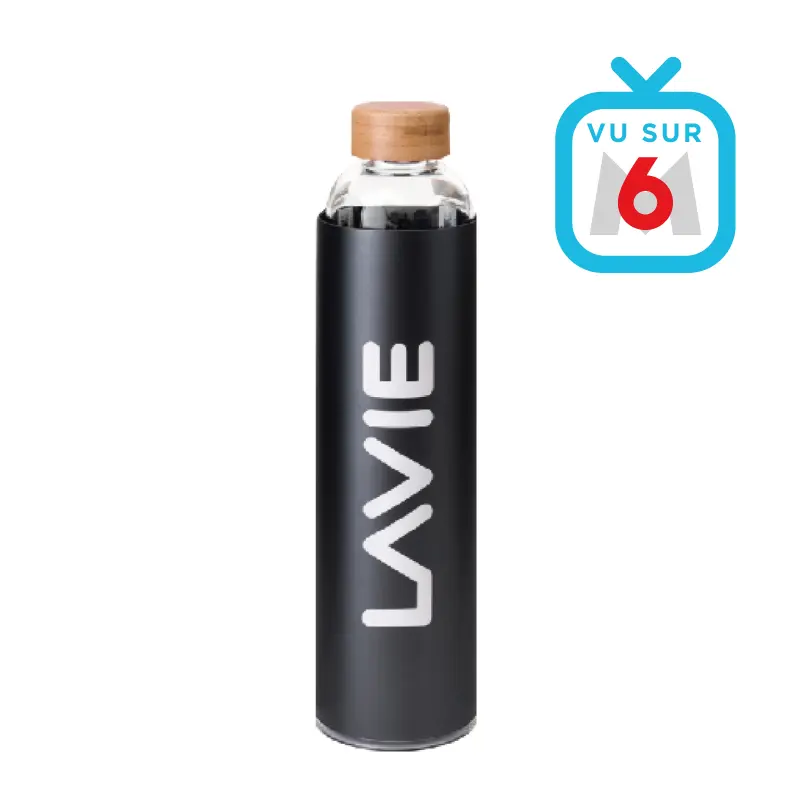
LAVIE UV-A carafe: healthier water without filters
The LAVIE UV-A carafe is the new generation of purification: no filters, no plastic, just the power of UV-A light.
Its patented technology triggers a natural phenomenon called photolysis: when the rays pass through the glass bottle, they transform the chlorine into reactive compounds. capable of neutralising pesticides, traces of medicines, bacteria and viruses.
All without affecting essential minerals such as calcium and magnesium.
The result: filtered water that's soft, healthy, tasteless and free of consumables.
The LAVIE UV-A carafe proves that it is possible to purify water effectively without producing waste.
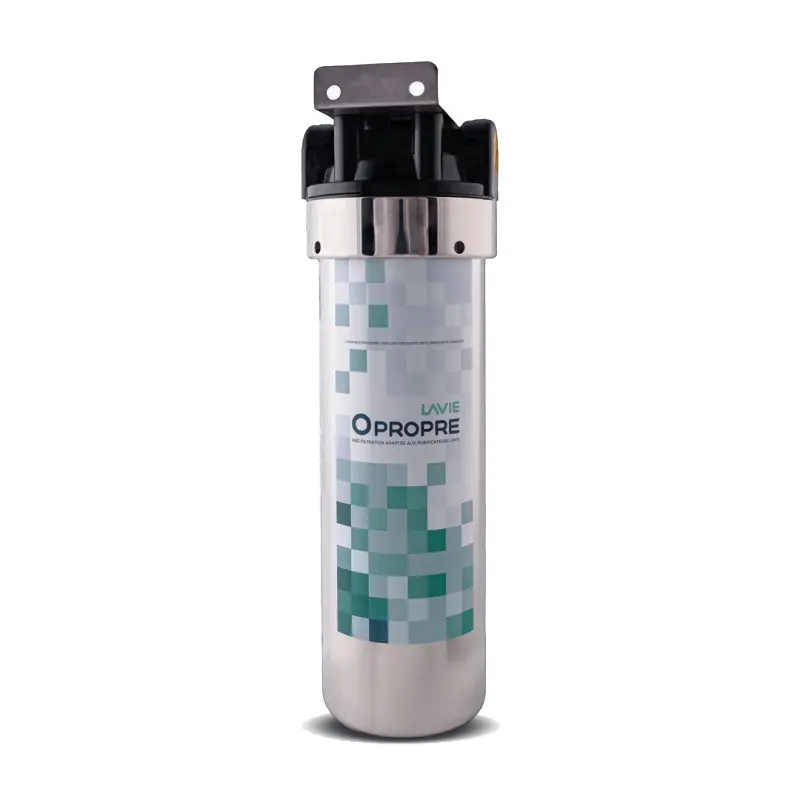
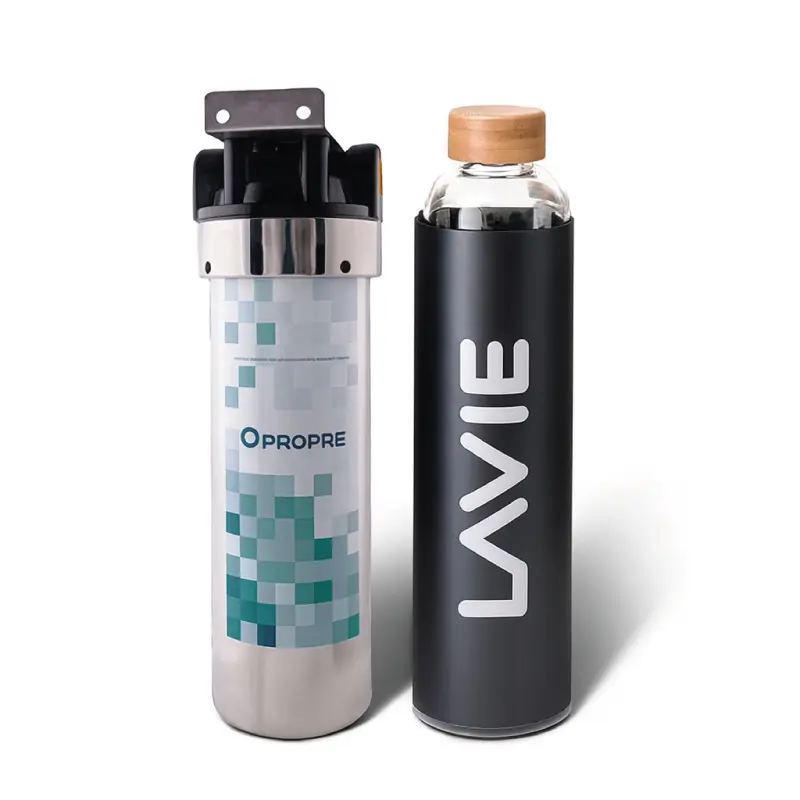
Installed under the sink, Opropre Turquoise offers ultra-high-performance filtration designed to target the most resistant substances PFAS, heavy metals, micro- and nanoplastics, medicinal products... Its combination of coconut activated carbon and specific resin captures these contaminants while allowing the essential minerals your body needs to pass through.
Its greatest asset? A returnable, refillable and recyclable cartridge: every six months, you return it, LAVIE refills it with new activated carbon, and the old cartridge is fully recycled.
A reliable, long-lasting solution that perfectly complements the LAVIE UV-A carafe for safer water, straight from your tap.
The classic carafe filter: a limited, even dangerous solution
Conventional filter jugs (Brita, Philips and other models) are reassuring because of their promise to improve taste and retain undesirable elements. But in reality, they do very little. Above all, they reduce chlorine, while depleting the water of essential minerals and lowering its pH to an acidic level.
As for the more serious contaminants (viruses, heavy metals, drug residues, etc.), they largely slip through.
And then comes the most problematic part: filters that take too long to change turn the carafe into a a veritable hotbed of bacteria. And all this with the production of disposable cartridges that have to be replaced every month and cannot be recycled.
In other words, a treatment that is not very environmentally friendly, not very sustainable and far from beneficial to health.
Water osmosis: effective, but with serious drawbacks
L'osmosis unit for tap water is often presented as the most radical solution. And it's true: it eliminates a huge proportion of contaminants, especially the most resistant ones. But this performance comes at a cost.
An osmosis system rejects large quantities of water (up to 4 litres lost for every 1 litre consumed), requires regular and expensive maintenance, and removes essential minerals, leaving water that is too poor for daily consumption.
The result: a significant ecological impact and a high price, both to buy and to use.
For all these reasons, this treatment is rarely suitable for conventional domestic use.
Drinking tap water? Yes, with the right filtration
Distributed tap water is the most logical option: healthy, economical and environmentally friendly. But because it can contain contaminants depending on the region, filtration quickly becomes essential to guarantee its quality. This raises the question of how to filter tap water ?
This is where the LAVIE Serenity Pack (LAVIE UV-A Carafe + Turquoise Opropre) comes into its own.
Opropre leads the way: it captures PFAS, heavy metals (lead, mercury, arsenic, etc.), microplastics and nanoplastics thanks to its blend of coconut activated carbon and high-performance resins.
Then the LAVIE UV-A carafe takes over: its light neutralises pollutants without affecting the essential minerals that make water beneficial to your body.
Here you are with filtered water that's purer, safer and better tasting, directly from your tap.
Simple, effective and good for the environment!
Opropre filter + UV-A carafe LAVIE
Serenity pack
Eliminates chlorine and odours, improves the taste of water
Filters out hazardous pollutants: PFAS, heavy metals, microplastics, etc.
Yes. In France, tap water is the most controlled food. It is safe to drink and complies with strict standards.
However, depending on the region, the water supply may contain traces of pesticides, PFAS, heavy metals and other harmful elements.
For more serene, risk-free drinking, appropriate filtration remains the best option for improving its quality.
Is tap water healthier than bottled water?
In France, tap water is one of the most closely monitored types of water in the world: safe to drink, regularly monitored and in compliance with strict standards. But that doesn't mean it's perfect.
Bottled water and mineral water are no better. Studies show that they often contain microplastics and other harmful substances, all in plastic packaging that can release particles.
In other words: bottles are no purer, only more expensive and more polluting.
How do I know if my tap water is of good quality?
The most reliable way to find out the composition and quality of your water is to consult official analyses of your local authority, available at the town hall or directly fromonline. These reports detail the possible presence of contaminants (e.g. nitrates) and their levels in relation to current standards.
They are public, easy to access and give you a clear picture of the regulations governing the water you consume every day.
How can I safely drink tap water?
The simplest solution is to use an effective, long-lasting filtration system. An under-sink filter like Opropre Turquoise removes PFAS, heavy metals, microplastics and other persistent contaminants, while a UV-A purifier like the LAVIE carafe neutralises pesticides, bacteria and medicines.
With this dual security, You'll enjoy pure, pleasant filtered water, suitable for everyday consumption.
Article written on 27/11/2025 by Pascal Nuti - CIO Solable - Passionate about energy, I'm constantly on the lookout for new targets for improvement, exploring cross-disciplinary paths using novel methods.