Faced with the presence of microplastics in drinking water, more and more consumers are looking for a solution to protect their health. Filter jugs are among the most popular options. But are they really capable of retaining these invisible particles? Before making your choice, it's essential to understand their limitations and identify the solutions that are really best suited to reducing your exposure to microplastics.
Read our articles as they happen
Join our Newsletter and get -5% on your first order!
Water, air, food : these contaminants have infiltrated everywhere, even in our tap water. Diffuse, silent pollution that raises serious health concerns.
But the real problem lies in their recognition. A CNRS study reveals that 98 % of microplastics in drinking water measure less than 20 micrometres. These particles are so fine that they escape current detection methods in France, suggesting that their actual presence and effects on health are largely underestimated.
Faced with this contamination, more and more consumers are turning to filter carafes to purify their tap water.
But are these filter carafes really capable of retaining microplastics, or is this a bad idea? And above all, what is the best carafe filter and the most effective?
What are the dangers of microplastics for our health?
Microplastics are tiny fragments of plastic, less than 5 millimetres in size, invisible to the naked eye. Resulting from the degradation of packaging, bottles, synthetic textiles and certain industrial processes, they are everywhere in the environment.
Present in rivers, groundwater and distribution networks, they massively contaminate tap water.
And even though there are very strict controls in France, the route taken by the water adds to this pollution. Reservoirs, pipes and certain stages of treatment and filtration release additional chemical particles.
The problem is once they enter our bodies! Ingested or inhaled, contaminants are not eliminated. On the contrary, research shows that’they gradually build up in the body, It passes through the bloodstream to settle in organs such as the liver, kidneys and even the brain.
Unfortunately, this is not without effect. The presence of microplastics is associated with chronic inflammatory reactions, oxidative stress and disturbances to the immune and hormonal systems.
There is also scientific evidence that microplastics and nanoplastics (less than one micron in size) cross the blood-brain barrier, which is supposed to protect the brain from toxic substances. A study published in Molecular and Cellular Biochemistry has highlighted possible links between exposure to these particles and the development of neurodegenerative diseases such as Alzheimer's or Parkinson's.
Research remains cautious, but the facts are in: the consumption of microplastics is not harmless. In the face of such pollution, limiting their ingestion is becoming a major health issue.
But by what process?
Filter jugs: a real solution against microplastics?
Traditional filter jugs, mostly made of plastic (Brita, Philips, Aarke, Amazon...), are attractive because they are easy to use and affordable. Their promise: a process that improves the taste and smell of tap water while reducing chlorine and certain pollutants.
How do they work? They work by using cartridges made of activated carbon and ion exchange resins, through which the water flows.
But this system is rapidly showing its limitations. The filtration fineness is insufficient to retain microplastics and nanoplastics over the long term.
And that's not all! In addition to this lack of efficiency, conventional filter carafes have other disadvantages:
Release of plastic fragments and undesirable products, due to wear and tear on materials and cartridges.
Risk of bacteria breeding ground Without chlorine, water becomes more vulnerable to the development of microbes.
Alteration of water quality, This results in a depletion of essential minerals. Filtered water no longer meets WHO recommendations.
Significant ecological impact, This is due to the frequent replacement of cartridges and disposable filters every 3 to 5 weeks.
While filter carafes can improve taste and smell, they are not a reliable solution for purifying water of microplastics and other pollutants. Their use can even alter the quality of the water.
So are there really effective systems for limiting the presence of these microparticles in tap water?
Opropre: advanced filtration against microplastics
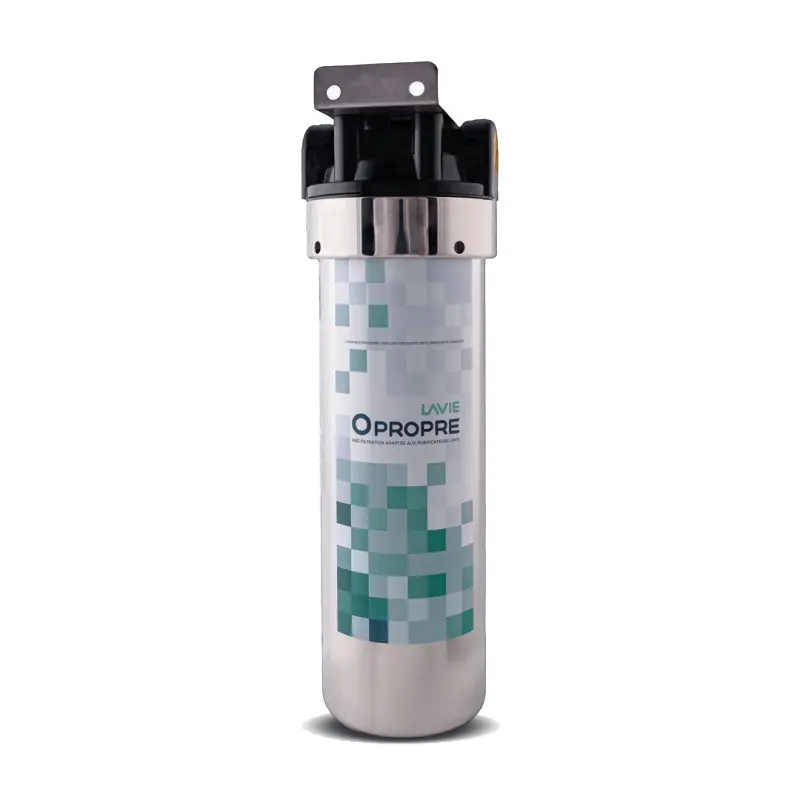
With the Opropre under-sink filter, LAVIE has opted for demanding filtration, designed to retain particles as fine as microplastics. This efficiency is based on a combination of very high performance activated carbon and a specific resin, capable of capturing extremely small elements.
From scientific studies show that activated carbon is a powerful barrier to micro- and nanoplastics. Under conditions close to those of natural water, the elimination rates observed can reach up to 90 %, particularly when nanoplastics aggregate, making them easier to capture.
Opropre also retains other pollutants present in tap water, such as PFAS, pesticides and certain heavy metals such as lead. From tests carried out by the University of Aix-Marseille laboratory confirms this ability, with up to 27.4 mg of PFOA and 23.8 mg of PFBA captured per gram of resin, while preserving essential minerals.
Finally, Opropre is environmentally friendly thanks to its returnable, refillable and recyclable cartridge, which reduces plastic waste.
Result: a scientifically proven and effective solution to reduce your daily exposure to microplastics.
The LAVIE carafe: the choice for healthier water every day
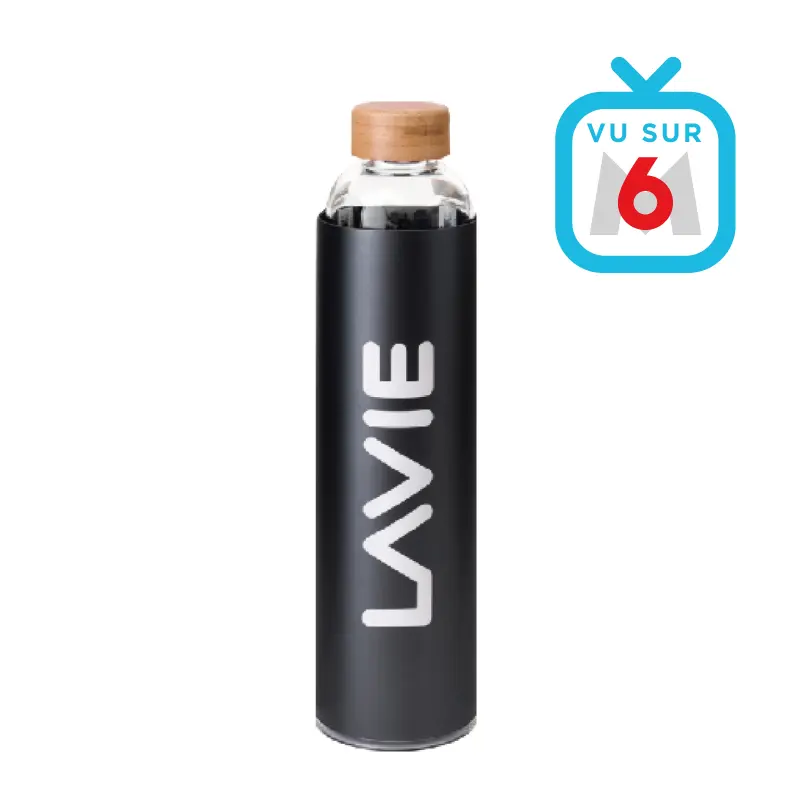
With the LAVIE decanter, there's no cartridge to replace or filter to dispose of, just patented UV-A technology, inspired by a natural phenomenon called photolysis.
In concrete terms, when UV-A rays pass through the glass carafe, they transform the chlorine present in the water into reactive compounds. These are then able to neutralise pollutants such as pesticides, traces of medicines, as well as bacteria and viruses. This process makes it possible to purify water in just 15 minutes, Without adding chemicals and without altering the essential minerals.
Once treated, tap water can be consumed with peace of mind throughout the day. And as an added bonus: the LAVIE UV-A carafe massively reduces the use of plastic bottles, while maintaining the same high standards of health and taste.
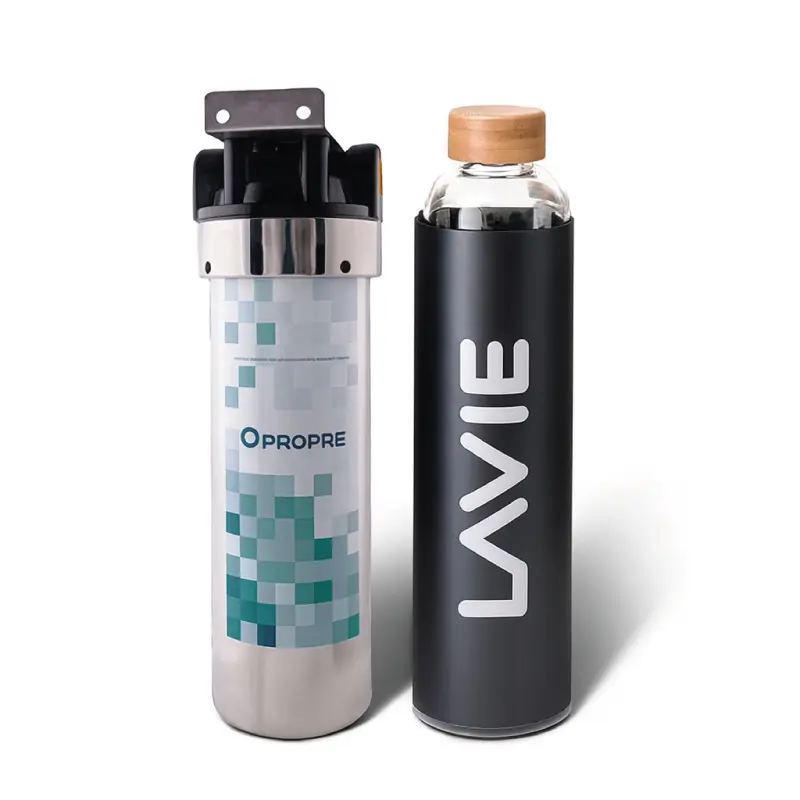
Used in conjunction with Opropre filtration, which eliminates persistent pollutants upstream, including microplastics, PFAS and heavy metals, the LAVIE filter carafe can be used to obtain even healthier, balanced water, directly at home.
Reverse osmosis: a high-performance solution, but at what price?
Reverse osmosis is capable of eliminating up to 99 % of microplastics, as well as many other contaminants. A recognised performance, widely used in industry for water treatment.
But for domestic use, this filtration efficiency comes with significant constraints:
High cost Purchase of the appliance, installation, maintenance and regular replacement of filters and membranes.
Wasting water Up to 4 litres of water are rejected to produce 1 litre of filtered water.
Ecological impact These include disposable cartridges, energy consumption and discharge of pollutant-rich water.
Demineralised water loss of essential minerals (calcium, magnesium), with a more acidic pH.
Risk of bacteria breeding ground in the event of inadequate maintenance.
In short, reverse osmosis is a very powerful technology, but it's not a responsible choice for daily hydration at home.
Bottled water: an even greater health risk
For a long time, bottled water was perceived as safer. Today, that idea no longer holds true.
The science is clear People who drink bottled water ingest up to 90,000 microplastics per year, This compares with around 4,000 for those who mainly drink tap water.
Over time, transport and temperature variations, the material degrades. Tiny fragments then migrate from the bottle directly into the water.
It's hard to believe, but it's true. Analyses reveal up to 5 to 50 times more pollutants per litre, mainly due to the degradation of the capsules and the coating.
In other words: bottled water, whether plastic or glass, increases exposure to these contaminants, Unlike water filtered using high-quality technology.
Can microplastics be removed using a carafe filter?
Conventional filter jugs are unable to remove microplastics. The extremely fine size of these fragments exceeds their filtration capacity. Worse still, some release plastic particles, leading to a decline in water quality.
As for bottles, whether plastic or glass, they are more contaminated, as a number of scientific studies have shown.
To really limit your exposure to these harmful pollutants, a combined approach is needed. The Opropre under-sink filter, with its very high performance activated carbon and specific resin, acts at source by trapping microplastics, as well as PFAS and heavy metals, even before the water reaches the tap.
The LAVIE UV-A carafe then completes this protection by purifying the water, neutralising pesticides, drug residues, bacteria and viruses, without altering the essential minerals.
Quality filtered water in your own home, with no unpleasant taste or smell!
With LAVIE Serenity Pack, You're choosing a reliable, sustainable solution to reduce your exposure to microplastics.
Pre-filtration + Purifier
Serenity Pack
Eliminates chlorine and odours, improves the taste of water
Filters out hazardous pollutants: PFAS, heavy metals, microplastics, etc.
Article written on 11/02/2026 by Pascal Nuti - CIO Solable - Passionate about energy, I'm constantly on the lookout for new targets for improvement, exploring cross-disciplinary paths using novel methods.
Pure, healthy water at home thanks to LAVIE
Discover our different water filtration and purification technologies:










 Read also : Glass or stainless steel carafe filter? Full comparison