Tap water is currently the focus of much debate. Behind its potability, traces of pollutants such as PFAS, pesticides and microplastics are regularly detected. On paper, everything looks fine. The reality is less reassuring. Between health concerns and the proliferation of filtration solutions, it's becoming difficult to know what to think and, above all, how to act.
Tap water is the most closely monitored foodstuff in France. It complies with strict health standards and is subject to numerous analyses. So, on paper, everything is fine.
But when you dig a little deeper, the reality is far less «clean».
PFAS, pesticides, nitrates, microplastics... An increasing number of studies are highlighting the impact of these substances on the environment. presence of pollutants in tap water. And this is true throughout the country: no region of France has been spared. Tools such as dansmoneau.fr to view the ARS samples for each municipality.
So yes, water is drinkable. But is it really safe to drink?
In this article, we take a look at what the risks are, where these contaminants come from and, above all, how you can reduce your exposure on a daily basis.
PFAS in tap water: contamination already everywhere
PFAS are chemical substances used for their non-stick, waterproofing and heat-resistant properties. They are found just about everywhere: in textiles, food packaging, certain industrial coatings and fire-fighting foams.
They are nicknamed «eternal pollutants» because these molecules are virtually non-degradable. They accumulate in the environment, particularly in the soil, seep into groundwater and end up in the water we drink through the distribution network.
Today, the presence of PFAS in water is no exception.
The samples taken by UFC-Que Choisir and Générations Futures show this clearly: 96 % of the municipalities tested have traces of eternal pollutants in their drinking water. From major cities such as Paris, Lyon and Bordeaux to more rural areas, this contamination affects the whole of France.
Unfortunately, this situation is not without consequences. Several studies suggest that links with certain cancers, It can also lead to hormonal disorders, reduced immunity and fertility problems.
The subject of PFAS in tap water is very real. Diffuse, long-lasting and harmful pollution.
The good news is that this exposure is not inevitable. Solutions exist to limit these eternal pollutants in our water.
Pesticides and nitrates: how does farming affect our water?
Pesticides: when agricultural treatments find their way into tap water
Pesticides are mainly used in agriculture. But these substances do not stop at the field.
With rain and irrigation, they infiltrate the soil, contaminating the water table and then rivers before reaching the surface. end up in our food and in our glass of water.
And today, their presence is massive. Analyses show that residues are detected in a large proportion of water resources in France, sometimes even exceeding authorised thresholds.
In Europe, the limit is set at 0.1 µg/L per pesticide and 0.5 µg/L in total. On paper, everything is regulated. But in practice, compliant water does not mean safe water.
And that's the problem. Some pesticides are classified or suspected carcinogens. Others act as endocrine disruptors and can affect the hormonal or nervous system, even in very low doses.
Nitrates are compounds that occur naturally in the environment. They are found in many foods, such as green leafy vegetables.
In agriculture, nitrates are also used as fertiliser. And that's where the problem begins. After spraying, they infiltrate the soil, reach the water table and end up in drinking water.
A limit of 50 mg/L has been set in France. But this does not mean that the water is «healthy». The risk is there.
For adults, nitrates are not considered toxic at the usual concentrations. However, in infants, they can be transformed into nitrites in the body and disrupt the transport of oxygen in the blood, leading to methaemoglobinaemia.
The nitrates in tap water are therefore not an immediate danger, but a pollutant to be monitored.
Heavy metals and chemical residues: molecules present in water
Heavy metals: these contaminants circulating in pipes
Heavy metals don't always come from far away. They can come from old pipes, ageing domestic installations or industrial products. As a result, these substances can easily find their way into tap water through the distribution network.
Lead is the best known, but others such as cadmium, nickel and copper are also involved. And unfortunately, they all present risks.
In the long term, their accumulation in the body can cause problems. Le cadmium in tap water, For example, it can cause kidney damage or weaken bones. It is even classified as carcinogenic. Others can also have effects on the nervous system or organs.
These residues are therefore a real health issue.
Drug residues: our treatments end up in our drinks
Antibiotics, painkillers, hormones... Some of the drugs we take are not completely eliminated by the body. As a result, these residues are found in waste water, then pass through treatment plants.
The problem is that these facilities are not designed to completely eliminate this contamination. As a result, traces of medicines can be found in our water.
These concentrations remain low, but the scientific community is wondering about the risks. Some substances may act as endocrine disruptors or have long-term effects, particularly in the event of repeated exposure.
Discreet but very real pollution.
What are the health effects of chlorine and limescale?
Is chlorine dangerous for humans?
Chlorine has been used for decades to drinking water disinfection. This treatment eliminates bacteria, viruses and other micro-organisms.
In fact, it is thanks to him that certain water-borne diseases, such as cholera and typhoid, have been drastically reduced.
But this disinfection has a downside.
When it comes into contact with organic matter, chlorine can be transformed into chemical by-products, some of which are suspected of having effects on human health. Not to mention its impact on the taste and smell of the water. Water that smells like a swimming pool is never very pleasant, especially on a daily basis.
The subject of chlorine in tap water is not always the case. Essential for health safety, but not always ideal for drinking every day.
Limescale: a problem for your home, not your health
Limescale is the hardness of water, i.e. the amount of calcium and magnesium it contains. The more naturally rich it is in these minerals, the «harder» it is.
And contrary to popular belief, it is not a pollutant and it is not dangerous for humans. On the contrary, these minerals are essential for the body.
The problem actually occurs in the home. When water is heated, calcium and magnesium are transformed and deposited on surfaces. This solid deposit is known as limescale.
Over time, this scale builds up in pipes, heating elements and household appliances. The result: less efficient equipment, higher energy consumption and breakdowns.
So limescale is not a problem for your health, but for your installations. That's why many households have a anti-limescale system.
How can you improve the quality of your water on a daily basis?
As this comparison shows, not all filtration solutions are created equal. Carafes and tap filters are still very limited, especially when it comes to the most persistent molecules. Osmosis, on the other hand, retains almost everything, including essential minerals. The result: water that may be «pure», but not ideal for everyday drinking.
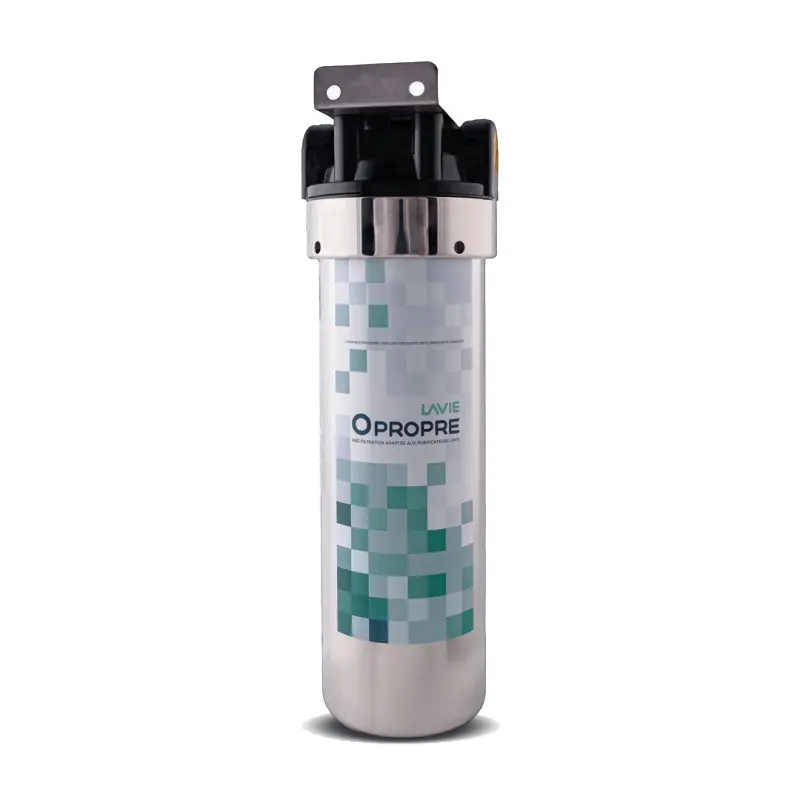
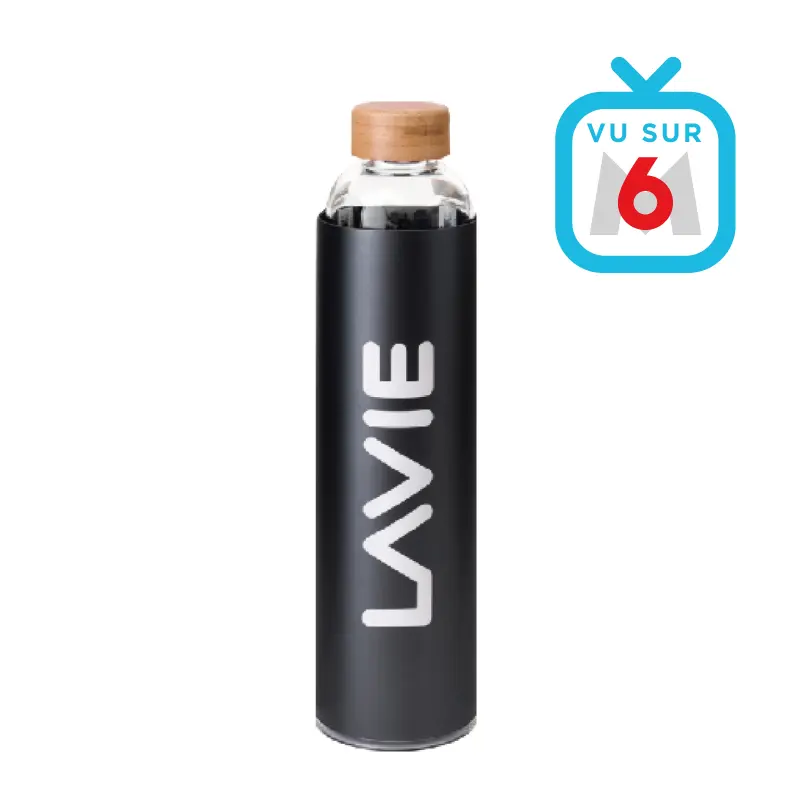
LAVIE's Opropre under-sink filter does things differently. It treats water directly at source by capturing many contaminants, including eternal pollutants. And by combining it with the LAVIE purifier, which uses UV-A rays to neutralise bacteria and viruses at the time of consumption, you get a complete and sustainable approach.
With a tap water filter If you choose the right water, you can drink high-quality, safer water.
Tap water or bottled water: which is better?
Bottled water may seem more reassuring. But it is far from flawless. From studies have highlighted the presence of microplastics in many bottled water samples. And these particles gradually accumulate in the body, impacting on our health.
What's more, several scandals have called into question consumer confidence in bottles.
There are also a number of disadvantages: high cost, bulky storage, transport of packs, etc. Not to mention the disastrous environmental impact, with tonnes of single-use plastic.
Filtered tap water is a much more balanced alternative. It's cheaper, more environmentally friendly and, above all, more practical for everyday use.
It allows you to drink better quality water straight from your home.
Tap water: not perfect, but not without solutions
So is tap water really dangerous? It's drinkable, yes. But flawless, no.
PFAS, pesticides, sediments, toxic residues... Samples show that this pollution is present in a large part of the region. Above all, their long-term accumulation has an impact on human health.
But it is possible to take action.
Le domestic filtration treatment can reduce most of these contaminants and improve water quality on a daily basis. The most effective approach is to intervene on two levels: treat at source, then purify at the point of consumption.
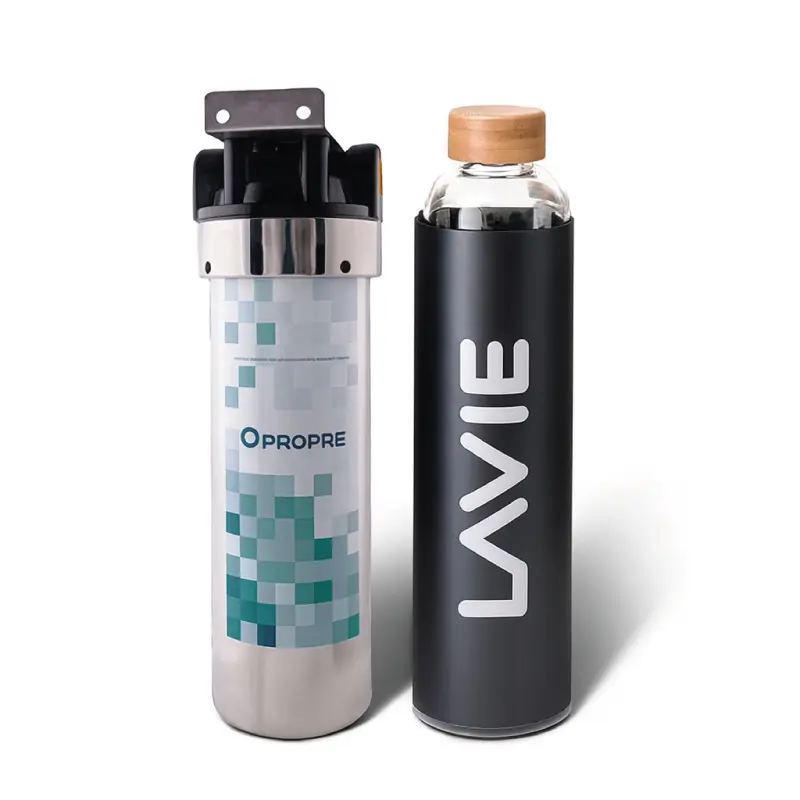
That's exactly what the LAVIE Serenity Pack offers. The Opropre under-sink filter captures many substances, such as PFAS, pesticides and heavy metals, before the water reaches the tap. The LAVIE purifier then uses UV-A rays to neutralise bacteria, viruses and other undesirable substances, while preserving essential minerals.
The result is water that's healthier, more pleasant to drink and better suited to your daily routine.
Pre-filtration + Purifier
Serenity Pack
Eliminates chlorine and odours, improves the taste of water
Filters out hazardous pollutants: PFAS, heavy metals, microplastics, etc.
How do I know if the water in my locality is contaminated?
To find out whether the water in your locality is contaminated by various undesirable substances, the easiest way is to consult the official results of health checks on drinking water carried out by the Regional Health Agencies (ARS).
These analyses are accessible via the public tools of the Ministry of Health, but also on platforms such as dansmoneau.fr, which makes it possible to view data by municipality or by distribution network.
Is tap water safe for babies and pregnant women?
Yes, contrary to popular belief, tap water is suitable for both babies and pregnant women. It is highly controlled in France and recommended by the health authorities for preparing feeding bottles.
However, it is worth taking certain precautions, such as checking the quality of your local water, because newborn babies are more sensitive to certain contaminants such as nitrates.
L'tap water for babies remains a safe, practical and environmentally-friendly solution.
Is a water filter enough to remove contaminants from tap water?
No, not all filters are created equal. Some solutions, such as filter carafes, improve the taste of the water above all, but are limited when it comes to the most persistent pollutants.
To be truly effective, a filtration system must be adapted to the contaminants present. Under-sink filters such as Opropre remove many residues directly at source.
The ideal remains to’combining filtration and purification. By combining Opropre and LAVIE UV-A technology, you can achieve healthier water quality every day.
Article written on 20/03/2026 by Pascal Nuti - CIO Solable - Passionate about energy, I'm constantly on the lookout for new targets for improvement, exploring cross-disciplinary paths using novel methods.