 French
 Spanish
 German
 Italian
 English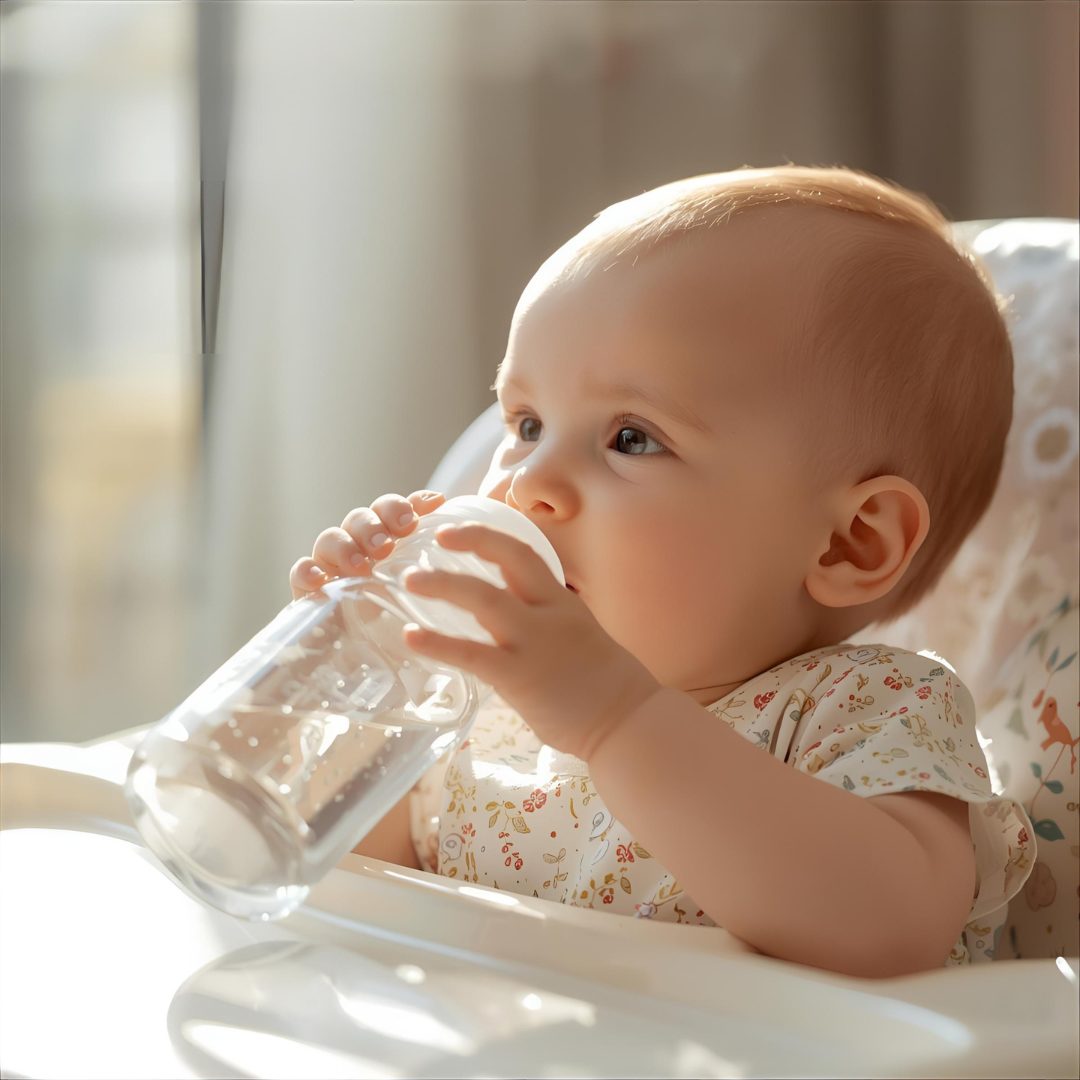
Certain mineral waters have become scarce on store shelves for the past few weeks. This has raised concerns among parents convinced that it is the safest option for infants. But behind this shortage lies a question: is mineral water really necessary for young children?
The answer is clear: no. Contrary to popular belief, expert authorities remind us that tap water is perfectly suitable for newborns. Even better: with simple, effective, and sustainable solutions, it is possible to obtain purified water, free from chlorine, viruses, and invisible pollutants, providing a better alternative to bottled mineral water. In reality, these waters do not guarantee that they are free from contaminants.
Let’s take stock and discover what the ideal resource is to hydrate baby with complete confidence.
Mineral water for baby: a persistent false belief
Many people turn to low-mineral water to prepare baby bottles, thinking it is the best dietary choice for the child. However, this is a misconception. Some have even built their reputation on a simple argument to increase sales: their composition is very low in minerals, and therefore sodium. It would then be ‘ideal’ for infants. This marketing discourse obviously appeals to consumers.
Additionally, there are the recommendations of relatives or some pediatricians who, out of habit, recommend these mineral waters. Finally, distrust of the content of our tap water perpetuates the idea that bottled water would be safer.
However, French authorities are clear: tap water is perfectly suitable for young children. And for good reason, its composition is strictly controlled every day. A recommendation confirmed by experts, including pediatrician Emmanuel Delmas (AP-HP), who reminds us: “Mineral water is not at all necessary for the development of children, for their nutritional needs.” To be completely reassured, it is possible to check the quality report of the municipal network, available at the town hall or directly online on the Ministry of Health’s website: eaupotable.sante.gouv.fr.
In reality, these mineral waters provide no particular advantage for infants compared to other drinking waters. Let’s now see why their low mineral content is not the best option for the child’s well-being.
Is low-mineral water really suitable for infants?
It is often said that low-mineral water would be safer for babies. They notably have the explicit mention ‘suitable for infant feeding’ on their label. However, this idea is not based on any scientific analysis.
To better understand, one only needs to look at the composition of breast milk: it is naturally rich in calcium and magnesium, essential for the growth and development of the little one. Why then recommend the purchase of mineral water that is almost devoid of these nutrients?
The real issue mainly concerns the bacterial risk. Tap water is therefore the best ally, provided that a few simple precautions are taken to protect against this contamination:
- Always use cold water;
- Let it run for a few seconds;
- Avoid any contact between the tap spout and the bottle;
- Boil it before using it with infant formula;
- Do not use conventional filter jugs that may be contaminated with bacteria and germs (here is our opinion on these filter jugs).
For more peace of mind, the LAVIE UV-A carafe is ideal and tests prove it: it contains no filters and relies solely on UV-A light. It eliminates bacteria, viruses, chlorine, and traces of pollutants while preserving the essential mineral content for the health of the infant.

Bottled water hides other dangers for the body
Due to their composition, the use of mineral waters is therefore not necessary for young children. However, these plastic bottles also present other risks. Several analyses have highlighted the presence of microplastics and nanoplastics, as well as pesticides, PFAS, or even pharmaceutical residues in certain brands.
The Nestlé scandal has also reminded us that the ‘pure’ image of the product is not always in line with reality: injection of industrial iron sulfate and CO₂, microfiltration below permitted thresholds, mixing mineral water with that from the public network… A systemic fraud that has affected more than 18 billion bottles.
But that’s not all. Beyond the health issue, the purchase of plastic packs also poses a major ecological problem. Their production generates significant emissions, and less than one in two bottles is recycled in France. The rest too often ends up in landfills, incinerated, or dispersed in the environment.
In light of these findings, these low-mineral water bottles do not represent either the most sustainable or the healthiest resource for an infant. Let’s now look at why their supposed ‘digestive’ virtues also belong more to the realm of false belief than to real benefit.
Does mineral water have real digestive benefits for babies?
Mineral water is sometimes used occasionally, not for daily hydration, but in the hope of alleviating digestive issues such as constipation or colic in the child. This habit has developed over time, passed on through word of mouth or by some unfounded medical recommendations.
However, there is no scientific evidence that these waters have real virtues on the transit of infants due to their mineral content. As pediatrician Emmanuel Delmas (AP-HP) reminds us: “Often, parents think their baby is constipated, but that is not the case. The first reflex in case of doubt is to consult a healthcare professional. But the second question is, is there any benefit to taking these specific mineral waters in case of constipation? The answer is no.”
In other words, this use is not essential for young children who have colic or other digestive problems.
Tap water: a healthy solution for the whole family
The observation is clear: mineral water provides no particular advantage to infants. It may even hide risks (pollutants, microplastics, bacteria…).
In contrast, tap water is the most suitable for baby. Why? In France, it is subject to strict daily controls, ensuring its sanitary safety for consumption. It is also much more practical (no need to carry or stock packs), economical (up to 100 times cheaper than bottled water), and ecological (less plastic waste production and emissions related to transport).
But to be completely at ease, first check its quality with your town hall or on the government website: eaupotable.sante.gouv.fr.
Then, for even more reassuring consumption, there are simple and sustainable solutions:
- The LAVIE UV-A carafe, which eliminates bacteria, viruses, chlorine, pesticides, and pharmaceutical residues, without filters or consumables, while maintaining the mineral balance for the child;
- The LAVIE Fountain, which brings the same purification technology in a family-friendly format, practical for the whole house.
With the use of these purifiers, you have the guarantee of quality hydration, healthy and safe, suitable for infant bottles.